India, Canada restore High Commissioners in G7 Summit breakthrough

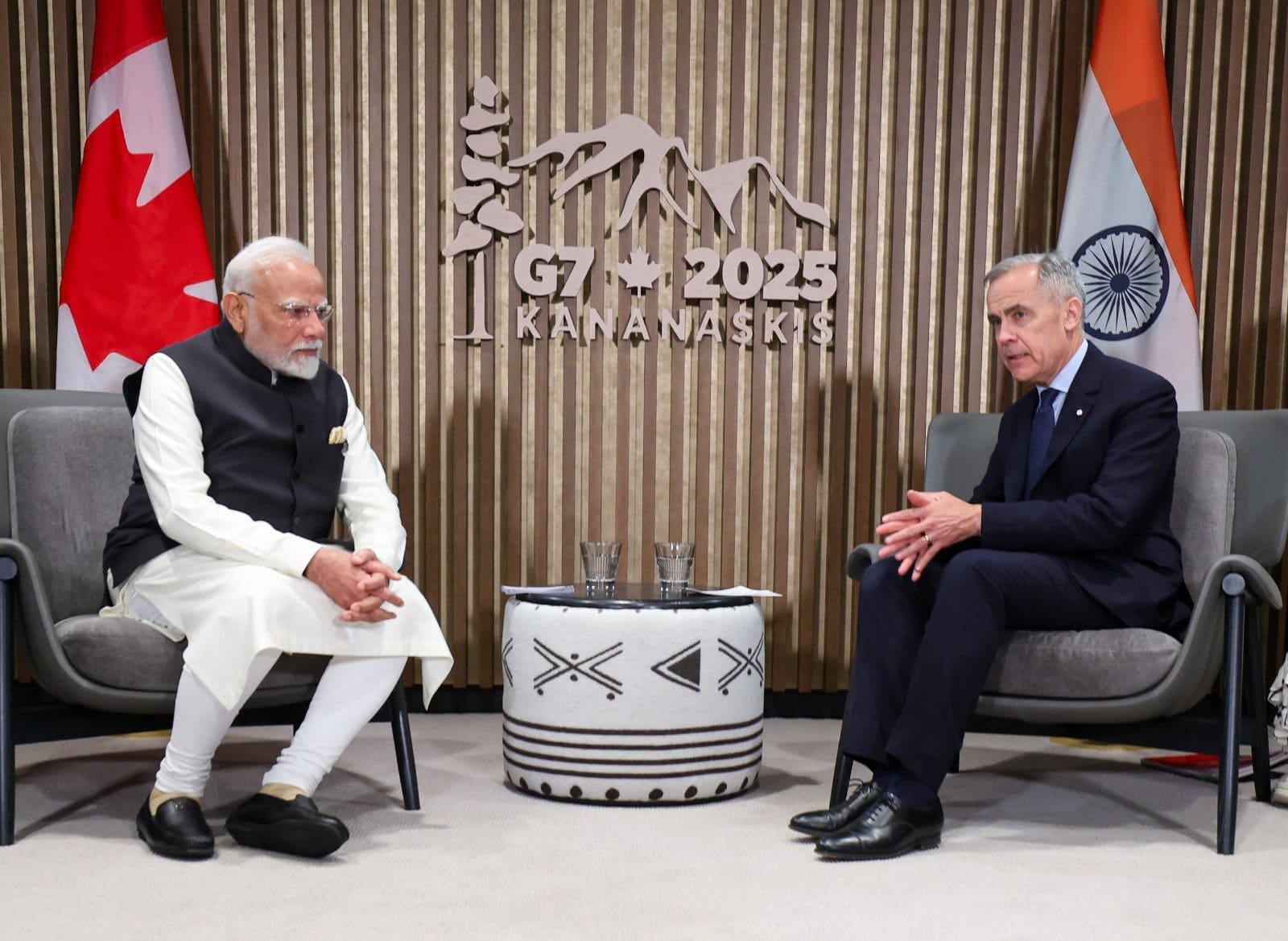
In a significant diplomatic development, India and Canada have agreed to restore high commissioners in each other’s capitals, marking the first step towards reviving a relationship that has remained strained for nearly a year. The announcement was made after a bilateral meeting between Indian Prime Minister Narendra Modi and Canadian Prime Minister Mark Carney on the sidelines of the G7 Leaders’ Summit in Kananaskis, Canada.
According to India’s Ministry of External Affairs, both leaders decided to designate new high commissioners and take “Strategic steps” to stabilise ties, beginning with resuming diplomatic representation. “Other diplomatic steps will follow in due course,” Foreign Secretary Vikram Misri said, adding that the leaders also agreed to restart senior and working-level discussions on trade, people-to-people contacts, and connectivity.
The Canadian Prime Minister’s Office, in a corresponding statement, said the reinstatement of envoys is aimed at resuming “regular services to citizens and businesses in both countries.” Carney also raised G7 priorities such as transnational crime, repression, and support for the rules-based international order during the bilateral talks. The statement notably emphasised mutual respect for the rule of law and sovereignty language that subtly referenced the unresolved tensions between the two nations.
This meeting is the first diplomatic engagement since September 2023, when then-Canadian Prime Minister Justin Trudeau publicly accused Indian agents of being linked to the June 2023 killing of Sikh separatist leader Hardeep Singh Nijjar in British Columbia.
Nijjar, who was associated with the Khalistan Tiger Force, a group banned as a terrorist organisation in India, was gunned down outside a Sikh temple. Trudeau claimed “credible allegations” pointed to Indian government involvement, sparking a diplomatic standoff.
The tension widened in October 2024, when India withdrew High Commissioner Sanjay Kumar Verma and expelled six Canadian diplomats. Canada responded with similar expulsions. At the time, Indian authorities rejected Canadian diplomatic communications naming Verma and others as “persons of interest.
Tensions appeared to ease slightly when Modi accepted Carney’s late invitation to attend the G7 Outreach Session, a sign interpreted as a possible thaw. The bilateral meeting held on June 18 (IST) confirmed that the two governments are trying to reset ties.
Indian officials said the conversation remained forward-looking, with discussions covering areas such as clean energy, digital technology, artificial intelligence, supply chain resilience, and cooperation on critical minerals. Misri noted that both leaders reaffirmed the bilateral relationship as one founded on “shared values, democracy and the rule of law.” The Canadian side echoed similar sentiments, highlighting respect for sovereignty and mutual interests in Indo-Pacific stability.
However, while India refrained from publicly raising the Khalistan issue during the talks, the Canadian side continued to allude to concerns. At a post-summit press conference, Carney reiterated the importance of addressing transnational repression and noted that legal proceedings were underway regarding the allegations made by Canada’s security agencies.
On the sidelines of the G7, where India was an invited country, Prime Minister Modi used the platform to call for collective global action against terrorism.
“Terrorism is the enemy of humanity and threatens all nations that uphold democratic values. There must be no ambiguity: if a country supports terrorism, it must be held accountable,” Modi said, urging G7 nations to adopt the same urgency towards terrorism as they do on other global issues.