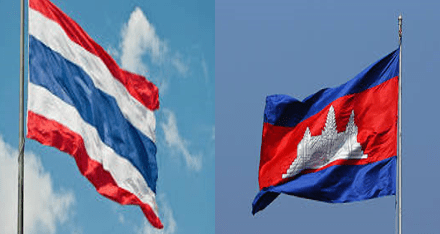
Why Thailand and Cambodia are once again at war?

Escalating clashes between Thai and Cambodian troops have left 32 dead on the Thai side and one in Cambodia, marking the deadliest confrontation between the two Southeast Asian neighbours in over a decade.
Armed conflicts between Southeast Asian states have been rare since the end of major regional wars in 1979, making the escalation particularly alarming.
The roots of the ongoing conflict trace back to a historic territorial dispute between Thailand (formerly Siam) and Cambodia over the area surrounding the Preah Vihear temple, a UNESCO World Heritage site and Prasat Ta Muen Thom perched atop the Dangrek Mountains that form a natural border between the countries.
The non-demarcated areas along their shared land border, which stretches more than 800 kilometres (500 miles).
This long-standing friction stems from early 20th-century colonial-era agreements, which left the border demarcation around the temple contested for decades.
According to a 1904 treaty between France (then protector of Cambodia) and Siam (now Thailand), which stipulated that the boundary along the Dangrek Mountains should follow the watershed line.
However, a series of maps produced by the French in 1908, one of which placed the temple within Cambodian territory, introduced a point of contention.
This divergence between the treaty's watershed line and the map's depiction of the border, particularly in the area around Preah Vihear, has fueled a long-standing dispute between Thailand and Cambodia.
Friedrich Ackermann, a cartographer who reviewed the border on behalf of the Thai government in 1961, would later observe that “one would need to be an expert to discover the mistake,” suggesting that the temple’s placement may not have been deliberately contested at the time.
During World War II, Thailand, with Japanese backing, temporarily gained control of Cambodian territories it had previously lost. Specifically, in 1940, Thailand reclaimed Battambang, Siem Reap, and Sisophon provinces, along with the Preah Vihear region, from French Indochina.
This occurred due to Thailand's alliance with Japan and the weakened state of France, which had been occupied by Nazi Germany.
But following Japan’s defeat in 1945, and in order to gain France’s support for joining the United Nations, Thailand returned the territories, including Preah Vihear, under the 1946 Washington Accord.
However, differing interpretations of the original maps and treaties persisted, reigniting the border debate.
Cambodia gains independence from France
When Cambodia gained independence from France in 1953, the situation escalated. Thai police raised the Thai flag at Preah Vihear, prompting Cambodian protests.
The Cold War further complicated matters as Thailand, a member of the U.S.-backed Southeast Asia Treaty Organization (SEATO), grew suspicious of Cambodia’s neutral stance in the global ideological conflict.
Although both countries attempted diplomatic negotiations in 1958, they quickly collapsed. In November of that year, Cambodia’s acting head of state, Prince Norodom Sihanouk, broke off diplomatic relations with Thailand, not solely due to Preah Vihear, but also in response to Thai support for Khmer opposition groups, which Cambodia saw as an infringement on its sovereignty.
ICJ Ruling of 1962 in Favor of Cambodia
These tensions of the 1950s and 60s laid the groundwork for the eventual ICJ case in 1962, as both countries remained firmly convinced that the temple rightfully belonged to them.
In June 1959, Thai Foreign Minister Thanat Khoman met Cambodian Deputy Prime Minister Son Sann to propose bilateral talks over Preah Vihear, in an effort to prevent Cambodia from taking the case to the International Court of Justice (ICJ). However, the matter eventually went before the Court.
On 15 June 1962, the ICJ ruled in favor of Cambodia, declaring that the Preah Vihear temple was situated in Cambodian territory.
The Court relied heavily on the Annex I map, produced by the French in 1908, which placed the temple within Cambodia’s borders.
Despite previously questioning the ICJ’s jurisdiction, Thailand accepted the ruling six days later, though with visible reluctance. The Thai government informed the international community that it reserved the right to pursue legal recovery of the temple in the future.
From the 1960s to the 1990s, the Thai–Cambodian border remained unstable due to regional wars. In 1978, Vietnam invaded Cambodia and installed a new regime, turning the border into a frontline of Cold War hostilities.
The Khmer Rouge, resisting the Vietnamese-backed government, used Preah Vihear as a strategic base. While Vietnamese forces briefly took control of the temple during their 1984 dry-season offensive, it mostly remained under Khmer Rouge influence.
In the 1980s, the Thai army built roads into Cambodian territory, ostensibly to facilitate Prince Norodom Sihanouk’s visits to pro-opposition villages.This further blurred border lines and contributed to tensions.
Thailand's formal alignment with the West, and its ties to anti-Vietnamese Cambodian factions, added layers of geopolitical complexity.
Thailand was one of 18 signatories to the 1991 Paris Peace Accords, which sought to bring lasting peace to Cambodia. Among the negotiators was Kasit Piromya, who would later play a key role as Thai Foreign Minister during the Preah Vihear tensions of 2008–2011.
Under Prime Minister Chatichai Choonhavan’s 1988 foreign policy shift, "turn battlefields into marketplaces," Thailand promoted economic integration and reconciliation. Both countries saw tourism potential at Preah Vihear and began clearing mines from the area.
Despite the 1991 peace process, the Khmer Rouge defected in 1993 and resumed its insurgency.
By April 1998, when Cambodian troops arrived at Preah Vihear to sign peace deals, they reportedly found remnants of the Khmer Rouge accompanied by Thai paramilitary Rangers (Thahan Phran), suggesting persistent unofficial ties.
In the maritime domain, Thailand and Cambodia signed a Memorandum of Understanding (MoU) in 2001 concerning their overlapping claims in the Gulf of Thailand.
This MoU established two areas, one for maritime delimitation and another for joint development of offshore resources. However, progress has been limited, largely because Cambodia prioritized land border demarcation. Although the Thai government threatened to revoke the MoU in 2009, it was ultimately preserved.
Regarding the land border, a Joint Boundary Commission (JBC) was tasked in 2003 with five procedural steps, the first being the physical location of historical border markers.
These markers had been installed in the early 20th century, based on treaties between the French protectorate of Cambodia and Siam (now Thailand) from 1904 to 1907.
Preah Vihear lies along a 200-kilometre stretch of the Dangrek mountain range, which, according to the 1904 treaty, should have followed the watershed line, placing the temple on Siamese soil.
However, a Franco-Siamese demarcation commission working in 1905 drew the border differently, ultimately placing the temple under French (and thus Cambodian) control.
While the ICJ ruling reaffirmed Cambodia's sovereignty over the temple, the surrounding territory remains a point of contention, shaped by overlapping historical claims, national pride, and strategic interests.
World Heritage listing sparks tensions
The issue flared up after Cambodia applied to list the temple as a World Heritage site in 2007, a move that was opposed by Thailand, which claims adjacent land.
The accompanying map included zoning that overlapped with the line Thailand’s cabinet had adopted in 1962, sparking diplomatic protests.
Eventually, both countries reached a compromise, Cambodia withdrew the controversial map, and Thailand dropped its objection.
On 7 July 2008, Preah Vihear was officially designated a UNESCO World Heritage Site.
Just days later, on 15 July 2008, three Thai ultra-nationalist activists crossed into the disputed area and were briefly detained by Cambodian forces.
The incident triggered military deployments from both sides. Thai Rangers took positions near the Keo Sikha Kiri Svara pagoda, adjacent to the temple, while bilateral talks resumed at various levels to de-escalate tensions.
Although Cambodian Defence Minister Tea Banh and Thai Supreme Commander Boonsrang Niumpradit held meetings that helped maintain the status quo along the border, political posturing in both capitals intensified as no lasting solution was found.
The Thai military viewed any unilateral withdrawal from the Keo Sikha Kiri Svara pagoda, located near the Preah Vihear temple, as a de facto acceptance of Cambodia’s sovereignty claim. Phnom Penh, for its part, refused to dismantle nearby settlements, citing similar concerns.
Under these tense and inflexible conditions, a minor border incident in early October 2008 quickly escalated into an armed clash on 15 October. The exchange deepened mutual distrust and led to increased troop mobilisations on both sides of the contested area.
The situation was further complicated when the Democrat Party, led by Abhisit Vejjajiva, came to power in Thailand in December 2008.
Nationalist rhetoric intensified, and trust between the two neighbours continued to erode. Despite this, two potential flashpoints in April 2009 and January 2011 were defused through the timely intervention of key military and political actors.
2011 escalation
Tensions spiked again in early February 2011 when the Thai army began constructing a road toward the disputed pagoda area.
According to Nicole Jenne, an assistant professor at the Pontifical Catholic University of Chile, what a senior Thai diplomat described as “the first war between two ASEAN members” erupted in February 2011, after months of diplomatic tension and increasing militarization along the border.
(Jenne discusses this in her 2017 paper, "The Thai–Cambodian Border Dispute: An Agency-centred Perspective on the Management of Interstate Conflict.")
Despite Cambodia’s formal protests, the construction continued. In response, Royal Cambodian Armed Forces (RCAF) troops fired warning shots, accidentally hitting Thai construction equipment, to which the Thai army retaliated with heavy artillery fire.
Within forty-eight hours, two ceasefires were broken, Cambodia promptly appealed to the United Nations Security Council (UNSC) for urgent intervention.
At least eight people were killed and nearly 100, including soldiers, police, and civilians, were injured in the initial fighting.
In April 2011, the conflict escalated further into a series of deadly clashes, resulting in the deaths of 14 Cambodian and 5 Thai soldiers, with over 200 injuries reported. These events marked one of the most intense phases of the long-standing dispute.
Despite the flare-ups, low-profile military negotiations continued behind the scenes.
Following the 2008 incident, both sides had reached a quiet modus vivendi to manage troop presence around Preah Vihear and other undefined parts of the border. However, such arrangements remained fragile and were often vulnerable to shifts in domestic politics and nationalist fervour.
With no resolution in sight, Cambodia referred the dispute, particularly the contested land surrounding Preah Vihear, to the International Court of Justice (ICJ) in The Hague.
The temple's strategic location on a cliff top has only deepened its significance, making it both a cultural symbol and a military stronghold in the ongoing standoff.
Although tensions flared between Thailand and Cambodia over the disputed Preah Vihear temple and adjacent land, relations gradually returned to normal as the International Court of Justice (ICJ) began its deliberations.
In November 2013, the ICJ delivered its judgment, which offered only a partial resolution. Despite this, the ruling helped cool tensions, and no major confrontations have erupted since. However, many outstanding border issues between the two countries remain unresolved.
The Thai–Cambodian dispute highlighted a broader pattern within Southeast Asia’s emerging security community, namely, that regional conflicts tend to be deferred or diplomatically shelved rather than settled through warfare.
Preah Vihear itself is often depicted in contrasting terms, as the "Temple of Doom," the "Temple in the Clouds," and as a site intrinsically tied to violence, conflict, and contestation. Its history as a flashpoint is deeply intertwined with colonial-era treaties and unresolved nationalistic sentiments.
This decades-old border dispute between Thailand and Cambodia reignited on Thursday after a landmine explosion wounded five Thai soldiers, triggering cross-border attacks and accusations of violations of international law.
This time, the conflict between Thailand and Cambodia does not centre on the Preah Vihear site, but primarily,came against the backdrop of simmering tensions between the countries in the past several months.
The outbreak of fighting between the South Asian neighbours follows weeks of tensions which have been brewing since May, when a Cambodian soldier was killed in an armed confrontation on the border.
Most recently, Cambodia submitted on 15 June another request to the ICJ to resolve its border dispute with Thailand following the skirmish between the sides in May.
Armed fighting broke out on Thursday morning near the disputed, ancient Prasat Ta Moan Thom Temple in Surin province, Thailand, very close to the border with Cambodia,
Tensions quickly escalated as both countries exchanged fire, each blaming the other for initiating the violence. Thailand alleged that Cambodian forces launched long-range rockets targeting civilian areas, including a petrol station strike that killed at least six people.
In retaliation, the Thai military deployed an F-16 fighter jet to bomb sites in Cambodia, reportedly hitting a Buddhist pagoda and causing at least one civilian death.
Cambodia, in turn, accused Thailand of deploying cluster munitions, a weapon banned under international treaties, calling the act a "clear violation of international law."
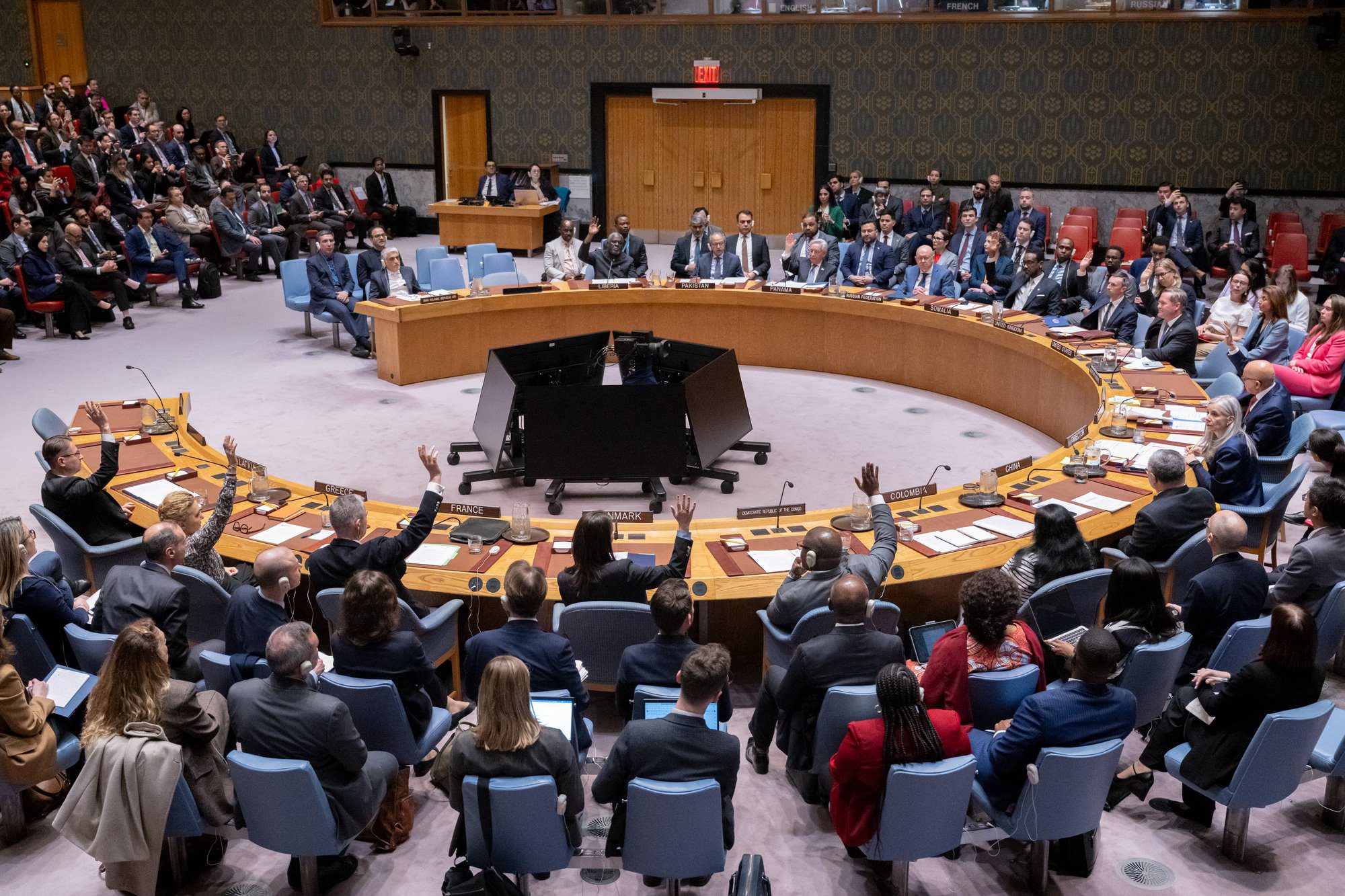
The UN Secretary-General has urged “utmost restraint” as the Security Council met behind closed doors on Friday to address the most serious escalation between the two Southeast Asian neighbours in more than a decade.
ASEAN, led by Malaysia’s Prime Minister Anwar Ibrahim, has also called for a ceasefire.