India’s Muslims at 78 years of Independence

It's the 78th anniversary of India’s Independence. There is much to celebrate, yet much to reflect: how far we have drifted away from the promise made “at the stroke of midnight hour” of upholding constitutional values and practices, a disquiet that most recently is animating apprehensions across the country about voter exclusion in Bihar and other states, with implications for possible mass disenfranchisement of vulnerable groups.
For Muslims, the fears are more raw and long-standing, in this past decade, especially in BJP-ruled states of Assam, Gujarat, Haryana, Jammu & Kashmir, Madhya Pradesh, Rajasthan, Uttarakhand and Uttar Pradesh. The list of discriminatory legislations, policies and practices, resulting in anti-Muslim violations becoming widespread and systematic is long. The following catalogue of issues raised by United Nations experts and reputable international NGOs, besides the media, captures some of the principal ones.
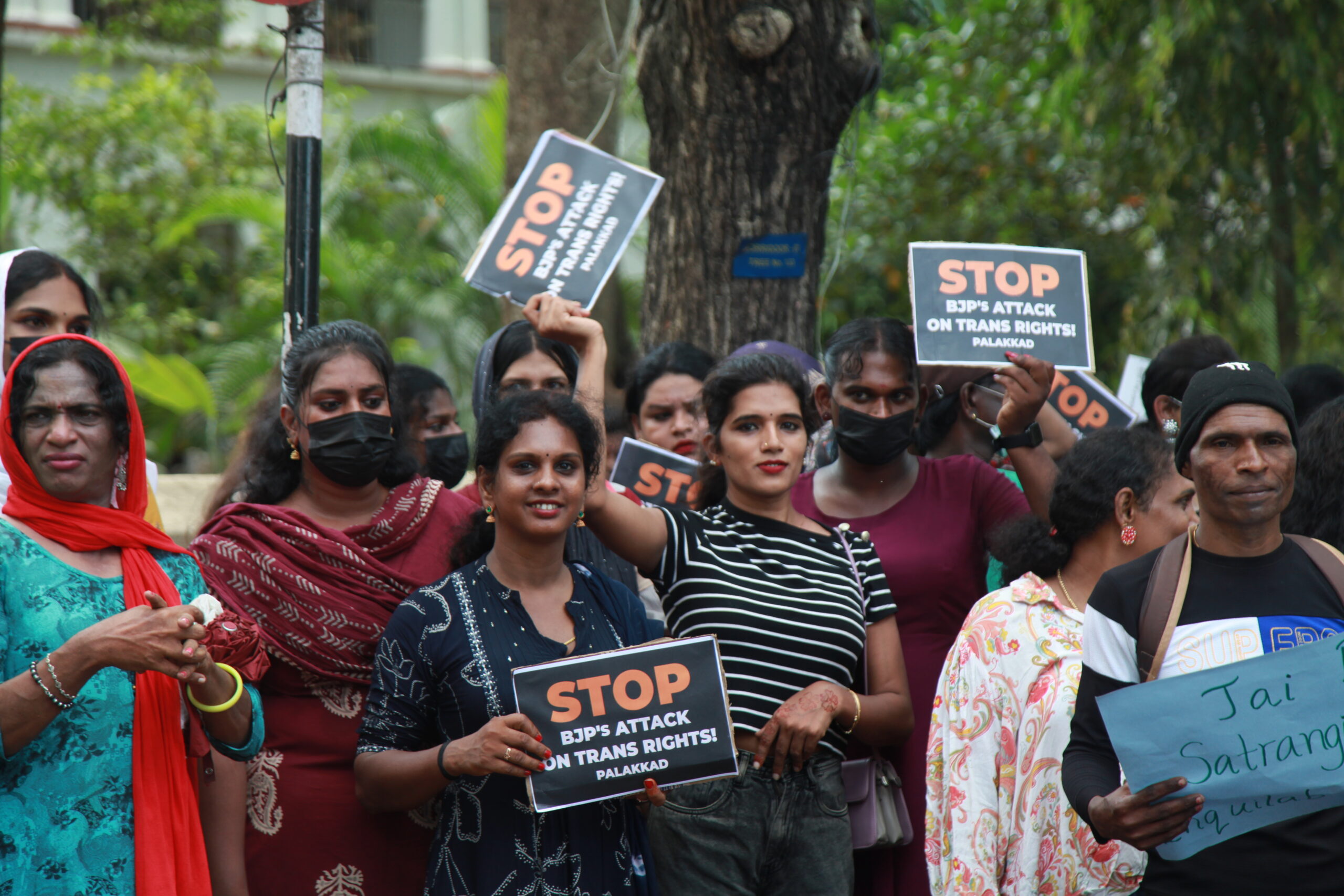
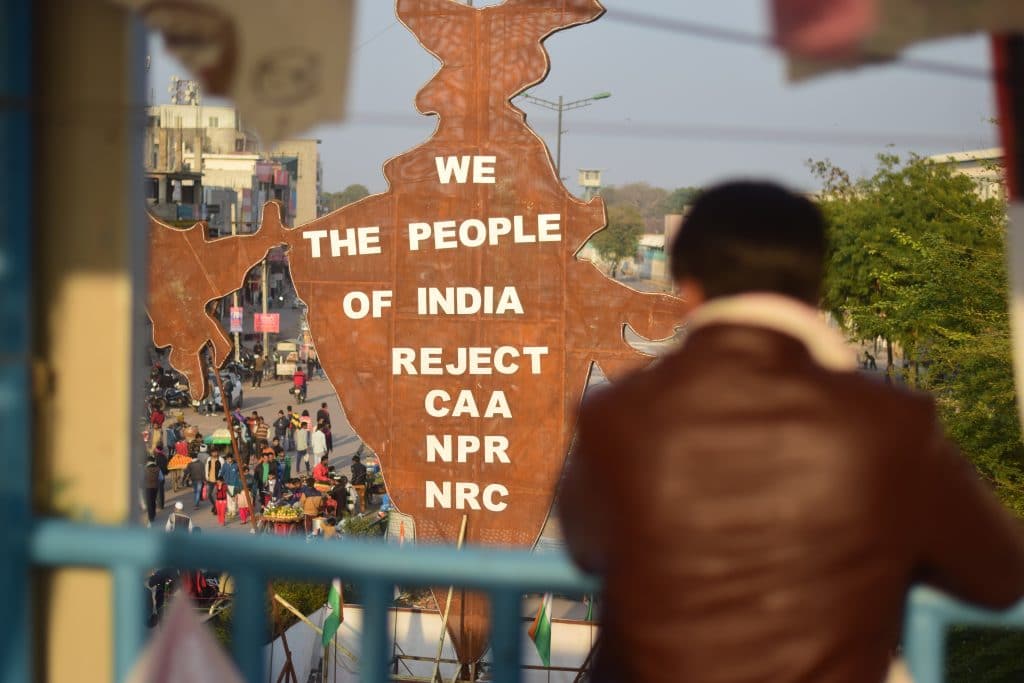
These are about, most recently, mass demolitions, evictions and deportations by authorities, as well as grave abuses by police and security forces, and lynchings and other hate crimes by private groups, all routine now. Behind these abuses are a range of discriminatory laws and policies, including the Citizenship Amendment Act, National Register of Citizens (NRC), and the Waqf Amendment Act, as well as laws that facilitate abuse, such as anti-conversion and cow protection laws and those that segregate and disadvantage minorities in education and livelihoods, besides judicial interventions that infringe religious rights of Muslims.
A national security architecture – including draconian laws such as National Security Act, Unlawful Activities Prevention Act, Uttar Pradesh Gangsters Act, Maharashtra COCA, Jammu & Kashmir Public Safety Act (PSA) among others - is also weaponised by state and central administrations to target minorities, in addition to political dissidents and the wider civil society. Much of this abuse is enabled by hate speech and incitement by senior leaders, who despite being called out internationally, disregard warnings.
A recent investigation of the Hindutva project in Uttarakhand, that captures the crisis facing Muslims well, is both alarming in the extent of the abuse and depressing in how deep the roots of the Hindutva machine go. They show how Muslims have been attacked physically and economically, their livelihoods destroyed, as have their mosques and shrines, everyday life made impossible, in some cases driving them out in campaigns of ethnic cleansing.
When Muslims have protested against these abuses in Uttarakhand, they have been extrajudicially executed or detained under terror and other draconian laws, and tortured, and have had their houses and commerce destroyed, all as reprisal for speaking up. The report demonstrates how this domination, has been achieved through a tangled web of local and state-level networks of youth, businesses, clerics and other actors, of the Sangh Parivar, all under the protection and support of the BJP-led state machinery, using state power and campaigns of hate and violence, what observers have called the ‘vigilante state’.
100 years after Rashtriya Swayamsevak Sangh’s formation and 78 years after India’s independence, RSS’s vision of Muslims as second-class citizens, seems close to being fully realised, at least for some Muslims.
Failures of safeguards
Despite the graveness of the violations, remedial measures are lacking. Journalists and human rights defenders (HRDs) reporting on the abuses are routinely targeted, resulting in information on the abuses being restricted. Victims’ attempts at seeking justice are often fruitless, resulting in a lack of acknowledgement of the crimes, little attempt by authorities to independently investigate and prosecute the perpetrators, and to provide restitution to families, all devastated by grave abuses and discrimination. Key justice institutions National Human Rights Commission, besides the highest courts, have been accused of failing in their duty, due, UN experts have shown, to lacking in independence and impartiality. Institutions meant to facilitate access to economic and social participation, Minorities Commission and departments for Minority Welfare, seem to have fully abdicated their responsibility.
How have Muslims responded historically?
This is not the first time that Muslims in India find themselves in this situation. Perhaps the situation just after Partition was a more existential threat. The eminent jurist and writer, AG Noorani, compares the situation of Muslims in 1947 to that in the aftermath of the 1857 Mutiny, when “radical change in the political order, amidst bloodshed and carnage, was accompanied with threat to old ways of living”. The two situations were analogous, in that Muslims “felt helpless and forlorn as they experienced distrust and hostile discrimination in their daily lives”.
The same could be said about reality today.
Yet, Noorani makes a distinction between the response by the Muslim community in the 19th century to that in the aftermath of Independence, and that was about leadership. “In 1947, the Muslims of India found themselves leaderless. Those in whom they had confidence went to Pakistan. The ones that remained had none of the qualities of the earlier”, meaning 19th century generation, concluding, “ post-Independence leaders had no gift of political leadership, still less of organisation”. This he felt had left its imprint on the community that it has not been able to erase.
Muslim mobilisation in the years after Independence took three broad forms:
A section of erstwhile Muslim League, which chose not to move to Pakistan, reconstituted itself as the Indian Union Muslim League, with its base mostly in Tamil Nadu and Kerala. Deploring the politics of the reconstituted IUML, Mohamed Reza Khan, IUML council member of the Madras legislature, commented, in 1961, that instead of working amongst the Muslim masses to raise their social, education and economic levels “we bother ourselves only with elections in Madras and Kerala and that without any corresponding benefits”.
The second trend was of Muslims who joined the Congress party. The historian Mushirul Hasan commenting on the Congress Muslims of Maulana Abdul Kalam Azad’s generation, lamented: though politically correct in urging Muslims to rally around the Congress and extolling democracy and secularism, they “squandered their historical opportunity” in not being able to create a following around issues of literacy, employment and improving the condition of common men and women”, rather they sought to uphold the status quo.
The third trend was of those like the Muslim Majlis-e Mushawarat, an umbrella of Muslim organisations, as well as Jamiat-e-Ulema in Hind, the All India Muslim Personal Law Board, and campaigns such as the Babri Masjid Action Committee, who chose to mobilise Muslims to assert their rights, ventilate grievances, and agitate for protection against wrong. They did this entirely on sectarian lines, with Muslims organisations alone. This, many believe, might have ended in aggravating the situation for Muslims further, a consequence of what has been described in the literature as ‘Hindu backlash’. It was this backlash, it is explained, in combination with the rise of the Hindu right in the years after the death of Jawaharlal Nehru, culminating in the Bharatiya Janata Party’s (BJP) capture of power in 2014, that has created the current existential crisis for Muslims.
The situation today is far worse than it was in the aftermath of Independence or since. BJP is now entrenched in power for over a decade, sitting astride a compliant state structure that it puts to effective use in service of its overtly majoritarian agenda. The challenge before the community is more formidable, therefore.
A response equal to the challenge!
The over 250 million-strong Muslims in India are not a monolithic group. They live in different parts of the country, hence their lived realities are different – those in BJP-ruled states and those in the rest, facing different concerns. They also speak different languages and belong to different ethnicities. There are significant variations among Muslims by caste and class, and by access to education and opportunities. Their concerns are not just Muslim concerns, but also the concerns of their specific gender, caste, class and ethnicity.
Consequently, there can be no single approach to addressing the crisis. Given the size of the population and variety of challenges faced by different Muslim communities, response can also not be prescriptive. Each community has to devise its own response, based on its unique situation and circumstance. That said, it is still possible to articulate a framework for an approach that is mindful of the complexities of the Muslims condition in India. Here too, Noorani’s advice from over 20 years ago, remains relevant in these difficult times:
It has increasingly become clear that constitutional safeguards are hopelessly inadequate. They need political underpinnings. Participation in public life alone, in its entire range of activities, provides hope.
Given the historical baggage, this participation, for it to be effective, must be inclusive, seeking responses to the challenges facing the Muslim community, as part of the broader challenge facing the country as a whole. Such inclusivity would allow wider society to profit by Muslim participation and thus learn more of their grievance, thus better primed to act to redress it.
Greater participation in public life is a factor also of representation. Muslim representation in decision making bodies is abysmal: lowest level in parliament today at 4.4%; average 5.7 % in state assemblies; 3-4 % in higher bureaucracy and police; 2 % in armed forces; and equally miniscule in the judiciary. This needs to go up significantly. Equally, Muslim representation in civil society, including among journalists, educators, NGOs and voluntary/developmental organisations, human rights groups and lawyers, must see an increase, equal to the challenge.
This increase must also be representative of gender, caste and class backgrounds – with a lot more Muslim women in public life, as well as those from socially and economically marginalised sections, able to represent concerns of those most vulnerable in these hostile times.
Ultimately, it is this new and youthful leadership - more representative of the Muslim situation, more confidently participating in public life, educating and engaging wide-ranging constituencies - that will redeem the constitutional promise of justice, equality and dignity for all Indians.
Sajjad Hassan is a human rights researcher and practitioner.