The compelling supervillain of Lokah

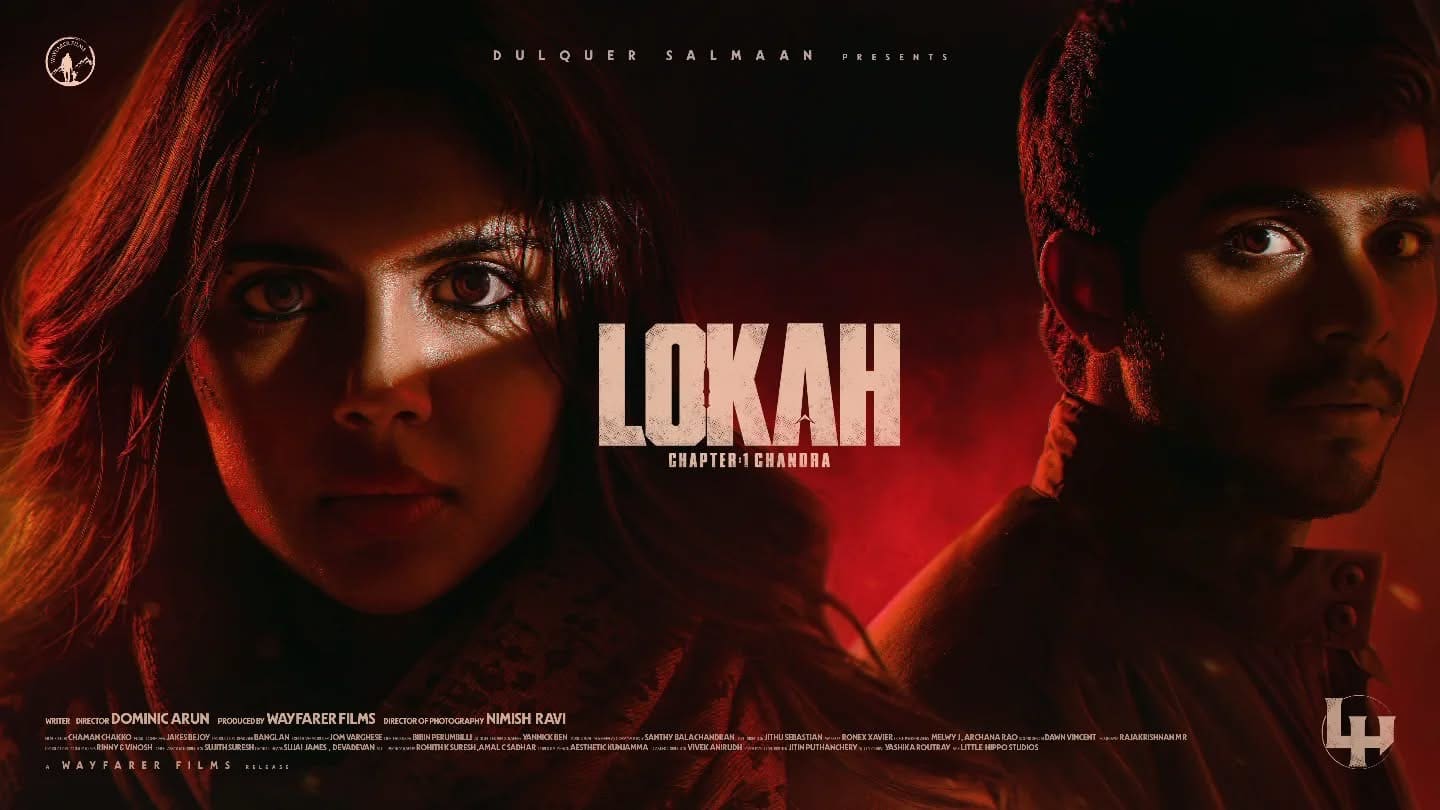
Dominic Arun’s new superhero film Lokah: Chapter 1- Chandra has a lot of merits but one of its boldest swings is the philosophy behind its villain. After all, every superhero needs a super villain. You take ubiquitous folklore like Yakshis which is bread and butter of every kid and every family in Kerala, so much that it is welded into its literature and pop culture (the iconic Srividya’s role in Kadamattathachan briefly appears in the film). And then when you need a villain to go against this Yakshi-as-a-superhero, you go for the latest but eternal bugaboo of the Indian state.
The ideal man of the Rashtriya Swayamsevak Sangh (RSS), the practicing Hindu, fit and prim, following the sang's defined code of Hindu culture, skeptical of every liberal idea, every free spirit, and sexist, misogynist, casteist to the core. How Dominic Arun and co-writer Santhy Balachandran craft him as this sneering pureblood mad man is one of the greatest aspects of the film.
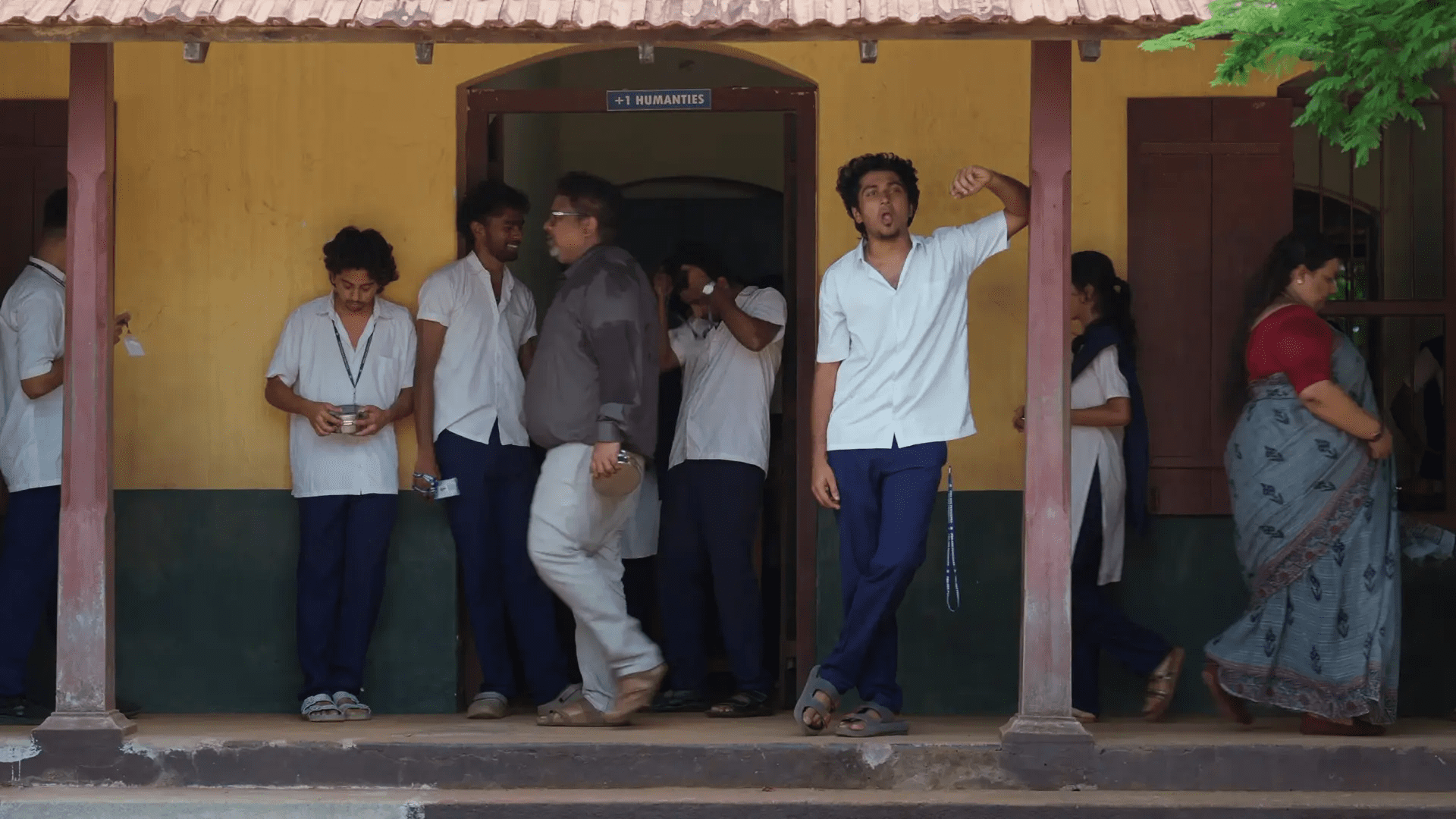
The idea itself is evident in the intro scene. We are supposed to fear those goons in the auto when the woman runs up to Nachiyappa (a fantastic Sandy who makes sneering look like an art), the police officer, for protection. But it's the cop one must fear! When we see him in his home, we see him as a symbol of fear for his own family. It’s a tiny scene but conveys everything about his character and what he thinks about the place of women in the society. And this idea comes into full bloom when he realises his immortality in front of his modest but busy puja room. Frames of Hindu gods behind him and his mother in front. What an image! His nemesis? A superwoman, Kalyani Priyadarshan as Chandra.
While that's one of the cleverest bits of writing in Lokah, the design choices here are exquisite. It's great that the film begins with the neon lit city-as-hellscape, the noir underpinnings of the first half is immense fun. The first forty minutes works like a noir thriller, mostly occurring in the seedy city alleys where organ trafficking is the latest menace and the new woman in the neighborhood is desirable but strange and mysterious. Things could have gone wrong here but such is the approach and gaze amidst all this that Chandra is a medium of dignity. Even the choice of Kalyani's hair color is inspired and in keeping with the color scheme of the city and its nighttime. Full props to her stylist, the bomber jackets, the piercings, the darker colors complementing her vampire origins. But they don’t miss Kalliyankattu Neeli’s whites either. Malayalam really succeeds in innovating within means and budget. Be it the practical effects of Minnal Murali or the malleable split screen fights of Thallumaala or the light and darkness play that Lokah puts on for the most part.
Though the second half contains some clunky writing (Nachiyappa remains incurious when the writer takes his blood in the hospital), most of the little decisions work. Like the off-hand moments of showing Naslen's Sunny as accurate with his aim or the initial red herrings with the blood bags. Malayalam is so good in unifying the languages, this has always been true not because they try to but because the language exists in the vicinity of a pop culture storm of Tamil as well as the unwieldy northern/Hindi influence. The language tends to subsume everything coming into it in the most positive way and manages to create truly original art that is widely appealing. The confluence of a Bangalore setting, a Tamil speaking villain and the very best of Malayalam folktale will remain one of the best, if overlooked aspect of the film. Maybe something that will help with how it travels.
Aditya Shrikrishna is an independent writer and film critic based in India. He's been writing about cinema for over twelve years and his work has appeared in various publications. He is a member of Film Critics Guild and also works with different film festivals in various capacities.