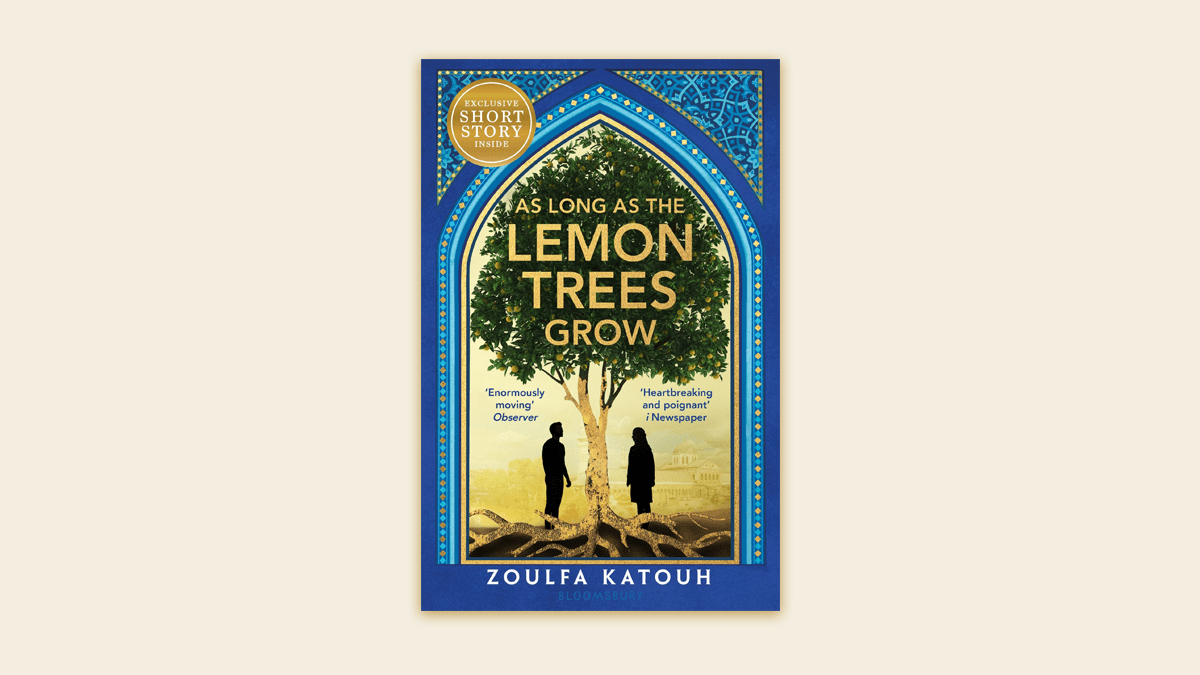
Book review: When lemon trees outlive genocide

“I am haunted by humans,” Death confesses in Markus Zusak’s The Book Thief. Reading Zoulfa Katouh’s As Long as the Lemon Trees Grow, I felt the same haunting, not through Death’s narration, but through the silence it leaves behind in Syria during the Assad regime. While Zusak gave Death a voice, Katouh gives the living their burden: to remember, to resist, to love in the face of massacre.
When the Assad family came to power in 1970 under Hafez al-Assad, Syria entered an era defined by authoritarian rule and systematic repression. The regime’s grip tightened through fear, censorship, and the violent crushing of dissent. The totalitarian family business of conducting a mass exodus of its own people was inherited by Hafez’s son, Bashar al-Assad, in the year 2000, who deepened the egregious atrocities. The Assad regime decimated entire cities, made citizens homeless, displaced over 16 million people, and killed millions with impunity. Katouh’s novel does not simply echo these atrocities; it breathes life into the silences they left behind.
Katouh’s young adult novel sets the Syrian Revolution against the backdrop of the Hama Massacre and its aftermath. The city of Hama was the Gaza of Syria, a bastion of resistance against the tyrannical government. The city saw the uprising against Hafez al-Assad’s brutal policies: the voice of ḥaqq and the calls for azadi were met by what is known as the single deadliest violence by a government against its own people in the modern world. In the span of three weeks, the Assad regime erased over 15,000 lives into disappearance, martyred more than 40,000, and uprooted over 100,000 from Hama. During the massacre, the Assad-led forces committed unimagined atrocities: field executions, burning bodies, killing fetuses in the womb, and cutting off women’s hands. The Hama massacre became a template of terror, signalling to Syrians that entire cities could be wiped out to silence dissent. The legacy of that massacre haunts later generations in Katouh’s story. The narrative is carried by Salama’s voice, thoughts, and hallucinations. She is an eighteen-year-old pharmacist forced to become a doctor as the Assadist invasion and occupation wreak havoc and destruction all around.
The reader also meets, through Salama’s eyes, various characters: Layla, Kenan, Lama, and Yusuf, born in different years following the Hama massacre. Yet the violence had already begun stealing from them before they were born: places, people, warmth. It is as if the massacres were breathed into their souls. Katouh gives life to what otherwise gets reduced to statistics in such large-scale violence: “x number of people bombed,” “y number homeless,” “z starved to death.”
Through Salama, we come to know the price paid by leaders and laypeople alike who refuse to surrender to the ẓulm inflicted upon them, fighting with whatever means they have, guided by ḥaqq and the pursuit of saving what little remains. The Assad regime built an infrastructure of fear and mass surveillance in Syria, where even a remotely political thought or dream could be enough to get one arrested, disappeared, displaced, or killed. Citizens were targeted for possessing a banned book, an overheard conversation, an accidental association with a suspected individual, or for failing to show sufficient enthusiasm for the regime (Read Syrian Gulag).
And so Katouh makes her characters understandable: you grasp their choices, their desperation, and their courage. She highlights what being on the verge of death does to people and their world. The air constantly smells of smoke from bombs, and the surroundings are permanently greyed. To be able to find colours is a luxury, therapy even. To recall flowers for their therapeutic value when tragedy demands is a coping mechanism not everyone can access. To have hallucinations filling the void left by those lost to heaven or prison is, paradoxically, also a privilege.
Katouh does not reduce her characters to their trauma. Instead, she illuminates their struggle for life, allowing hope and love to flicker even against the ashen backdrop of war. Reading the book after the liberation of Syria is a bittersweet experience. Ecstasy fills the heart that Syria is finally free from the clutches of a monstrous regime, but then reality creeps in, and one cannot help but throw oneself to the ground and ask: When will the Palestinians return home? When will the Olive trees, like the lemon trees, outlive genocide?
Aatifa Ikram Khan is an independent researcher based in Madhya Pradesh. She holds a Master’s in Language, Literature, Media and Culture from the English and Foreign Languages University, Hyderabad. She is interested in the study of secularism, liberalism, and their denial of alternate modes of being.