
Recasting Yakshi: Gender, caste, and limits of Lokah

The 2025 Malayalam film Lokah: Chapter One – Chandra claims to reimagine Kerala’s infamous female spirit Kalliyankattu Neeli through a contemporary feminist lens. Promoted as India’s first female-centred superhero movie, Lokah has earned both commercial success and critical attention for subverting the traditional portrayal of the yakshi, the vengeful enchantress of Kerala folklore, and for crafting a new cinematic universe blending local myth with modern genres. In the film, Neeli (renamed Chandra) steps out of the pages of legend and into present-day Bengaluru, no longer as a demonic temptress but a vigilant protector. This transformation has been celebrated as a feminist intervention in a genre long dominated by male heroes and male gazes. However, a closer analysis through the intersecting lenses of caste and gender reveals that Lokah’s empowerment narrative, while interesting in some respects, remains constrained by certain blind spots, notably a dilution of Neeli’s caste critique and a lingering reliance on male saviour figures.
Kalliyankattu Neeli’s origins in Kerala folklore are deeply rooted in patriarchy and caste hierarchy. In the early 20th-century compendium Aithihyamala, Neeli appears as Alli, the daughter of a temple-bound devadasi (hereditary temple dancer-courtesan). Alli’s life was circumscribed by caste – forbidden from marrying upper-caste men – until a Brahmin priest named Nampi lured her into marriage, only to betray and murder her. The legend narrates her resurrection as a yakshi, a bloodthirsty female spirit, arising directly from this act of caste-and-gender oppression. Neeli’s “monstrosity” is explicitly inseparable from the caste order, she is punished for transgressing the boundaries of caste and for daring to desire outside her ascribed status. Folklorists note that nothing is liberating in these old tales, as they function primarily as cautionary fables that reinforce brahminical patriarchal boundaries rather than celebrate female agency. The yakshi’s beauty and fury serve as a warning that a woman who defies societal norms (too beautiful, too wilful, or reaching beyond her caste) will be demonised as a deadly threat. Thus, the early Neeli story encodes a double critique: as it exposes the violence of caste patriarchy, even as it ultimately reinforces that social order by portraying the avenging woman as a supernatural menace to be feared or subdued.
These patriarchal and casteist underpinnings carried into Neeli’s representations in Malayalam cinema throughout the late 20th century. Malayalam films and television serials habitually depicted yakshis like Neeli as femme fatales – irresistibly alluring yet terrifying women who embody male fantasies and fears. In the 1979 film Kalliyankattu Neeli and the 1985 film Kadamattathachan, for example, Neeli is presented as a seductive ghost in a white sari, an ethereal beauty whose charms are fatally dangerous to men. These works, laden with the “Madonna–whore” complex, linger on the yakshi’s sexuality – the flowing hair, the low-cut blouses, the sensual allure – even as they portray her as a monstrous punisher of male transgression. The camera’s objectifying gaze in such films reinforced the idea of the yakshi as an object of male desire and dread in equal measure. Crucially, these narratives also reinstated male power through saviour figures: typically, a learned man or priest would ultimately tame or destroy the yakshi, restoring the patriarchal norm. The legendary exorcist Kadamattathu Kathanar became especially central to Neeli’s story in popular culture – in a 2004 TV serial and other retellings, a Syrian Christian priest’s holy powers triumph over Neeli’s witchery, underscoring the notion that male authority (often upper-caste or clerical authority) must reassert control over unruly female power. Before Lokah, the figure of Neeli in cinema was largely confined within a patriarchal, caste-coded paradigm: she was either the titillating evil seductress or the vanquished feminine demon, always defined in relation to the men who desire or defeat her.
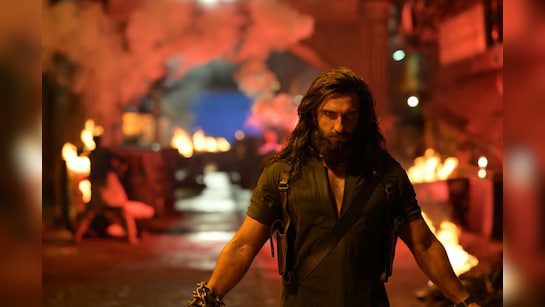
This film intervenes in this tradition by reframing Neeli as a modern superheroine, attempting to liberate her from the twin cages of the male gaze and casteist stigma. Gone is the spectral temptress draped in white; Chandra appears on screen as a contemporary young woman, clad in ripped jeans, bomber jackets, and fiery streaks in her hair, blending into the cosmopolitan crowd rather than standing out as a folkloric phantom. The seductive bait-and-kill trope is entirely absent. Chandra does not lure men with her charms at all. Neeli’s age-old rage is repurposed into a righteous (and decidedly non-sexualized) fury against evildoers.
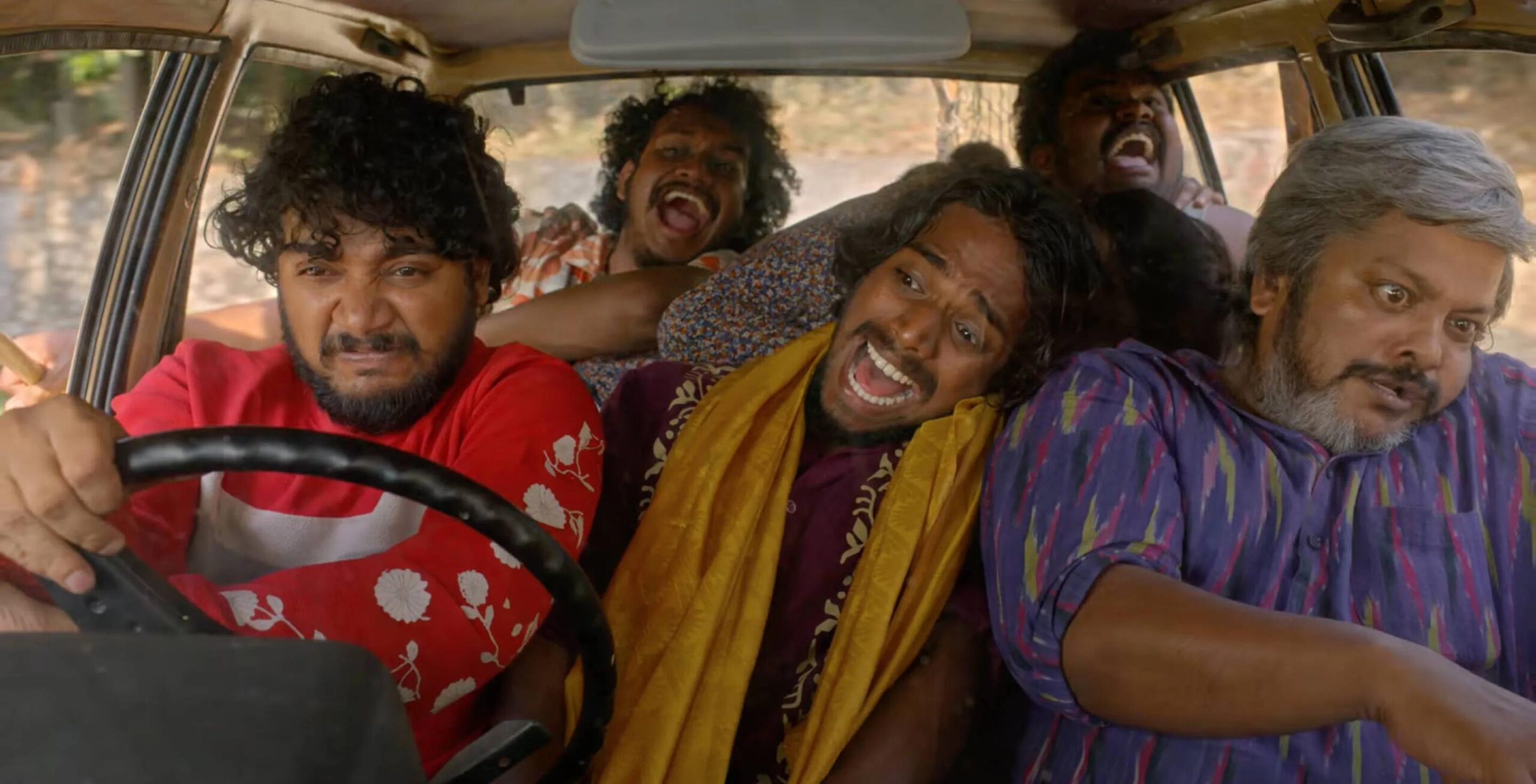
However, Lokah does not entirely eliminate male gaze from its narrative, Chandra can be often seen through the eyes of three young men in the neighbouring flat who furtively observe her – a scenario reminiscent of voyeuristic comedy in Malayalam cinema. Director Dominic Arun himself has noted that Chandra’s apartment being spied on by nosy male neighbours, was an influence from Priyadarshan’s 1989 film Vandanam - in Vandanam’s famous scene, two male characters peep at a woman through her window, a trope of male voyeurism played for laughs. This underscores that Chandra is still being framed through a (literal) male point of view. To the film’s credit, Chandra is never depicted as a willing seductress – a stark departure from earlier yakshi portrayals – but the inclusion of this peeping-tom element suggests that the spectre of voyeuristic, male-centric framing has not been entirely exorcised from Lokah’s storytelling.
However, the film does find other ways to quietly challenge familiar gender expectations. Chandra is the one saving a male character (her nervous human neighbour, Sunny), in an inversion of the usual hero-rescues-damsel scenario. Sunny, in fact, spends much of the film awestruck and fearful of Chandra, providing moments of humour and role reversal as he panics and even faints at the sight of blood while she does the fighting. This subversion of the typical “heroic male saviour” trope has led critics to praise Lokah’s nuanced feminist politics.
Equally significant is how Lokah reimagines Neeli’s origin story, though this is where the film’s approach to caste becomes complicated. The script acknowledges Neeli’s folkloric backstory (the Aithihyamala legend is even explicitly cited within the film’s universe), but it pointedly rewrites the specifics. Instead of Alli, the betrayed Brahmin’s wife, Lokah introduces Chandra as a tribal girl living over a thousand years ago, marginalised and forbidden from the spaces the king inhabits. In this new account, young Neeli’s crime is an attempt to transgress brahminical caste boundaries: she and her friends, out of curiosity, enter a forest temple from which their community is banned. This incursion – essentially a violation of caste segregation, since the temple is for the so-called upper caste – provokes the wrath of the local king, who retaliates by burning the tribal village and massacring Neeli’s people.
The brutality of this episode provides the catalyst for Neeli’s transformation. She escapes into an ancient cave where a supernatural encounter grants her immortality and power, allowing her to survive the centuries. The film thus retains a framework of structural injustice behind Neeli’s rage – in both versions, Neeli’s power emerges from the violent enforcement of caste hierarchies. However, Lokah shifts that hierarchy from an explicitly caste-based one to a more generic form of feudal oppression. Neeli’s original antagonists were Brahmin patriarchs enforcing caste laws, whereas in the film they are replaced by a tyrannical king and his henchmen. This change broadens Neeli’s story into a universal tale of the powerful vs. the powerless, perhaps making it more accessible to a wide audience. Yet it also represents a softening of the caste critique, the film stops just short of naming caste atrocity for what it is, portraying it instead as the misdeeds of a singular villainous ruler. Neeli is still a victim of oppression, but the oppressor is a fantastical feudal lord – an allegory of evil that sidesteps direct reference to caste beyond the brief mention of temple exclusions.
The consequences of this caste elision become more evident in Chandra’s present-day arc. After establishing (if somewhat obliquely) a caste-driven trauma in her origin, Lokah pointedly avoids engaging with caste in its contemporary storyline. Once the narrative shifts to 2025, Chandra’s battles are fought against individual bad actors – an organ-trafficking mafia, a sadistic corrupt police officer, misogynistic goons – with no mention of caste-based injustices in modern society. In essence, Lokah confines the question of caste to a distant flashback, treating it as a historical wrong that forged Neeli’s character, but not as a living social reality that continues to demand reckoning. The film does frame the police villain as a symbol of patriarchal authority (he harasses women and abuses power), but conspicuously absent is any parallel thread about caste discrimination or the plight of marginalised communities in the present.
Given Neeli’s backstory, this feels like a missed opportunity. A 1000-year-old heroine born of caste violence might logically be an avenger against caste oppression through the ages – yet Lokah steers her story toward a more sanitised battle against a decontextualised evil. The result is a kind of caste-blind feminism; the film foregrounds gender empowerment in the form of a fierce female lead, but it does not interrogate how caste and gender intersect in the very society Chandra now protects. By replacing a Brahmin vs. devadasi conflict with a king vs. tribe scenario, and by omitting caste issues from the present timeline, Lokah arguably dilutes the radical potential of Neeli’s story, making her crusade one of generalised justice rather than a pointed challenge to Kerala’s caste patriarchy.
Another area where Lokah’s feminist reimagining comes up against traditional norms is in the role of Kadamattathu Kathanar – the male saviour figure who has long shadowed Neeli’s legend. Folklore and earlier adaptations cast Kathanar (a 9th-century priest with occult powers) as Neeli’s ultimate conqueror, driving a nail into the yakshi’s forehead or otherwise binding her to subdue her vengeance. Lokah pointedly avoids such a crude defeat of its heroine, but it does something arguably more subtle, it domesticates Kathanar into Neeli’s benevolent mentor. In the film, after the massacre in the past, it is hinted that Kathanar finds the traumatised Neeli and “takes Chandra in his fold,” recruiting her as part of a legion of guardians he has assembled to protect the world. In other words, rather than exorcising her, the priest co-opts Neeli’s power for a righteous cause.
On the surface, this is a progressive twist; Kathanar becomes an ally instead of an adversary, symbolically ceding the spotlight to a female protagonist. The new dynamic is one of collaboration, even friendship, and the film explicitly frames it as such: Kathanar is portrayed as a friend working alongside Neeli, allowing her agency to remain central. Nevertheless, this mentorship can be seen as a reconfigured male-saviour trope. Kathanar, though no longer restraining Neeli, still serves as the gatekeeper to her power and purpose. He is an elder, patriarchal figure (and notably a clergyman, occupying a high status) who legitimises Chandra’s supernatural abilities by incorporating her into his mission. The agency Chandra wields thus comes with the tacit approval of a wise male authority, echoing a familiar pattern where a female hero’s journey is overseen by a paternal guide. The autonomy promised to Chandra is slightly undermined by the fact that her heroism operates within a framework engineered by Kathanar – she joins his league of extraordinary beings rather than striking out entirely on her own. This choice subtly substitutes one form of patriarchy for another. Neeli is no longer violently subdued by a man, but she is still, in a sense, managed by one. Here, the film stops short of full female autonomy. It imagines a powerful woman, but under the wing of an even more powerful (and, in the context of legend, upper-caste) man – thereby reproducing, in gentler form, the old narrative that female power must ultimately align itself with male leadership to be meaningful.
Lokah is an interesting effort to reclaim a feared female figure and recast her as a force for good. The film’s feminist potential is evident in its certain inversion of gender tropes, and the centring of a woman’s agency in a genre that rarely affords women such primacy. However, Lokah’s feminism is compromised. By evading a forthright confrontation with caste and by keeping a venerable male figure in a position of guidance, the film’s narrative stays within certain comfort zones.
The film we have is a beautiful start, carving out space for a female superhero in a landscape that had none. The film we can imagine – a Neeli who truly contains multitudes, free of caste blind-spots and patriarchal strings – would be an even more empowering ode to all the “women betrayed, spirits wronged” who seek to claim their space in the world.
Reeba Mariyam, a postgraduate in Film Studies from Birkbeck, University of London, is a visual artist and writer based between India and London, working across film, photography, and poetry.