WHO rejects Trump’s claim linking Paracetamol, vaccines to autism

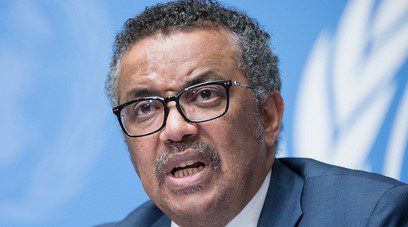
The World Health Organisation (WHO) has issued a statement on Wednesday in which it emphasises that there ‘is currently no conclusive scientific evidence confirming a possible link’ between autism and the use of paracetamol during pregnancy.
WHO’s statement comes a day after Trump’s press conference in the Oval Office on Monday, during which he stated that Tylenol is ‘not good’ for pregnant women, and that ‘effective immediately’ the US Food and Drug Administration (FDA) will be notifying doctors to advise against Tylenol prescriptions unless "medically necessary". Tylenol - coming from the drug acetaminophen - is also known as paracetamol.
Trump opened the press conference stating the intention to "announce historic steps to confront the crisis of autism", which he proceeded to describe as "horrible". He alleged that around 18 years ago, "1 in 10,000 children had autism", stating that now "it's 1 in 31". He stated that this increase is ‘artificial’ and that autistic people are "taking something".
"By the way, I think I can say that there are certain groups of people that don’t take vaccines and don’t take any pills that have no autism," he continued, citing the Amish people as one example.
BBC Verify fact-checks these claims as inaccurate. A large reason for lower statistics among certain groups of people, or in previous years, is due to a lack of access to resources and awareness on the topic.
In its statement, the WHO emphasised that ‘extensive research’ over the past decade has been conducted to determine possible links between paracetamol usage during pregnancy and subsequent autism in the child. The WHO maintains that "no consistent association has been established".
The WHO strongly recommends that all women continue to follow the advice of their doctors or health workers.
Despite the president’s strong claims, the FDA admitted in their notice to American doctors that ‘a causal relation has not been established’ between Tylenol and autism.
Trump also condemned the child vaccine roll-out programme, stating, "they pump so much stuff into those beautiful little babies it’s a disgrace". He stated that the MMR - Mumps, Measles and Rubella - vaccine "should be taken separately".
"It looks like they’re pumping into a horse. You have a little child, a little fragile child, and you have a vat of 80 different vaccines [...] and they pump it in."
The correlation between child vaccines and autism gained public attention in 1998, in a since-discredited paper in The Lancet medical journal. The author Andrew Wakefield is considered by some as an ‘anti-vaccine activist’. He was struck off the UK medical register in 2010 after falsifying research for the claim that the MMR vaccine caused autism and inflammatory bowel disease.
In 2016, he met with Trump, following which Wakefield stated that Trump was "on our side".
The WHO asserts that ‘robust, extensive evidence’ disproves the claim that childhood vaccines cause autism. "Original studies suggesting a link were flawed and have been discredited. Since 1991, independent experts advising WHO have repeatedly confirmed that vaccines [...] do not cause autism or other developmental disorders."
"Childhood vaccine schedules are developed through a careful, extensive and evidence-based process involving global experts," the WHO stated.
In response to Trump’s assertion that vaccines should be administered over a longer period, the WHO continued: when vaccine schedules are delayed, disrupted, or altered without evidential review, "there is a sharp increase in the risk of infection not only for the child, but also for the wider community".
The WHO maintains a commitment to ‘including autistic-led organisations’ and others with ‘lived experience’ in their work, in order to support ‘a dignified community entitled to evidence-based considerations free of stigma.’
Trump's comments on autism have garnered widespread criticism from across the medical and political fields. Mel Merritt, head of policy and campaigns at the National Autistic Society, called his statements "dangerous", "anti-science" and "irresponsible". Merritt stated that this "dangerous pseudo-science" is "putting pregnant women and children at risk and devaluing autistic people".
American College of Obstetricians and Gynaecologists president Dr Steven Fleischman likewise called Trump’s claim lacking in "scientific evidence", stating that it "dangerously simplifies" complex neurological conditions.
UK Health Secretary Wes Streeting commented, "I trust doctors over President Trump, frankly, on this".