
Idli Kadai review: Part meditative, part mindless

In Idli Kadai, its director and lead actor Dhanush attempts to fuse two contrasting narrative styles. One is a meditative exploration where the protagonist seeks connection with his true inner self. The other is a mindless masala entertainer, reliant on simplistic crowd-pleasing techniques. The film doesn’t quite succeed in merging these worlds, but the meditative stretches alone offer reasonable fulfilment.
The meditative
As Sivanesan, an earnest man who runs a modest idli shop in a village, Rajkiran firmly anchors the film’s meditative dimension. For Sivanesan, work is worship, and his presence becomes the film’s spiritual core. His son Murugan (Dhanush), however, leaves the village in search of better economic prospects. Far removed from his roots and sense of self, Murugan is forced to return due to unavoidable circumstances. That return, however, becomes his chance to rediscover purpose.
The film could have easily slipped into cloying cliches or indulged in over-romanticising the simplicity of village life. But Dhanush avoids these pitfalls, instead using folkloric and surreal elements to shape Murugan’s inner journey. When an earnest and hardworking Murugan still cannot make sense of his life, he encounters a surreal dream that evokes his inner self. The sequence crackles with brilliance and beauty, offering a glimpse of Dhanush’s genius as a director.
When Murugan begins running the idli shop with the same devotional fervour as his father, he finds peace within himself. These remain the finest moments of the film, leading us neatly to intermission.
But once Murugan’s spiritual quest is fulfilled, Dhanush seems unsure how to carry the second half forward. And so, he turns to the mindless.
The mindless
It’s clear that Murugan’s spiritual journey could only sustain half the film’s duration. And it’s equally clear that these parts aren’t conventionally “mass” enough. So, the film conjures up a family of stereotypical antagonists. Sathyaraj, Arun Vijay, and Shalini Pandey are cast as a plastic-rich family who intermittently obstruct Murugan’s path.
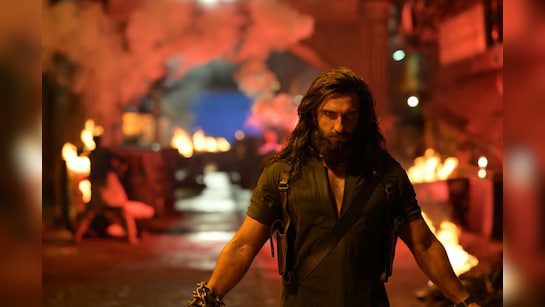
As Meera, Shalini Pandey is supposedly in love with Murugan, but she never comes across as an emotional person. Instead, she perpetually feels like someone irritated by a domestic worker taking more than two days off. Arun Vijay, as Ashwin, flexes his muscles 24/7 and vows not to calm down until he exacts “ultimate revenge.” Yet he changes his heart faster than it would take to build those biceps. Sathyaraj, as the father of these two brats, tags along pointlessly in their bratty adventures.
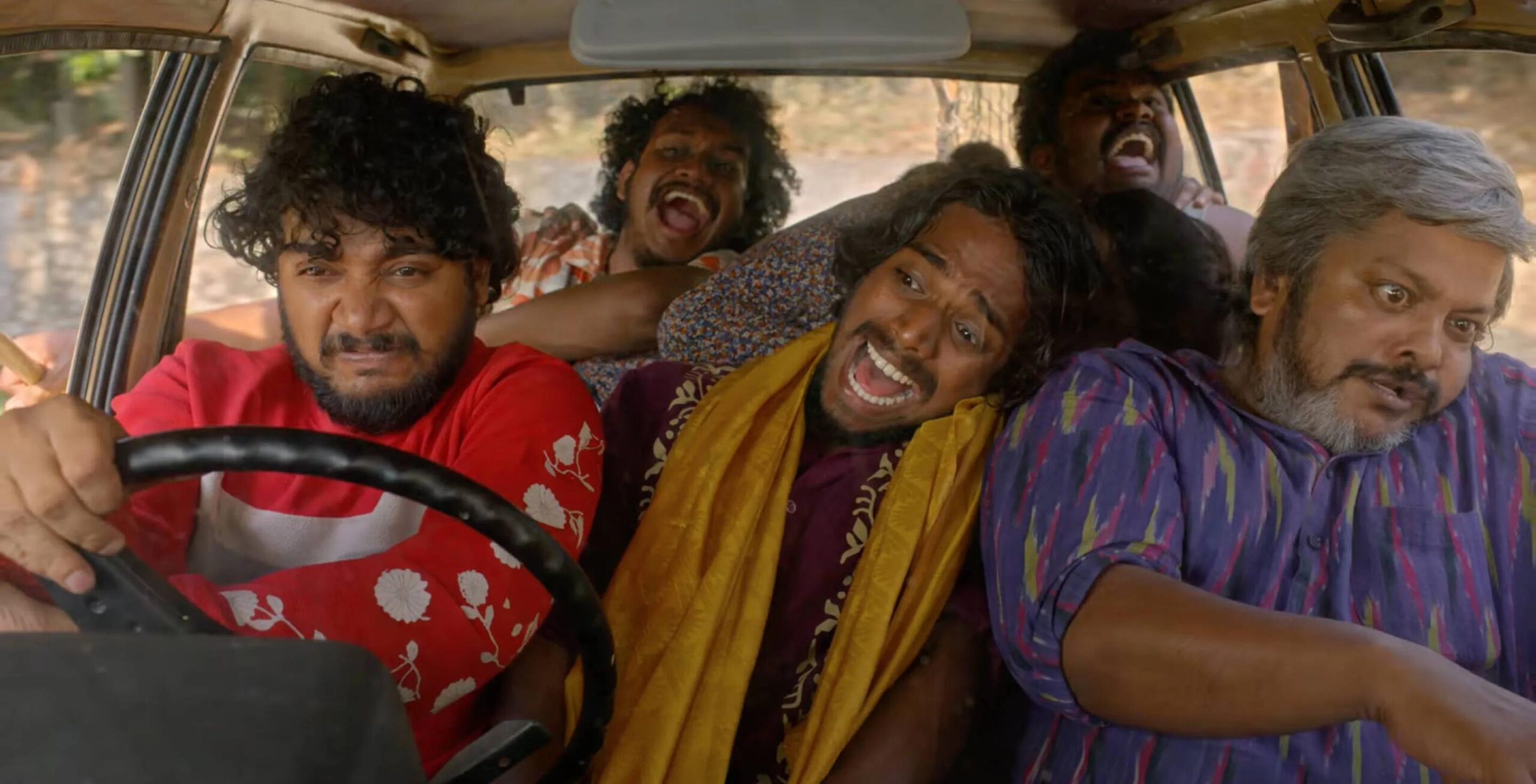
This fake, bratty family feels so forced and lifeless that they wouldn’t even qualify for a lazily made TV serial. And then there’s the pointless local villain, played by Samuthirakani. As if that weren’t enough, the film randomly inserts an 80s-style murder mystery episode. And in some twisted logic, we’re expected to believe these antagonists somehow help Murugan earn the villagers’ trust and affection.
As a writer, Dhanush may have hoped the villains would deliver the required masala thrills. Unfortunately, they don’t.
The mix
To bridge the two narrative strands, Dhanush invents a backstory about Sivanesan’s allegiance to non-violence and Murugan’s decision to carry it forward. But even as a dramatic device, it is handled inconsistently, coming across as forced and contrived.
The saving grace, however, is that the masala portions don’t contaminate the meditative core. Dhanush’s inability to merge them works in his favour, as they remain apart like oil and water. The satisfaction of the meditative world, at least, remains intact.
Among performances, Nithya Menon (Kayal) stands out as always, even in a role that doesn’t demand much of her. Parthiban sparkles in a minor police officer role.
GV Prakash Kumar’s earlier collaboration with Dhanush in Nilavuku En Mel Ennadi Kobam (2025) yielded a memorable album. But here, apart from Yen Paattan Saami Varum and Enjaami Thandhaane, the songs lack lustre. And, as is unfortunately mandatory these days, the background score is omnipresent and unbearably loud.
Cinematographer Kiran Koushik, too, seems unsure of the film’s emotional tone, succeeding only intermittently.
The film tries to close on a feel-good note, but it might have worked only if the meditative and masala worlds had been seamlessly blended. For now, we can only give full marks to the meditative stretches and pretend the masala ones never happened.
Rating: 2.5 stars out of 5