Cricket in the age of Nationalistic Machismo

In the much-touted Asia Cup final, India beat Pakistan by five wickets in Dubai, on the evening of September 28. A convincing win, the kind of clinical performance that cricket fans would feel inclined to keep returning to the highlights of in the days to come: WhatsApp groups and social media platforms have meanwhile churned out Bollywood-esque renditions of Tilak Verma’s vital knock, and Kuldeev Yadav’s exploits with the ball in the middle overs, until one has memorised not only the key moments, but also the high-voltage commentary of Gavaskar, Doull, Manjrekar, et al, behind the microphone.
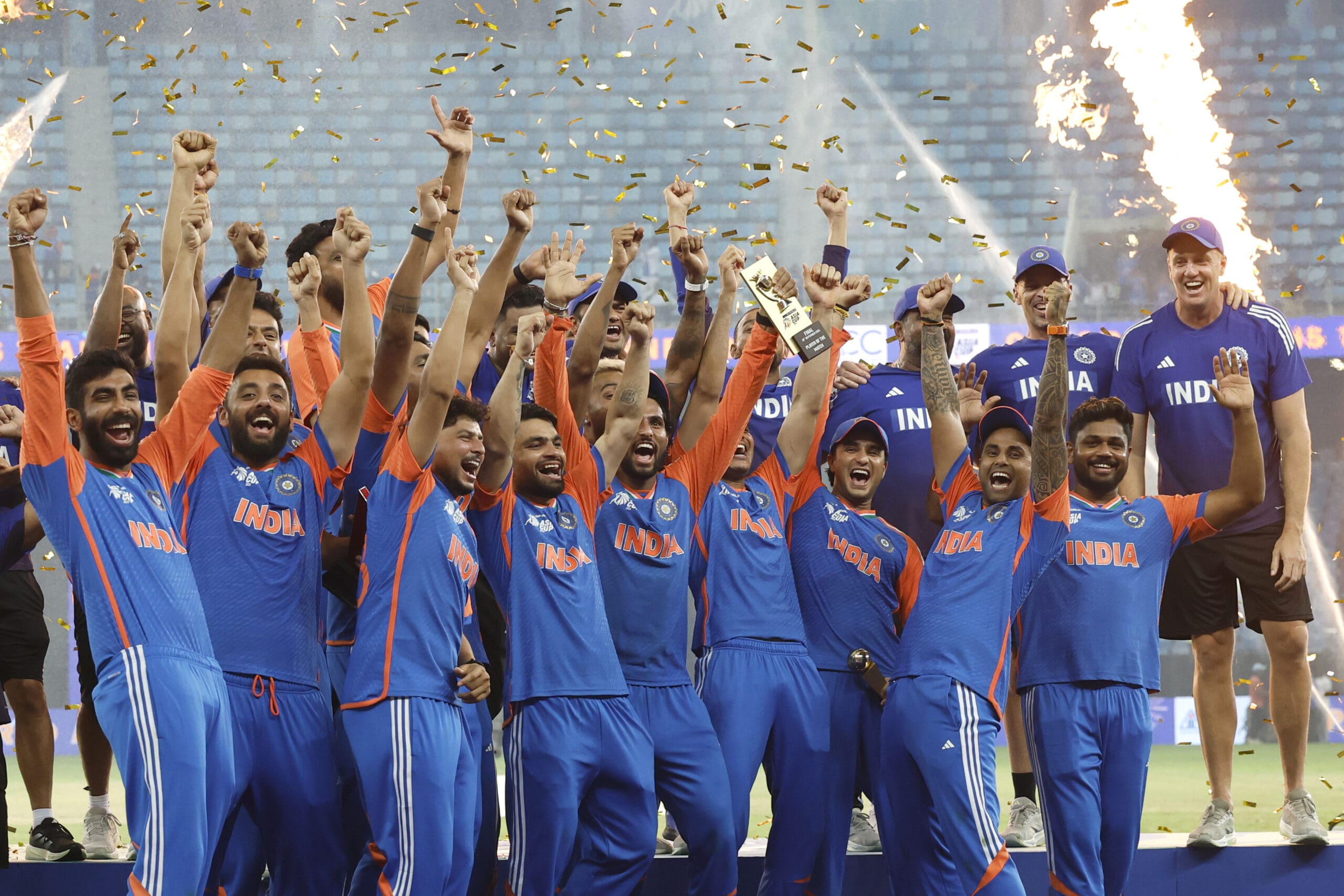
Following the win, the trophy had to wait for an extended period of time for its ritual moment of coronation, which ultimately never came. The reason? Because it was being presented by Mohsin Naqvi, president of both the Asian Cricket Council (ACC) and the Pakistan Cricket Board, as well as the Pakistan Interior Minister.
What could have been a simple post-match ceremony turned into a spectacle of refusal – a refusal that was read, replayed, and reshared across the nationalist mediascape. And perhaps this is where we are now: cricket less as a game, more as a battleground of optics.
Beyond the cricket, in this recently concluded tournament, was a swelling tide of jingoism, fuelled by the weight of the Pahalgam terror attack, the militarised rhetoric of Operation Sindoor, cross-border civilian casualties, and the thinly veiled desire to weaponise a sport that once promised play. The tension was further sensationalised to an unprecedented fever pitch by cricket pundits, media anchors, and political commentators alike.
Major General GD Bakshi was of the opinion that choosing to play the tournament matches against Pakistan has made India a ‘tamasha’ before the rest of the world. In Maharashtra, the Shiv Sena (Uddhav Singh Thackeray) protested with slogans that ran:‘Cricket tujhse bair nahi, Pakistan teri khair nahi.’ Besides, the demonstrations also included thrashing up television sets with cricket bats, in a display of frustration with the insult that would befall the families of the victims who suffered in the terror attacks, and the cross-border firings. Veteran Indian spinner Harbhajan Singh strongly condemned the BCCI’s decision to play Pakistan in the series, asserting that ‘khoon’ and ‘paani’ cannot co-exist.
It requires noting that cricket matches between India and Pakistan have never existed in political vacuums. In fact, had the BCCI felt strongly about the ‘negative’ message this match would send out to those who have suffered, India could have pulled out of participating in the tournament itself. Granted, India-Pakistan cricket matches have always carried the baggage of Partition, border wars, nuclear tests, and Kargil. Yet, paradoxically, the players themselves have often carried themselves with surprising joviality, both on and off the field. I think of Virat Kohli, in 2016, during a practice session on the eve of the Indo-Pak World T20 clash, offering Pakistani fast bowler Mohammad Amir his cricket bat, as a gesture of camaraderie amidst the political noise of a heavily charged rivalry. Even in the aftermath of a 10-wicket loss in the Asia Cup 2021 match against the same ‘arch-nemesis’, Virat Kohli hugged and applauded Pakistani wicketkeeper Mohammad Rizwan in a gesture of goodwill and sportsmanship. Similarly, during the 2023 Asia Cup, Pakistan’s Shaheen Afridi endeared himself to fans by presenting a gift to Jasprit Bumrah, who had just welcomed his first child.
Not until long ago was the beauty of cricket in the subcontinent: politicians could spit fire across borders, and we, on the cusp of adulthood, could rationally distinguish between the vitriol that existed in the political domain, while also taking an active interest in the cricket matches, which felt like they genuinely stood for something more than recreation and entertaining.
In this edition of the Asia Cup, that tradition all but fell to pieces. In the very first Indo-Pak fixture, Indian skipper Surya Kumar Yadav set the stage by snubbing the customary handshake with his Pakistani counterpart. This continued throughout the next three face-offs, culminating in the Indian Team walking away from the stage after having secured the coveted trophy. All this feels deliberate – nay, rehearsed. It hardly felt like the cricket we have grown up used to, but an extended performance – a piece of nationalist performance art under the klieg lights of the refusal serving as a more explicit statement of Bharat’s unwillingness to kowtow to any foreign powers, let alone Pakistan. Skipper Surya Kumar Yadav, for instance, noted how the Prime Minister himself was instrumental in helping the team embody a fearless brand of cricket by demonstrating how to play on the ‘front foot.’
The audience was wheedled to decode it as patriotism. What we are witnessing is a complete subsumption of sport into a loosely defined, nationalistic, chauvinistic posturing. Cricket has become less about the play of willow and leather, and more about performing a certain brand of politics: collars-up machismo, a saffron-infused swagger carefully aligned with the ruling party’s image of muscular nationalism.
Pakistan, of course, returned the favour with its own set of provocations: Haris Rauf’s gesticulations – a taunt referencing claims of having downed Indian aircraft, opener Shahibzada Farhan’s gun celebration after scoring fifty in the second clash, and the general refusal to step aside in this ritual of mutual antagonism. It is not enough, however, for Pakistani cricketers to be dismissed as outclassed or incompetent rivals. The discourse now demands something heavier, darker. They must be villainised, cast as stand-ins of a hostile nation, the Islamophobic stereotypes dressed up in green jerseys. Every India-Pakistan match, in this way, becomes a proxy war, not only at the level of leather and willow but at some ontological register: a metaphorical battle for nationalistic bragging rights that is on at all times, even when the scoreboard has long been cleared.
It also needs reminding that cricket, today, isn’t just about sport – but also about the billion-dollar industry that feeds off it. Who can forget the shrill anchors who turn debates on cricket into war montages? Republic TV’s Arnab Goswami, for instance, reminded viewers some three minutes into this prime-time debate show, that congregating, even in your drawing halls, to watch the India v Pakistan match, would be equivalent to compromising ‘national interests.’ It’s no reassurance, but perhaps three consecutive Indo-Pak clashes scheduled (masterfully) on three consecutive Sundays preclude any untoward concessions towards Bharat’s national interests. I leave it to readers to make sense of what Arnab might have meant by that heavily loaded phrase. Satire comes naturally at such moments, because the absurdity is too rich to ignore. Here we have a billion-dollar sport, one of the slickest entertainment machines in the world, reduced to a schoolyard spectacle.
If it weren’t tragic, it would be hilarious.
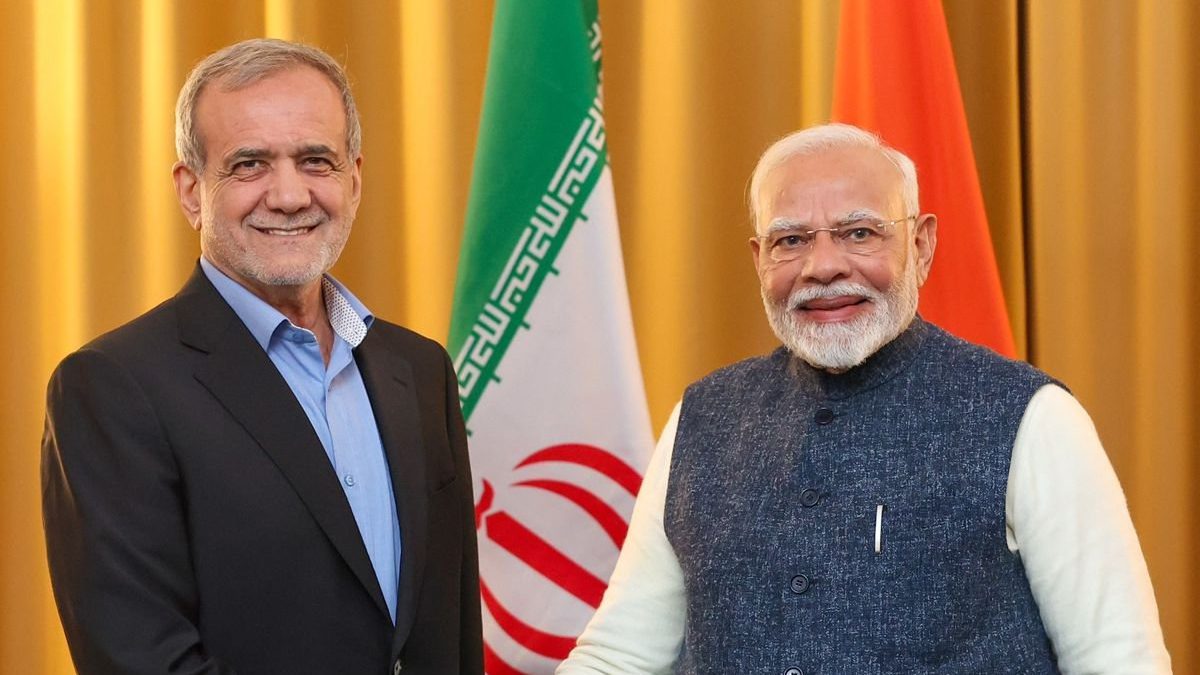
But the tragedy is this: the players are no longer just cricketers. They are actors in a state-scripted drama, required to embody the anxieties of the nation. The swagger and the smugness – all of it can be read politically. And fans, too, are enlisted in the project. To remain indifferent becomes suspicious (apologies, Arnab), because what logical reason is there for any nation-loving citizen not to get on the nationalistic bandwagon and cheer for the men in blue? To see how thoroughly the sporting discourse bleeds into political theatre, one need only glance at Prime Minister Narendra Modi’s recent X post, made minutes after India’s win in the final - hailing India’s triumph over Pakistan as another rendition of “Operation Sindoor”, played out in a cricket battle.
This juxtaposition is no accident. In fact, the cricket pitch has become a stage where Modi’s brand of muscular politics finds its perfect echo. The refusal to accept the trophy in Dubai folds neatly into this narrative: a symbolic ‘operation’ of its own, as if the Indian team was carrying out a moral strike by avenging the martyrs, by giving their arch-nemesis a good ole thrashing.
Of course, the media loves this. What could be better than a cricket match that doubles as war porn? Television anchors don camouflage jackets, singing paeans to ‘our boys’ delivering ‘knockout punches’ to Bharat’s bête noire.
Perhaps that is the true loss: the shrinking space for cricket itself. What should have been a contest of bat speeds and bowling variations was instead a contest of spite. A field where young men ought to have tested talent became a stage where states paraded their grudges. Cricket here was no longer played in the spirit of sport, but as a conduit for channelling national insecurities and political muscle-flexing.
To borrow an Orwellian phrase, the Asia Cup was ‘‘war minus the shooting.’’ We may count the runs and wickets, but the numbers are meaningless. The only score that mattered was symbolic, and from the looks of it, it looks far from being settled.
Prantik Ali is a writer and researcher interested in how misinformation, digital propaganda, and media narratives shape public life in India. He holds a Master’s degree in English Literature from Jamia Millia Islamia.