Pulwama, a bulldozer, and the line between law and revenge

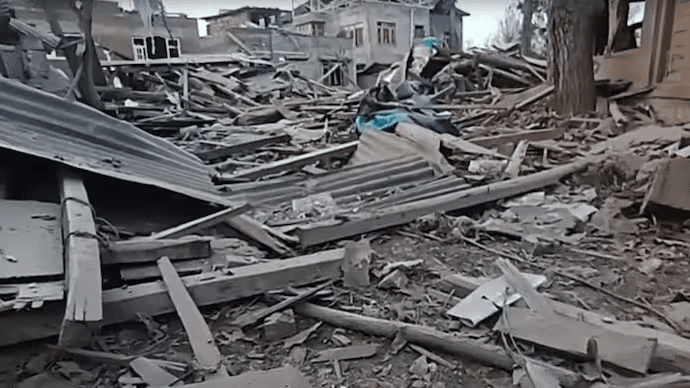
On 14 November, a small home in Pulwama was demolished before the morning had properly begun. A neighbourhood that has learned to read danger by sound alone woke up to the engine of a bulldozer grinding across the yard. By noon, the house stood in ruins—its walls broken, its belongings buried, its memories scattered in the dust. The family inside, stunned and silent, watched their only shelter disappear under the weight of a state that believed it was sending a message.
The demolition came only days after the Red Fort blast, and just one day after the first anniversary of the Supreme Court’s landmark 2024 judgment in the matter of demolition of structures. That judgment, delivered on 13 November 2024, tried to put an end to a troubling trend: demolitions carried out in the shadow of accusations, without notice, hearing, or lawful authority. It mandated that before any home or commercial establishment is demolished, authorities must issue a show-cause notice, give at least fifteen days for a reply, offer a personal hearing, and pass a reasoned order. These were not suggestions—they were binding safeguards meant to prevent the state from using bulldozers as instant instruments of punishment.
The Pulwama demolition, occurring within a few days of the blast and within hours of the accused’s identity being confirmed, could not possibly have complied with these mandatory steps. The timeline itself makes that clear. And so, the incident forces a deeper question: what vision of justice is the state embracing, if a home can be reduced to rubble before a single charge is proved in court?
What law actually says
There is one basic truth that deserves to be repeated without hesitation: Indian criminal law does not recognise demolition of homes as punishment.
The Bharatiya Nyaya Sanhita (BNS)—our new substantive criminal code—lists all punishments Parliament considers lawful. These include imprisonment, fines, and, in limited circumstances, forfeiture of property. The old Indian Penal Code said the same. Neither recognises demolition as a legally permissible penalty.
The Bharatiya Nagarik Suraksha Sanhita (BNSS), which governs police powers, lays out in detail what the police may do during an investigation—search, seize, arrest, produce, and interrogate. Nowhere does it authorise destroying a home in response to a criminal allegation.
Even the Unlawful Activities (Prevention) Act (UAPA), India’s harshest anti-terror law, does not permit punitive demolition.
This means the bulldozer that arrived in Pulwama was not implementing a court-ordered sentence, not enforcing a statutory punishment, and not acting within the framework of criminal procedure. It was acting outside all three.
The only legal cover ordinarily available for demolition is under municipal or town-planning laws. But the Supreme Court, in its 2024 judgment, made it explicit that these laws cannot be invoked mechanically after criminal incidents. Demolition must be tied to genuine construction violations, not to allegations of criminal guilt. If the real purpose is to punish, the action becomes unconstitutional.
When a state action finds no support in any criminal statute and fails to comply with Supreme Court-mandated procedure, it cannot be called “law enforcement” at all. It becomes a punishment outside the law.
Return of collective punishment
Another hard truth is that demolitions of this kind rarely harm the accused. In cases of terror, the accused is often already dead or in custody. The ones who lose their roof are the people left behind: parents, siblings, children, neighbours. They may have known nothing about the alleged plot, had no role in its planning, and possessed no power to stop it. Yet they bear the consequences.
Indian law has always rejected this idea. There is no offence called “being related to a suspect.” Liability is individual, not familial. You can be prosecuted only for taking part in, abetting, conspiring, or attempting an offence. You cannot be punished for sharing a bloodline.
This position was reaffirmed on November 7. In a recent order setting aside bail in a narcotics case, a bench of the Supreme Court rejected an undertaking offered by the accused’s brother and stated plainly:
“In India, the alleged sins of an accused cannot be visited on his brother or other family members.”
The Court’s reasoning — rooted in the principle that guilt is personal, not hereditary — cuts to the heart of why punitive demolitions cannot be justified. If an innocent sibling cannot be sent to prison for the accused’s conduct, the State certainly cannot reduce a family home to rubble for it.
But bulldozer “justice” revives an old logic — collective punishment — in which families and communities are made to suffer for the alleged wrongdoing of one member. International human rights law condemns it. India’s own constitutional principles reject it. And our courts have repeatedly distanced themselves from it.
In State of Punjab v. Baldev Singh (1999), the Supreme Court emphasised that even in the gravest cases, the state must obey “procedure established by law,” because the alternative is arbitrariness. In Maneka Gandhi v. Union of India (1978), the Court held that the procedure under Article 21 must be “just, fair and reasonable,” not mechanical or retaliatory. In Tehseen Poonawalla v. Union of India (2018), the Court warned that the state must resist majoritarian impulses and avoid mirroring the logic of mob justice.
Yet the Pulwama demolition reflects the exact danger these judgments tried to prevent: a state responding to public anger instead of constitutional obligations.
Due Process Is a Discipline, Not a Decorative Ideal
The presumption of innocence is widely misunderstood. It is not a sentimental belief that every accused person is innocent. As Upendra Baxi has argued, it is a discipline placed on the state. It forces the government to restrain itself—to prove guilt with evidence, to follow established procedures, to allow fair hearing, and to honour the courts’ authority.
Due process is not a luxury to be suspended in cases of terror. It is precisely in such cases that it matters most. A legal system that abandons due process when emotions run high becomes a legal system that cannot be trusted at all.
Political theorists have long argued that vengeance is a private emotion, not a principle on which states can build public order. When the state institutionalises vengeance, it becomes indistinguishable from the forces it claims to oppose. A demolition carried out before trial, without notice, hearing, or lawful purpose, is not justice. It is anger using the machinery of the state.
To condemn such an act is not to question the horror of the Red Fort attack. It is simply to insist that justice cannot be built on the ruins of the Constitution.
Seduction of the 'Bulldozer'
In recent years, the bulldozer has turned into a symbol—not of governance, but of instant justice. It promises action in a country frustrated by slow trials and delayed convictions. It creates a spectacle: an image of toughness, a sense of decisive response, an immediate “message” to the public.
But spectacle is not justice.
Demolitions do not improve investigations. They do not enhance prosecution. They do not protect victims. They do not strengthen institutions. They simply create a momentary performance of power, one that often collapses in court—if it ever reaches court at all.
The Supreme Court’s 2024 demolition judgment was an attempt to stop this misuse. The Court described arbitrary demolitions as “extreme” and “disproportionate” and warned against a “lawless, ruthless state of affairs.” The demolition in Pulwama, coming days after a terror blast, falls into exactly the category the Court cautioned against.
It is tempting to see the Pulwama demolition as an exceptional act because terrorism is involved. But the logic behind it is already expanding. It has been used after communal clashes, in eviction drives, against protesters, and in other contexts unrelated to terror. Once the idea takes hold that the state may punish before conviction, the ground beneath everyone shifts.
A constitutional republic must be able to do difficult things at the same time: mourn the victims of terror, condemn the attack without hesitation, investigate thoroughly, prosecute strongly, and still refuse to violate the Constitution in the name of justice.
Nothing in this article defends the accused. Nothing excuses the brutality of the Red Fort blast. Nothing calls for restraint against terrorism. The argument is only this: the state must not break the law in order to enforce it.
If we accept bulldozers as tools of punishment, then the structure being quietly dismantled is not the house in Pulwama, but the architecture of justice itself.
Adv. Sahil Hussain Choudhury is a practising advocate at the Gauhati High Court and a constitutional law researcher based in New Delhi.