Inside the sudden sealing of Masjid Colony in Delhi's Okhla

Samra Iqbal & Tulip Banerjee
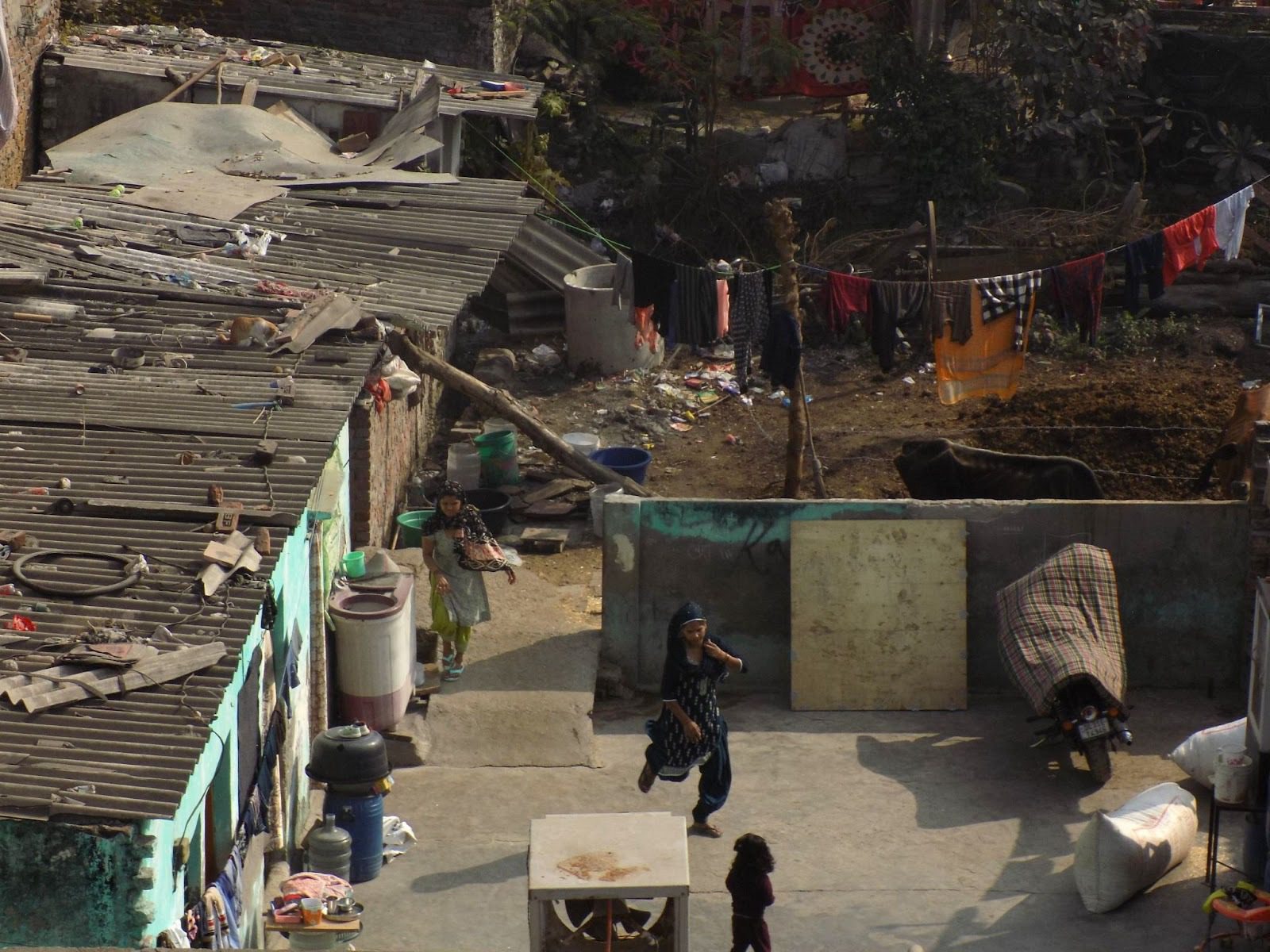
When children of Masjid Colony in Aali village of New Delhi's Okhla returned from school on 15 December, they found their homes sealed. With no access to get in, they were forced to remain in their uniforms for days.
That day, residents of the poor neighbourhood were forced to vacate their homes by the UP irrigation authorities without prior notice. The sealing, which had allegedly been carried out by UP police, Delhi Police and CRPF forces as per a court order, left over 300 families stranded in the cold, with no compensation or rehabilitation plan.
"We have no idea where our clothes and books are. We had to miss two pre-board exams. We can neither eat properly nor study—if this were to continue, we will fail," said 17-year-old Sajjo, a 12th-grade student, who goes by her first name.
The land has been contested through long legal battles. According to the residents, the UP irrigation authorities have claimed 8.48 acres of land in the region. A day before the sealing, the UP police announced that shops on Pusta Road, the stretch outside Masjid Colony, would be sealed. Instead, residential homes in Masjid Colony were locked and sealed the following day.
Outside their locked homes, a group of women sat together with their children in a charpai, drained after repeatedly reiterating the state of their plight. “You can see what happened to us, you can see all the houses locked up, all our belongings strewn on the ground, our children sleeping outside in the cold. There is nothing left to say,” said a woman in the group.
Residents claim that no formal announcement or notice was given prior to the sealing. The officials have cut off the electricity to households and stopped the water supply in the neighbourhood.
“They came out of nowhere with their men and started removing our belongings. Had we been notified, we would have removed our belongings earlier,” echo the residents who have suffered severe losses, as many of their belongings have either been damaged or remain stuck inside their sealed homes. Important documents locked inside.
“Our vegetables were only half-cooked, the dough for the rotis was only half-kneaded, when they suddenly came, dragged us, and forced us outside,” one resident told Maktoob.
The unannounced sealing has left hundreds of families stranded outside, in harsh weather conditions with temperatures going below 10 degrees Celsius and Delhi’s AQI in the hazardous category.
New mothers suffer the most
“The government has evicted people from their homes in this cold. The roof over our heads is being taken away. We keep lighting fires just to get through the night; smoke fills the place everywhere, but what choice do we have?"
Among the displaced people are women who had gone into labour days before. At a time when they needed care and medical supervision, they were forced to sleep in the open farmland with their newborn babies.
“They made them sit outside. We asked them—if something happens to them, who will be responsible? Shouldn’t the government see what it means for a person to live without a roof over their head—whether someone is surviving or dying?” Saira Bano, another resident of the neighbourhood, said, referring to the new mothers.

Bano, a widow in her sixties, recounts how she struggled to provide for her children all by herself. After years of struggling and raising her children, suddenly being forced out of her home has been too difficult for her.
“We raised our young children on our own, built this home, and now they have taken our house away. They say they will bring in bulldozers.”
Many residents have testified that one of the newborn babies, who were forced to sleep out at night with their mothers, had to be hospitalised due to excessive exposure to the cold.
"Many generations were born here"
Forty-year-old Geeta, who goes by her first name, states that women who had remained indoors for most of their lives, now have to live outside with no sense of security or privacy. Residents contest the pending court case, the sudden sealing without a written legal notice, an action they deem arbitrary.
“We have lived here for 50-60 years, and many generations were born and raised in this Colony. Does that hold no value?” repeated Bano. The stretched-out court case has pushed a community of people whose daily earnings are meagre to collectively raise funds for lawyers.
“We attended hearings at the Saket court on the 12th and 13th of this month and were given a February date,” said 50-year-old Mohd Aslam, a painter from Masjid Colony.
“But all of a sudden, they arrived with security personnel, removed some of our belongings while others were left inside, and rushed everyone out before locking the house. We were powerless to speak up in front of the force.”

The Madrasa attached to the Mosque in the neighbourhood has been sealed as well. Multiple residents have alleged that the moment the police entered the locality, they went straight to the mosque and broke the water pump.
Chand Babu, a resident of nearby Pir Mohalla, alleged that the Police misbehaved with the imam of the mosque. The electric meter of the mosque was also allegedly cut off. The reporters reached out to the SHO of Sarita Vihar Police Station, who declined to comment.
Residents further said that they were intimidated by the huge police force that came into the premises. Sixty-year-old Rajpal Fauji alleged that the police pushed him out of his house which gave him a leg injury. Fauji now uses a borrowed walker to move and spends his days outside his house in a charpai.

Members of the Bhim Army have made several visits to the site and have tried to supply the Colony with drinking water, blankets and tents. Babar Khan, a member of the Delhi wing, who paid the visits, highlighted the human cost of the issue.
“It is a grave matter for this country that a woman who has just given birth through surgery is being forced to stay outside her home in the cold,” he said, calling for the immediate rehabilitation of those displaced.
“Education, water and shelter are the rights of every citizen. Yet they filled the water tanks with stones and broke the motor pipes. What kind of law is this? How is asking for the right to a roof over one’s head an injustice?”
Neighbourhood on edge
After Masjid Colony, Aali village’s Pir Mohalla received a notice regarding the sealing of properties. While no sealing has been carried out yet, the locality, predominantly inhabited by Dalit workers and daily wage earners, has been gripped by fear.

“We are people from the Dalit community. If we earn a little during the day, we are able to eat — where are we supposed to go?” stated a resident of Pir Mohalla, highlighting the caste seclusion and added vulnerability that the community would face if their homes were to be taken away.
“Would something like this ever happen in an upper caste, posh locality? Why is it that underprivileged workers are always targeted through these acts?” added Babar Khan.
A group of women assembled and spoke about their concerns regarding the notice. Many were concerned about the impact of a possible eviction or demolition drive on their children.
Residents reasoned that even though every facility within the village was attached to the Delhi government, how could their land suddenly become that of the UP government?

Mukesh, another resident of Pir Mohalla, showed his house, which he claimed was 50-years-old. He showed his father’s ration card. The address was that of the same house in Pir Mohalla, Aali Gaaon.
Multiple other residents from both localities came ahead and showed their Voter ID Cards, and Below Poverty Line Ration Card - all of which had Aali Gaon mentioned in the address. Tired of having their place in the village questioned and being maimed as ‘illegal occupiers of the land’, they wished to prove their claim through government documents.
The court case remains pending, and the next hearing has been scheduled for February 11, 2026.
Samra Iqbal is currently a Young India Fellow at Ashoka University. She is actively involved in civil society work and student movements, and has previously covered stories on minorities, exclusion and the rhetoric of bulldozer justice. Tulip Banerjee is a postgraduate student of journalism at AJK MCRC, Jamia Millia Islamia. She has previously reported on demolition.