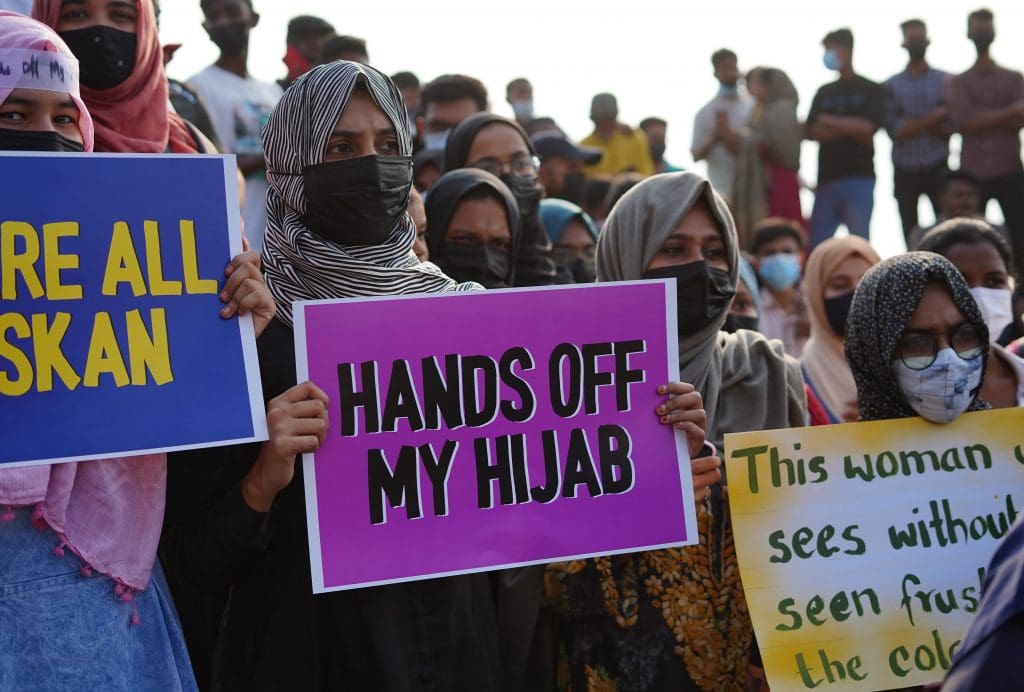
When hijab becomes a public problem: understanding gendered Islamophobia

The hijab is not new to controversy. It has long served as a troubling object within secular public discourse, and is repeatedly framed as a badge of backwardness, coercion, or, at worst, a dangerous religiosity. When Muslim women’s veiling is questioned, banned or interfered with in public and institutional settings, it brings out the most insidious form of Islamophobia, which should be understood as gendered Islamophobia. And these incidents do not merely concern dress or decorum; they, in fact, reveal how Muslim women’s bodies are rendered available for scrutiny, correction, and intervention by the state and its dominant cultural norms. Scholars like Jasmine Zine, Alimahomed-Wilson and Abu-Lughod are among the first to theorise gendered Islamophobia as a distinct analytical category explicitly. Jasmine Zine defines it as “a form of racialised gender violence that targets Muslim women through intersecting regimes of patriarchy, racism and imperialism”
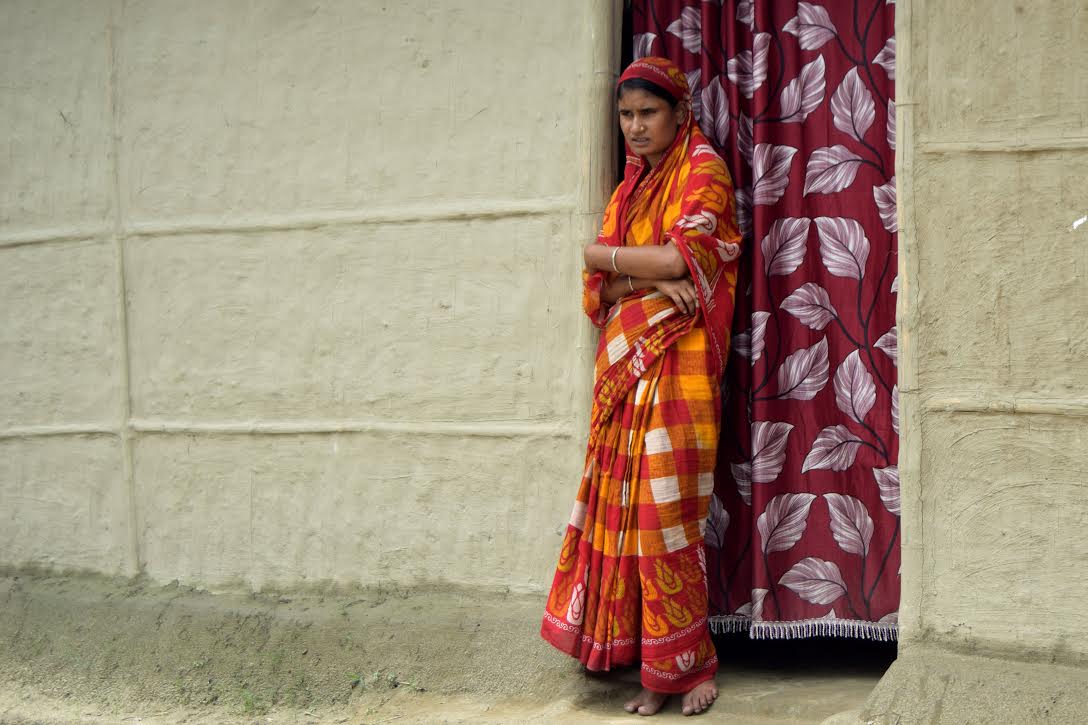
The public unveiling of a Muslim woman at a state-held function by Bihar Chief Minister Nitish Kumar in full media glare is symptomatic of a political culture rooted in gendered Islamophobia, where Muslim women are both hyper-visible and denied agency at the same time. Muslim women are disembodied, and hijab/burka becomes a symbolic battleground where anxieties about secularism, national identity, and modernity are projected and propagated.
Over the past several decades, feminist scholarship on hijab has evolved beyond the binary framework to a more nuanced understanding of its cultural and political context. Western liberal feminists used veiling as a sign of patriarchal oppression and religious backwardness, implying that visibility and emancipation were synonymous. Mary Wollstonecraft, hailed as the mother of liberal feminism, described Muslim women as ‘soulless’ in her seminal essay A Vindication of The Rights of Women. She used Muslim women's image to argue for the education of Western women. The contrast here is strategic, in projecting Western women's education through the binary of civilised/ barbaric.
Later postcolonial feminist scholars like Mohanty and Mernissi questioned the oversimplified, static and ahistorical framework situating Muslim women as ‘other’ of Western women. Saba Mahmood’s intervention in the Politics of Piety remains foundational in redefining agency. She maintains that agency cannot be just resistance to norms, but must also account for ethical self-fashioning within religious traditions. Leila Ahmed’s historical analysis of the resurgence of veiling since 1970 after the unveiling era of 1940 and 50’s in A Quiet Revolution further demonstrates how Muslim women’s veiling is a complex and multilayered phenomenon and was central to colonial projects of domination, where unveiling was projected as both civilisational progress and a ‘moral rescue’ of Muslim women, precluding the imperialist designs underway. One can see the same colonial logic and its crude persistence in contemporary secular governance, where the hijab is repeatedly positioned as a problem requiring state intervention. Joan Wallach Scott also exposes the hypocrisy behind the fixation on the veil as a veiled strategic displacement for the liberal democracies to proclaim their commitments to gender equality while at the same time refusing to interrogate their own forms of control and coercion. Islamic feminist scholars argue that the controversies surrounding hijab is more about controlling Muslim visibility, disciplining religious differences and asserting state authority over minority bodies than about women’s rights.
The meaning of hijab has never been singular, just like its diverse styles and ways of draping; its meaning is also contingent and is discursively produced through power-laden encounters. In Iran, when the Shah banned public veiling following Turkey‘s example, popularly known as kashf e hijab, in 1937, many women stopped moving out of their houses as they refused to be unveiled, and not surprisingly, hijab or the chador later became a symbol of the 1979 Islamic revolution in Iran. When political authorities presume the right to question, touch, or remove a woman’s veil, they assert interpretive sovereignty over her body, reinscribing precisely the forms of domination and control that feminist critique today seeks to dismantle. The act of unveiling a woman without her consent, whether through physical touch or symbolic coercion, in reality, constitutes an assertion of power over her body and is emblematic of rape culture.
Judith Butler argues that bodies that are marked by religious and gendered differences are rendered precarious in places saturated with state authority. The public stage is far from being neutral; in stark contrast, it is organised through norms and codes that determine whose bodies are legible, respectable, and safe. Veiling often intensifies this precarity, exposing Muslim women to both surveillance and violation under the guise of visibility and transparency. Their participation in public life is frequently made conditional upon modifying their appearance, suggesting that their acceptance remains provisional and supervised. There have been media reports about the Muslim woman doctor in Bihar who was forcibly unveiled, felt so humiliated that she considered not taking the job.
One must understand that gendered Islamophobia is a more intimate and insidious form of Islamophobia as it operates through concern, protection, and moral anxiety, often targeting ‘visible’ Muslim women through their hijab and burkas, as both victims in need of saving and as symbols of cultural excess that must be managed and their supposed ‘oppression’ become the rationale for their intense securitization. As a result, they are subjected to heightened surveillance where their dress, mobility, and comportment are monitored not only by state institutions but also by media, social networks, and public opinion. Such surveillance is not always codified in law but are interspersed through everyday gestures, language, interruptions, mockery, and corrections that normalise domination while appearing benign.
The logic that Muslim women must unveil to be ‘recognised’ mirrors older imperial intervention in which emancipation was imposed rather than chosen, and one can see a colonial continuum equating visibility with progress and conformity with inclusion. The obsessive scrutiny of the hijab/burka in public life needs a reorientation of feminist politics today. Any form of feminism which is attentive to power, difference, and history must reject the regulation of Muslim women’s bodies as a route to equality. Consent and bodily autonomy cannot be selectively applied; they must hold equally. Anyone can see that the hijab is not the site of oppression here, but the persistence of surveillance, touch, and control over Muslim women’s bodies is.
Dr Amina Hussain teaches at the Sarojini Naidu Centre for Women’s Studies, Jamia Millia Islamia, New Delhi.