Kerala Christians, Gaza and the moral challenge of Zionism

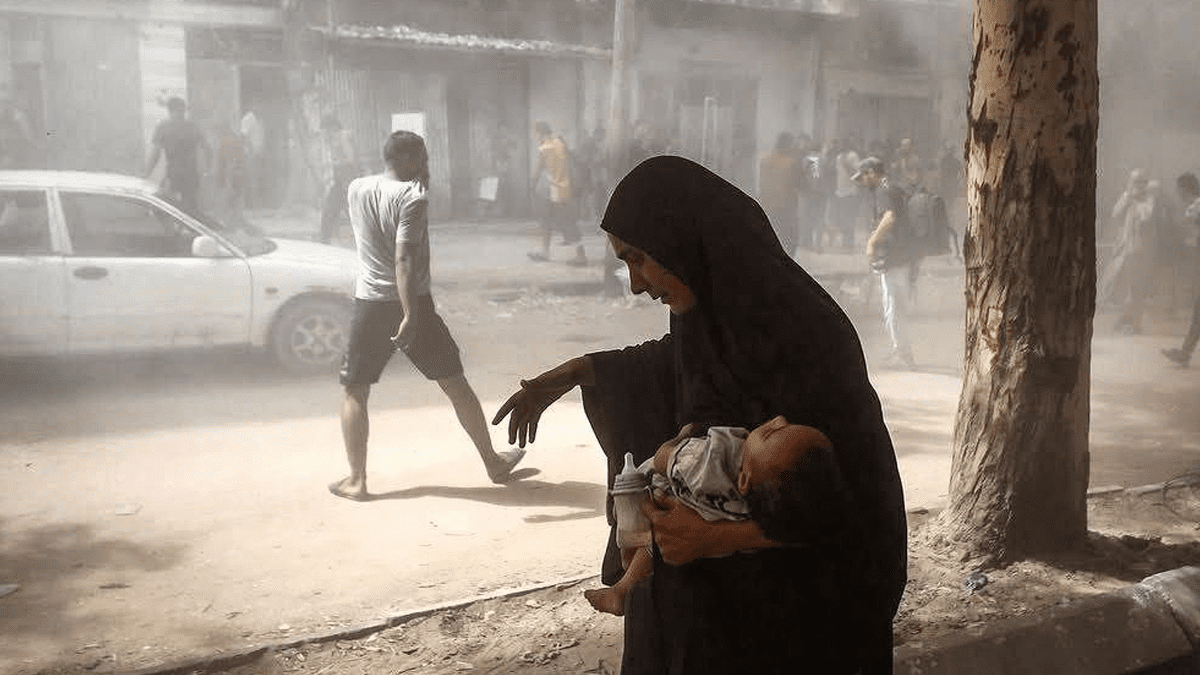
The Christmas season has passed, but it leaves the Christian community in Kerala at an uneasy crossroads. The recent liturgical celebration of the birth of Jesus Christ now sits alongside images emerging from Gaza that show devastation on a scale that makes celebration feel morally fraught. As Palestinian civilians are killed, displaced, and buried under rubble, Kerala Christians are compelled to ask uncomfortable questions that have long been postponed. How should biblical ideas of Israel be understood in the context of modern state violence? Does Christian faith obligate support for the contemporary State of Israel? And what does it mean to proclaim a Gospel of love, peace, and incarnation while remaining indifferent, or selectively compassionate, toward one of the most horrific genocides of our time?
These questions are not abstract. They cut to the heart of how Christianity has been taught, imagined, and lived in Kerala. The community’s ancient self-understanding, its colonial theological inheritance, its relationship with the Middle East, and its unresolved caste hierarchies all converge at this moment. What is at stake is not merely a position on an international conflict, but the moral coherence of Kerala Christianity itself.
At the centre of Christian Zionist claims lies the biblical figure of Abraham, revered as the patriarch of faith. According to the Hebrew Bible, Abraham was called by God from Ur in Mesopotamia and promised that his descendants would inherit the land of Canaan. Christian theology has traditionally followed the Genesis narrative through Isaac, Abraham’s son by Sarah, while Islamic tradition traces descent through Ishmael, Abraham’s son by Hagar. This distinction has often been weaponised to claim exclusive divine entitlement to land.
Yet historians and theologians consistently remind us that Abraham is the shared patriarch of Jews, Christians, and Muslims. Rashid Khalidi, Edward Said Professor of Arab Studies at Columbia University, has repeatedly emphasised in his lectures and writings that Abrahamic lineage cannot serve as a “title deed” for modern territorial claims. Both Jews and Arabs trace their ancestry, spiritual and historical, to Abraham. Any theological argument that grants exclusive divine sanction to one group while erasing the other is therefore deeply flawed.
The concept of “Israel” itself is frequently misunderstood in popular Christian discourse. In the Hebrew Bible, Israel originates not as a state but as a family. Jacob, Abraham’s grandson, was renamed Israel, and his twelve sons became the ancestors of the twelve tribes. Biblical scholars such as Walter Brueggemann of Columbia Theological Seminary have noted that “Israel” in Scripture refers to a covenantal community bound by kinship and memory, not by borders, armies, or modern sovereignty. These tribes - Reuben, Simeon, Judah, and others - were ancient social units, not precursors of a modern nation-state. To collapse this ancient, theological idea of Israel into unconditional support for a contemporary state is to flatten history and distort Scripture.
This distinction becomes crucial when examining the origins of the modern State of Israel. Israel did not emerge as a direct fulfilment of biblical prophecy but as the outcome of a 20th-century nationalist project shaped by European antisemitism, colonial power, and global war. Zionism, as historians such as Ilan Pappé of the University of Exeter and Avi Shlaim of the University of Oxford have documented, arose in late 19th-century Europe as a secular political movement. The Balfour Declaration of 1917, issued by the British government, promised support for a Jewish national home in Palestine while disregarding the political rights of the indigenous Arab population. This promise was later incorporated into the League of Nations Mandate for Palestine in 1922.
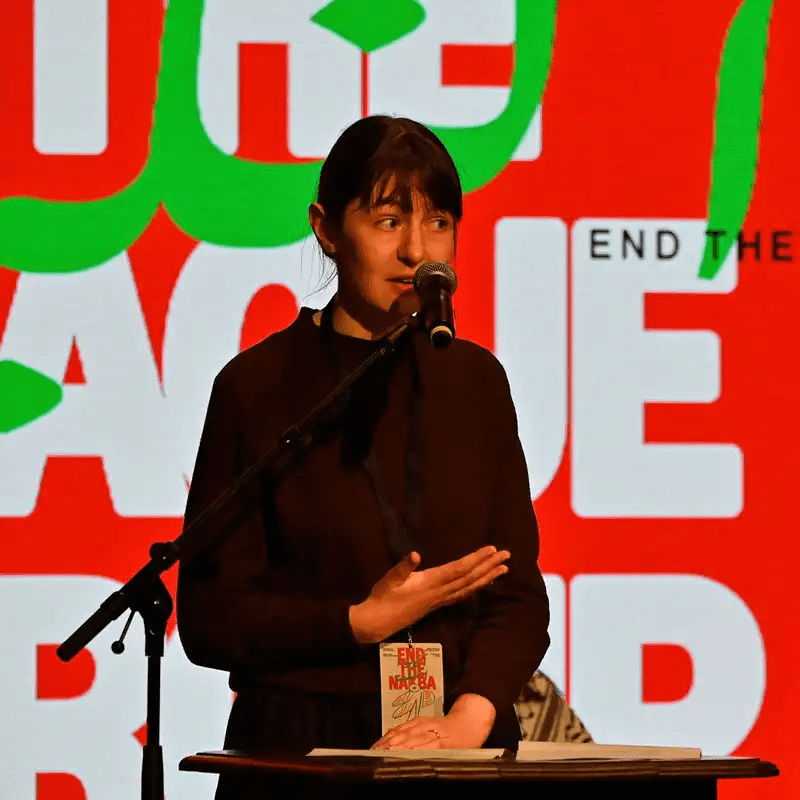
Following the Holocaust and increased Jewish migration to Palestine, tensions escalated. When Israel declared independence on 14 May 1948, an event documented by the U.S. National Archives, it did so without clearly defined borders and during armed conflict. During the genocide that followed, approximately 750,000 Palestinians were expelled or fled from their homes, an event Palestinians remember as the Nakba, or catastrophe. These are not contested fringe claims, but well-established historical facts recognised by mainstream scholarship and even by Israeli “New Historians.” For Kerala Christians, understanding this history is essential. Israel’s formation was the product of modern geopolitics and colonial arrangements, not a simple enactment of divine promise.
Christian theology, however, does not begin or end with ancient covenants. It centres on the life and teachings of Jesus Christ. Jesus was born in Bethlehem, lived in Galilee, and was executed under Roman imperial rule. He was a Jew of the Middle East who spoke Aramaic, observed Jewish law, and lived among the poor and the colonised. In a 2011 judgment, the Supreme Court of India, while discussing the historical origins of Christianity and citing established reference works, noted that “Jesus was a Palestinian Jew,” underscoring Christianity’s Eastern origins rather than its later Western representations. Yet centuries of European art and missionary activity have recast Jesus in Western terms. Art historian Anna House, writing in The Conversation, explains that in the absence of historical images, European artists depicted Jesus using Greco-Roman aesthetics. The widely circulated 20th-century Head of Christ by American artist Warner Sallman, white-skinned and light-eyed, became dominant through missionary circulation, including in India.
In Kerala, this “White Jesus” is not confined to church altars; he occupies living rooms, bedrooms, calendars, prayer cards, school textbooks, and convent walls. Almost every Christian household displays a Europeanized Christ, gentle, pale, detached from the soil of Palestine and from the brown bodies of the global South. This is not an innocent aesthetic choice. As theologians of decolonial Christianity have argued, images shape belief. When Jesus is imagined as Western, Christianity itself becomes aligned, often unconsciously, with Western power, Western suffering, and Western political narratives. The historical Jesus - colonised, brown, Middle Eastern - is rendered distant, even unrecognisable. This visual theology makes it easier to empathise with Western-backed states while remaining emotionally insulated from the suffering of Palestinians, who look nothing like the Christ on our walls.
This detachment has ethical consequences. Jesus’ teachings consistently resist any separation between faith and justice. In the Gospel of Matthew, Jesus declares that the greatest commandment is to love God and love one’s neighbour as oneself. He blesses peacemakers, identifies himself with the hungry, the imprisoned, and the stranger, and repeatedly warns against the seductions of power and wealth. New Testament scholar N. T. Wright has argued that Jesus explicitly rejected nationalist and violent messianism, offering instead a kingdom rooted in justice, humility, and mercy. Any theology that sanctifies state violence while invoking Jesus’ name stands in direct tension with the Gospel.
Nevertheless, Christian Zionist interpretations have found increasing resonance within sections of Indian Christianity. Narratives framing support for Israel as a biblical obligation, and linking such support to divine blessing, have circulated through mission education, evangelical publications, televangelism, and transnational church networks rooted largely in the West. Historian Donald M. Lewis, a scholar of evangelical history and Christian Zionism, has traced how Christian Zionist theology emerged within British evangelicalism and expanded transatlantically into the United States. Scholars building on this work have shown how these ideas later travelled into the Global South through missionary activity, evangelical media, and global church networks. In Kerala, sermons, pilgrimages, and church publications have often presented modern Israel as sacred space rather than as a contested land inhabited by living communities.
This theological framing has contributed to the erasure of Palestinian Christians, who are among the oldest Christian communities in the world. Reverend Munther Isaac of the Evangelical Lutheran Christmas Church in Bethlehem, speaking during Christmas 2023, noted that there were no celebrations in Bethlehem, no lights, no festivities, only mourning and rubble. His sermons, delivered from the birthplace of Jesus, ask how Christians can celebrate the incarnation while ignoring the suffering of those who live where Christ was born. These voices, however, rarely receive the same amplification in Kerala churches as pro-Israel narratives.
Kerala’s own history complicates this further. The state has long-standing ties with the Middle East through trade and migration. Sociologist Filippo Osella of the University of Sussex describes this relationship as producing a “transregional familiarity” that shapes political sympathies. This partly explains why large sections of Kerala society, across religious lines, have mobilised in solidarity with Palestinians. Yet some Christian organisations have organised prayer rallies explicitly supporting Israel, framing it as spiritual kinship. This division reflects deeper theological and historical fractures within Kerala Christianity.
To address these fractures honestly, Kerala Christians must also re-examine their own origins. The popular narrative that St. Thomas the Apostle converted Brahmins in the first century is increasingly rejected by historians. M. G. S. Narayanan, former chairman of the Indian Council of Historical Research, has repeatedly stated that there is no archaeological or textual evidence supporting mass Brahmin conversions by St. Thomas. Historian Susan Bayly, in Saints, Goddesses and Kings, argues that this narrative emerged much later as a means of claiming high-caste status within a deeply hierarchical society. Richard Eaton similarly cautions against projecting later caste identities onto early Christian communities. Christianity in Kerala likely developed through West Asian trade networks and gradual social processes, not through elite Brahmin conversions.
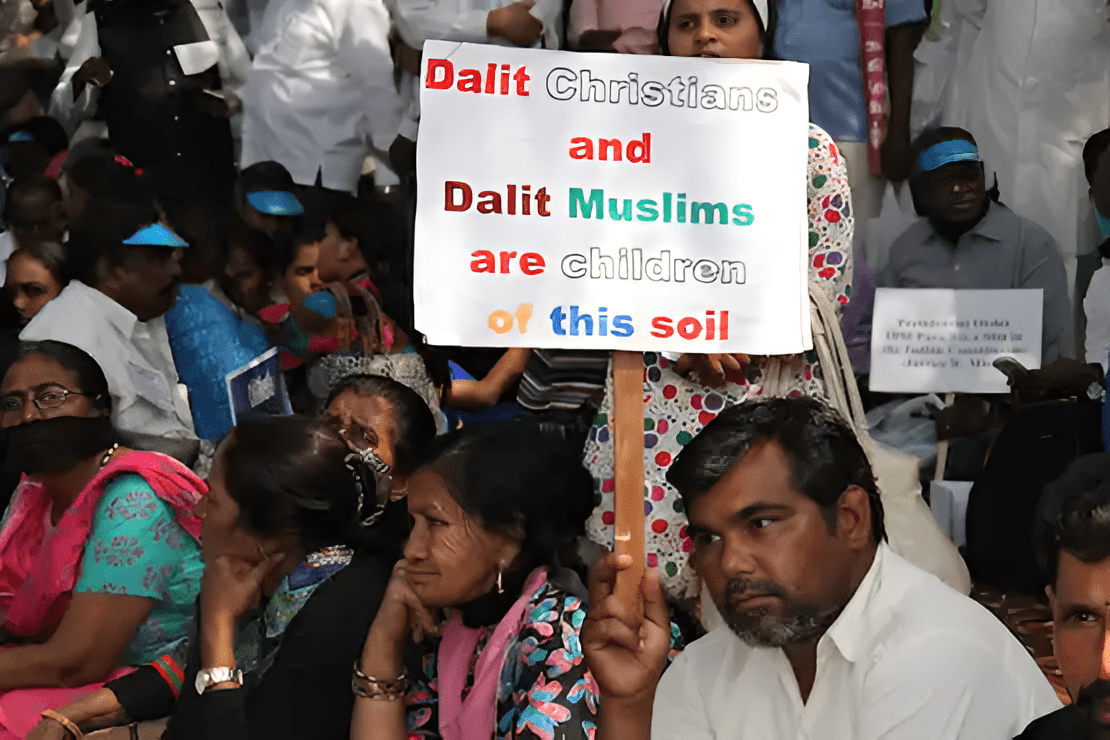
The persistence of this myth reveals an anxiety that continues to shape Kerala Christianity: the desire for Savarna respectability. This desire has consequences. Although Christian doctrine rejects caste, sociologists such as Rowena Robinson have documented how caste discrimination persists within Indian Christian institutions. Dalit and Adivasi Christians face exclusion in church leadership, marriage practices, burial grounds, seminaries, and educational institutions. Savarna Christians often reproduce social hierarchies while claiming moral superiority through religious identity. This contradiction undermines Christian claims to justice and equality.
The silence of many Savarna Christians on Palestinian suffering must be read alongside this internal caste blindness. Solidarity cannot be selective. Liberation theologians such as A. P. Nirmal have long argued that faith without justice is empty. A Christianity that defends state violence abroad while ignoring oppression at home risks becoming an ideology rather than a Gospel.
The genocide in Gaza intensifies this moral challenge. According to the United Nations Office for the Coordination of Humanitarian Affairs and statements by UN Special Rapporteur Francesca Albanese, the scale of civilian suffering raises grave concerns under international law. Speaking before the UN Human Rights Council in Geneva in November 2023, Albanese warned that mass displacement and civilian casualties may constitute serious violations of international humanitarian law.
Christmas commemorates a God who chose vulnerability over power, incarnation over empire. Jesus was born into a family that soon became refugees fleeing state violence. To celebrate this story while excusing or ignoring the suffering of other refugee families is to hollow out the meaning of the festival.
For Kerala Christians, this moment calls for more than slogans. It calls for historical honesty, theological courage, and ethical consistency. The shared heritage of Abraham demands humility, not supremacy. The life of Jesus demands solidarity with the oppressed, not alignment with power. And Kerala’s own Christian history demands that Savarna Christians' confronts caste, colonial inheritance, and selective compassion.
References
- Albanese, F. (2023) Statement to the United Nations Human Rights Council on the situation in the Occupied Palestinian Territory. Geneva: United Nations Human Rights Council.
- Bayly, S. (1989) Saints, Goddesses and Kings: Muslims and Christians in South Indian Society, 1700–1900. Cambridge: Cambridge University Press.
- Brueggemann, W. (1997) Theology of the Old Testament: Testimony, Dispute, Advocacy. Minneapolis: Fortress Press.
- Eaton, R.M. (2000) Essays on Islam and Indian History. New Delhi: Oxford University Press.
- House, A. (2020) ‘How Jesus became white’, The Conversation, 24 December. Available at: https://theconversation.com (Accessed: 7 December 2025).
- Isaac, M. (2023) Christmas sermon from Bethlehem. Evangelical Lutheran Christmas Church, Bethlehem.
- Khalidi, R. (2020) The Hundred Years’ War on Palestine. New York: Metropolitan Books.
- Lewis, D.M. (2010) The Origins of Christian Zionism: Lord Shaftesbury and Evangelical Support for a Jewish Homeland. Cambridge: Cambridge University Press.
- Lewis, D.M. (2021) A Short History of Christian Zionism. London: SPCK.
- Narayanan, M.G.S. (2013) ‘Perumals of Kerala: Political and social conditions’, Indian Historical Review, 40(1), pp. 1–25.
- Osella, F. and Osella, C. (2009) ‘Muslim entrepreneurs in public life between India and the Gulf: Making good and doing good’, Journal of the Royal Anthropological Institute, 15(S1), pp. S202–S221.
- Pappé, I. (2006) The Ethnic Cleansing of Palestine. Oxford: Oneworld.
- Robinson, R. (2003) Christians of India. New Delhi: Sage Publications.
- Shlaim, A. (2000) The Iron Wall: Israel and the Arab World. London: Penguin Books.
- Supreme Court of India (2011) P.M.A. Metropolitan v. Moran Mar Marthoma, Civil Appeal Nos. 5707–5710 of 2004, judgment dated 9 August.
- United Nations Office for the Coordination of Humanitarian Affairs (OCHA) (2023) Humanitarian situation reports: Occupied Palestinian Territory. New York: United Nations.