Sharjeel Imam completes six years in prison

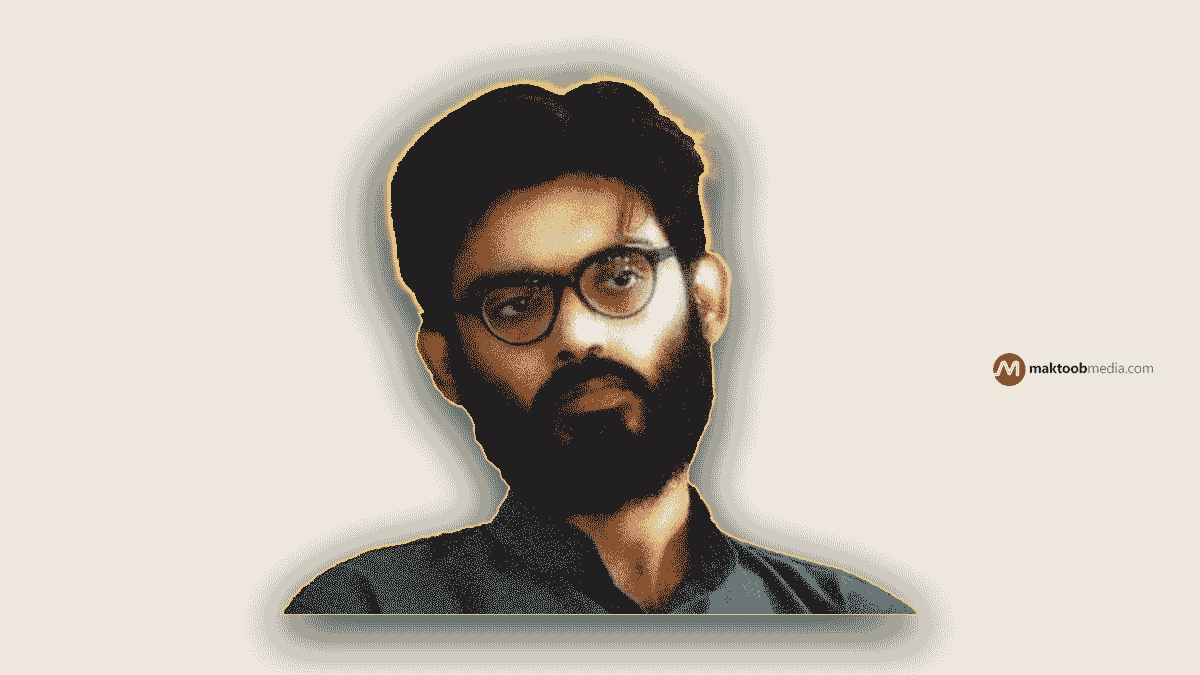
Today, January 28, 2026 marks six years since Sharjeel Imam, a Jawaharlal Nehru University research scholar and prominent face of the anti-Citizenship Amendment Act (CAA) movement, was arrested and jailed under draconian laws including sedition and the Unlawful Activities (Prevention) Act (UAPA).
Imam, now 36, was arrested on January 28, 2020, after an intense online hate campaign and multiple FIRs filed by police in five states for speeches he delivered during the nationwide protests against the CAA and the proposed National Register of Citizens (NRC).
The Citizenship Amendment Act (CAA) and the proposed National Register of Citizens (NRC) were widely criticised as discriminatory and communally biased measures that disproportionately target Muslims and risk rendering many people stateless or reducing them to second-class citizenship.
The CAA, passed in 2019, fast-tracks Indian citizenship for non-Muslim migrants, Hindus, Sikhs, Buddhists, Jains, Parsis, and Christians, from Pakistan, Afghanistan, and Bangladesh who entered India before December 31, 2014, while explicitly excluding Muslims, a provision many have described as religious discrimination and a violation of India’s secular principles and the guarantees of equality and life under Articles 14 and 21 of the Constitution.
During the historic anti-CAA movement, Imam had called for “chakka jam,” road blockades as a form of protest.
The police in Delhi, Uttar Pradesh, Assam, Manipur and Arunachal Pradesh registered cases against him, accusing him of making “secessionist” and “inflammatory” speeches.
He was later booked in the Jamia protest case and the Delhi violence conspiracy case under UAPA.
The police alleged that his speeches contributed to tensions leading up to the February 2020 northeast Delhi pogrom. However, no violence took place during or immediately after the Aligarh speech of January 16, 2020, the speech that forms the core basis of the conspiracy case against him.
Sharjeel Imam is widely believed to have been among the key intellectual architects of the Shaheen Bagh protest, the 100-day peaceful sit-in that became the symbol of resistance against the CAA.
An exceptional academic, Imam hails from Jehanabad in Bihar, is an IIT Bombay graduate, a software engineer, and a prolific writer.
He holds a Master’s degree in Modern History and Philosophy from JNU, received the Maulana Azad National Fellowship, cleared the NET, and was eligible for an assistant professorship. Before his arrest, he had never had any encounter with the criminal justice system.
Eight FIRs were registered against him. He has received bail in seven of them, including UAPA and sedition cases, with courts in multiple orders noting that he did not call for violence.
He remains in jail only in the Delhi riots conspiracy case under UAPA, in which his bail was rejected despite the absence of any direct evidence linking his speech to the violence.
He was arrested in this case six months after the FIR was filed.
Recently, four co-accused, Gulfisha Fatima, Shifa Ur Rehman, Mohd Saleem Khan, and Meeran Haider, were released after spending over 2,000 days in jail.
However, the Supreme Court denied bail to Sharjeel Imam, Umar Khalid, Athar Khan, Khalid Saifi, Tahir Hussain, Salim Malik, and Tasleem Ahmed observing that a “prima facie” case under UAPA existed.
The decision triggered widespread criticism from human rights organisations, legal experts, families of the incarcerated, political leaders, and civil society.
Reacting to the verdict, Sharjeel Imam welcomed the release of his co-accused but condemned what he described as the “criminalisation of protest.”
“Umar and I are being punished for organizing and spearheading what was probably the most important mass protest in recent Indian history. The judgment criminalizes organised protests and treats disruption as a terrorist act. This blurs the distinction between terrorism and democratic dissent,” he said.
Speaking about his personal circumstances, he said that“My only concern is the physical and mental health of my elderly mother. Apart from that, I remain optimistic. Inshallah, the truth will prevail.”
Quoting Faiz, he wrote, “Dil na-umeed to nahin, naakam hi to hai…”
His brother Muzammil Imam called the ruling deeply disappointing and arbitrary.
“If seven accused are in the same case and only two are denied bail, where is the substance of conspiracy? They have been in jail for years. Now we can’t even apply for bail for another year. This is farcical,” he said.
Earlier, Sharjeel Imam withdrew from the 2025 Bihar Assembly elections after the Delhi High Court rejected his bail plea on September 2, 2025, and the Supreme Court declined to grant him interim relief.
In a statement, Imam said they had hoped he would be out on bail in time to campaign, but restrictions on him as a “political prisoner” made it impossible to reach voters or conduct an effective campaign.
Six years on, Sharjeel Imam remains in prison, a symbol for many of how India’s anti-terror laws are being used to incarcerate dissent and criminalise protest.
“I have already spent nearly four years in jail, and while I did anticipate being imprisoned on trumped-up charges due to my involvement in Shaheen Bagh, I had mentally prepared myself for it. As Ghalib wrote, “ḳhana-zad-e-zulf hain zanjir se bhagenge kyuun hain giraftar-e-wafa zindan se ghabaravenge kya” (“Why should the prisoner fear the chains of loyalty, when those bound by love run from them?”). What I did not expect, however, was to be accused of “terrorism,” especially for riots that occurred a month after my arrest. This speaks to the lengths the current regime will go to to suppress dissent and keep people like me behind bars,” Sharjeel earlier wrote in an article which he sent two years ago to Maktoob from jail.
Hw went on to say: “The only real anguish I feel in this prolonged and unnecessary incarceration is the thought of my ageing and ailing mother. My father passed away nine years ago, and since then, it has just been me and my younger brother to support her. Apart from this, I submit to God’s will and spend my time reading as much as I can. As long as I have meaningful and interesting books, I find solace, and the world outside doesn’t affect me much.”