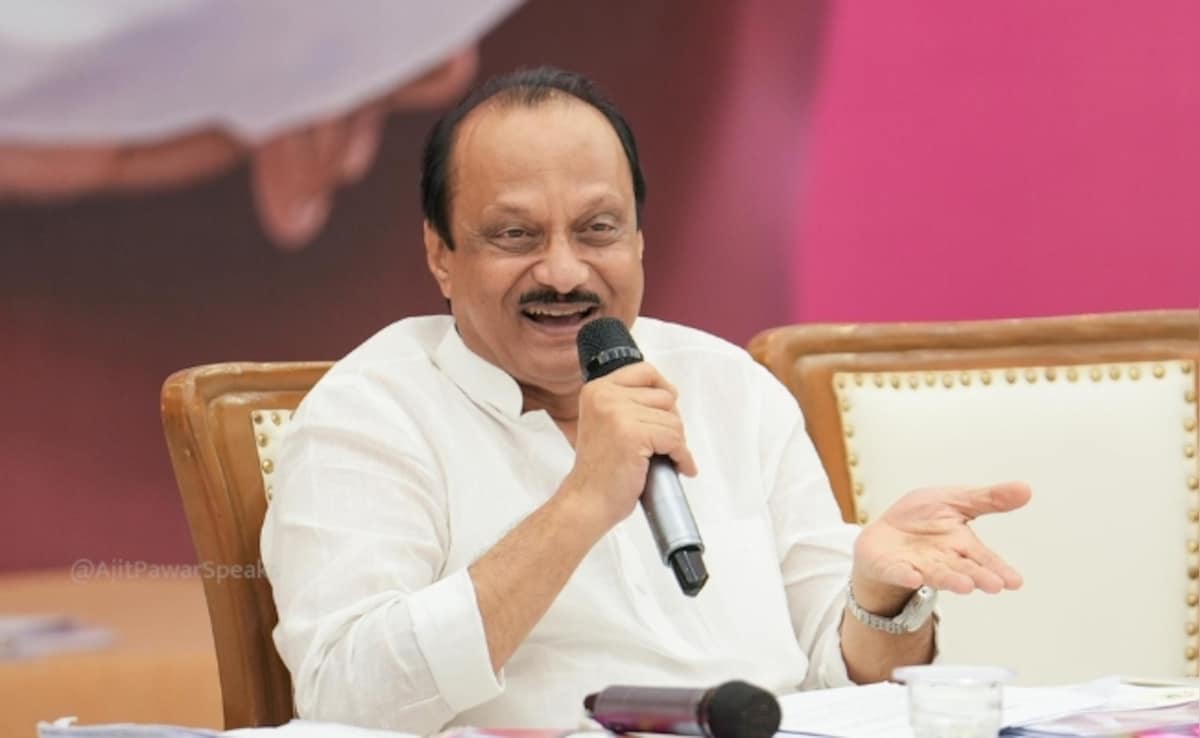
Ajit Pawar, the power broker who dominated Maharashtra politics

Ajit Pawar, one of the most influential and prominent figures in Maharashtra politics and the state’s Deputy Chief Minister, died on Wednesday after the aircraft he was travelling in crashed while attempting to land at Baramati airport in Pune district.
Two pilots and his security personnel were also killed in the accident.
Born on July 22, 1959, in Deolali Pravara in Ahmednagar district, Ajit Pawar grew up in a family deeply embedded in Maharashtra’s political and cooperative movements.
His father, Anantrao Pawar, died when Ajit was just 18, forcing him to shoulder family responsibilities early in life. It was during these formative years that he became closely associated with farmers’ issues and the cooperative sector, a space that would shape both his politics and his power base.
He began his public life in 1982, when he was elected to the board of a sugar cooperative. Over the next decade, he built a formidable network across sugar factories, milk unions and cooperative banks in western Maharashtra. In 1991, he became chairman of the Pune District Cooperative Bank, a post he held for 16 years.
That same year marked his formal entry into electoral politics. He was elected to the Lok Sabha from Baramati in 1991, before shifting to state politics and winning the Baramati Assembly seat, a constituency he would go on to represent continuously for more than three decades.
In 2024, he won the seat for the eighth time with a margin of over one lakh votes.
The nephew of NCP founder Sharad Pawar, Ajit Pawar rose steadily within the party, earning a reputation as a no-nonsense administrator with a firm grip over the state machinery.
Over the years, he handled some of the most powerful portfolios in Maharashtra, including finance, irrigation, water resources and rural development, becoming central to the state’s budget-making and bureaucratic decision-making.
He served multiple terms as Deputy Chief Minister, making him one of the longest-serving politicians in that role. His political career, however, was marked as much by bold manoeuvres as by controversy.
Though his career unfolded under the towering presence of Sharad Pawar, Ajit Pawar was driven by a constant desire to establish an identity of his own. Over time, he came to see himself as the natural political heir within the NCP.
This, however, created unease within the Pawar family’s political circle, especially after Sharad Pawar’s daughter Supriya Sule entered electoral politics in 2009 and later when Rohit Pawar emerged as a third-generation leader.
Ajit Pawar first publicly broke ranks with the party leadership in 2004, when the NCP conceded the chief minister’s post to the Congress despite being the single-largest party.
In 2012, he resigned as Deputy Chief Minister over allegations linked to irrigation projects, triggering a crisis that threatened the survival of the Congress–NCP government. Sharad Pawar intervened to prevent its collapse, and Ajit Pawar later returned to office.
Ahead of the 2019 Assembly elections, he briefly resigned as MLA and withdrew from public view after the Enforcement Directorate named him and Sharad Pawar in a money-laundering case linked to the Maharashtra State Cooperative Bank. He later returned, emotionally denying any wrongdoing.
In November 2019, he executed one of the most dramatic political moves in Maharashtra’s history. As the NCP, Congress and Shiv Sena negotiated a coalition, he broke away and formed a government with the BJP.
In a surprise early-morning ceremony, Devendra Fadnavis was sworn in as Chief Minister and Ajit Pawar as Deputy Chief Minister. The experiment collapsed within 80 hours after it became clear he did not have the support of the NCP legislature party. He returned to the NCP and later became Deputy Chief Minister again in the Maha Vikas Aghadi government.
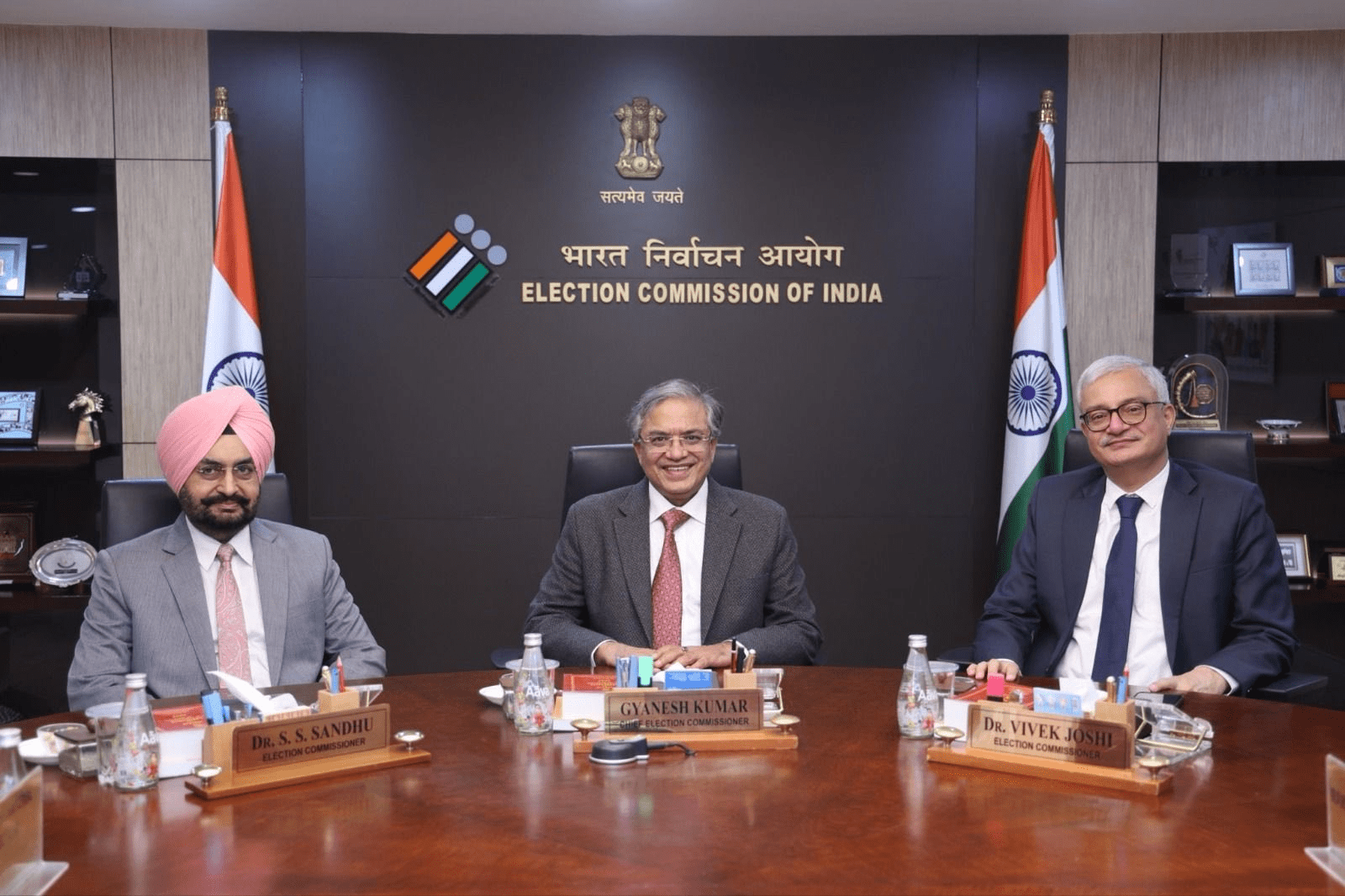
In July 2023, he staged his most consequential break by splitting the Nationalist Congress Party and joining the BJP-led Mahayuti government with the backing of a large group of MLAs. The move formally divided the NCP and ended decades of political unity within the Pawar family. The Election Commission later recognised Ajit Pawar’s faction as the official NCP and granted it the party name and symbol, while Sharad Pawar’s group continued as NCP (SP).
By December 2024, he took oath as Deputy Chief Minister for the sixth time, cementing his position as a central power in Maharashtra politics. In the 2024 Assembly elections, his party, as part of the BJP-led Mahayuti, won 41 of the 59 seats it contested, securing around 9 percent of the vote share.
Despite repeated political storms, Ajit Pawar’s base in Baramati and surrounding regions remained remarkably solid. His strength lay in his tight organisational control, deep roots in the cooperative sector, and relentless grassroots outreach. Known for his fast-paced working style, blunt speech, and regular Janata Darbars, he cultivated the image of a leader constantly accessible to the public.
Often called “Dada” by supporters and colleagues alike, he was seen as a politician who combined administrative command with sharp political instincts, a leader who understood both Mantralaya and the countryside.
At the time of his death, Ajit Pawar was serving as Deputy Chief Minister in the Maharashtra government. He is survived by his wife Sunetra Pawar, a Rajya Sabha MP, and two sons, Parth and Jay.
Ajit Pawar was known for his blunt, no-nonsense style of speaking, which often won him admiration for candour but also landed him in repeated controversies. The most infamous was his 2013 Indapur remark during a drought, when he made a crude joke about “urinating” into a dam to release water, triggering widespread outrage and forcing him to apologise, later calling it the biggest mistake of his life.
Over the years, he also drew criticism for remarks such as telling voters “you have votes, I have funds” during election campaigns, a comment seen as implying quid pro quo politics.
Yet in recent years he also positioned himself as a defender of communal harmony, warning against hate speech and divisive slogans and insisting that Maharashtra’s political culture must remain inclusive.
In one of his last notable political signals, when asked about a possible reunion of the two NCP factions, he replied with a light-hearted Marathi idiom, “may there be sugar in your mouth” hinting at reconciliation.
His demise comes just days after Shiv Sena (UBT) leader Sanjay Raut claimed that the two factions of the NCP would reunite and that Ajit Pawar would return to the Maha Vikas Aghadi, saying his heart was with his family.
His sudden death leaves a significant void in Maharashtra politics. In a state long shaped by coalition arithmetic and regional power centres, Ajit Pawar’s absence is likely to reshape political equations and alter the balance of power in the months to come.
Prime Minister Narendra Modi expressed grief over the tragedy, saying, “I am deeply saddened by the tragic plane crash that occurred in Baramati, Maharashtra. I share in the grief of all those who have lost their loved ones in this accident. I pray that the bereaved families find strength and courage in this moment of sorrow.”
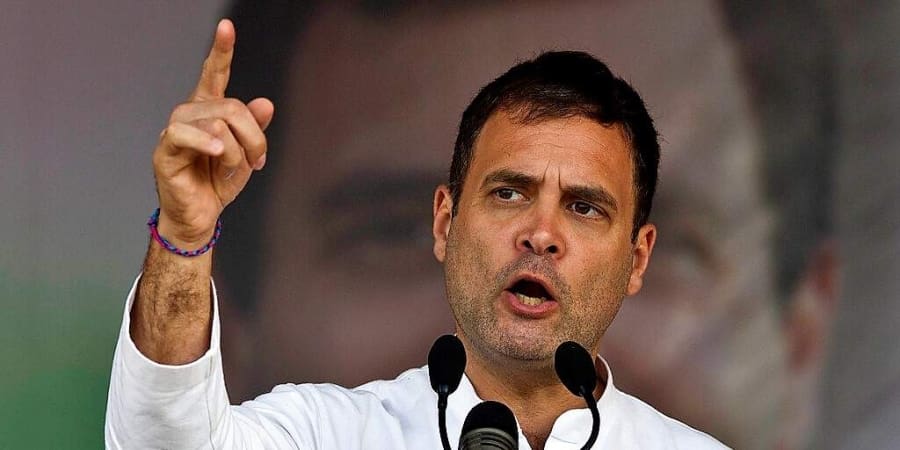
Leader of the Opposition Rahul Gandhi also condoled Ajit Pawar’s death, calling the news “extremely heartbreaking.” “In this moment of grief, I stand with the people of Maharashtra. I extend my condolences to the entire Pawar family and their loved ones during this hour of sorrow,” he said.
A huge crowd gathered outside the Baramati hospital as the mortal remains of Maharashtra Deputy Chief Minister and NCP leader Ajit Pawar were brought there following the tragic plane crash.
Deputy Chief Minister Eknath Shinde announced that the accident would be probed, calling it an “extremely painful and unfortunate incident” and saying such a tragedy was “unimaginable.” “This is a sad day for Maharashtra. Ajit Pawar had a strong grip on administration and was studious and articulate,” Shinde said.
Meanwhile, Chief Minister Devendra Fadnavis announced a government holiday in Baramati and declared three days of state mourning.