Union Budget 2026–27: Key takeaways

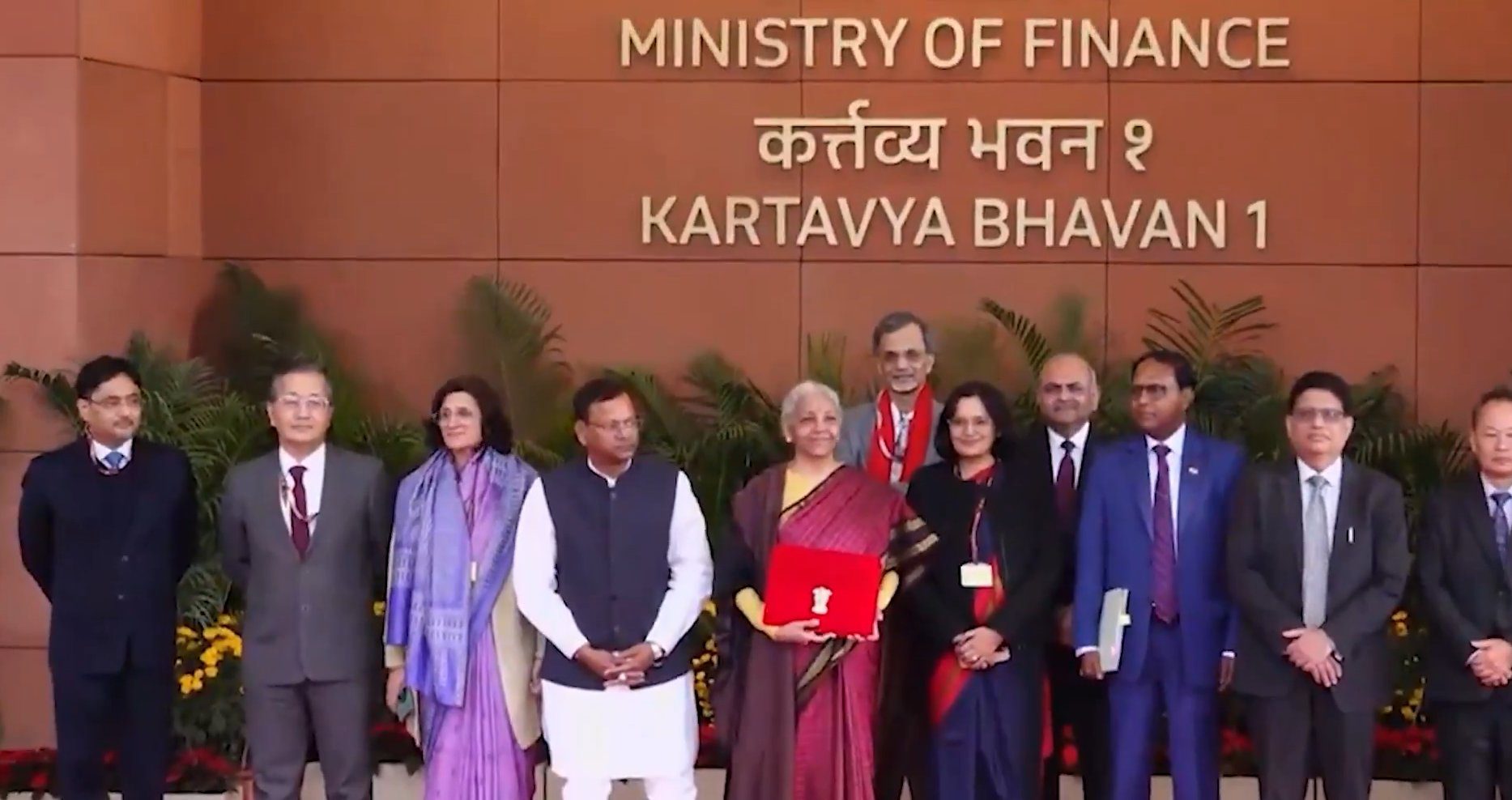
Finance Minister Nirmala Sitharaman presented her ninth Budget in the Parliament on Sunday. While there were no changes announced in the income tax slabs, Sitharaman announced the implementation of the New Tax Act from April 1, 2026. This was the first time in the history of India that the Union Budget is being presented on a Sunday.
No Change in Income Tax Slabs; Filing Timelines Tweaked
Union Finance Minister Nirmala Sitharaman on Sunday tabled the Union Budget for the financial year 2026–27, announcing no changes to income tax rates or slabs.
She said income tax filing timelines will be staggered, and the deadline for revising filed income tax returns will be extended from December 31 to March 31, subject to payment of a nominal fee.
However, the deadline for filing ITR-1 (for salaried individuals and pensioners earning up to ₹50 lakh) and ITR-2 (for individuals and Hindu Undivided Families not covered under ITR-1) will continue to remain July 31.
New Income Tax Act to Replace 1961 Law from April
Sitharaman confirmed that the Income Tax Act, 2025, which replaces the six-decade-old Income Tax Act of 1961, will come into effect from April 1.
The legislation was cleared by Parliament in August last year.
Fiscal Deficit and Debt Levels See Marginal Improvement
India’s fiscal deficit for FY 2026–27 has been estimated at 4.3% of gross domestic product, marginally lower than the 4.4% projected for 2025–26.
The country’s debt-to-GDP ratio is estimated at 55.6%, down from the revised estimate of 56.1% in the previous fiscal year.
Last year, Sitharaman had stated that the government was targeting a debt-to-GDP ratio of 51% by 2030–31.
Government Spending and Tax Collections
The Union government’s total expenditure is projected at ₹53.5 lakh crore in FY 2026–27.
Net tax receipts are estimated to be ₹28.7 lakh crore, according to the finance minister.
States to Receive ₹1.4 Lakh Crore as Finance Commission Grants
The Union government has accepted the 16th Finance Commission’s recommendation to retain the vertical devolution share at 41%.
As a result, states will receive ₹1.4 lakh crore in FY 2026–27 as Finance Commission grants, including allocations for rural and urban local bodies and disaster management.
Capital Expenditure Pushed Up; Infrastructure Focus
Capital expenditure has been proposed at ₹12.2 lakh crore, up from ₹11.2 lakh crore in the current fiscal year.
Sitharaman announced:
- A new dedicated freight corridor connecting Dankuni in West Bengal and Surat in Gujarat
- 20 new national waterways
- Seven high-speed rail corridors between major cities
The Ministry of Railways has been allocated ₹2.9 lakh crore, compared to a revised estimate of ₹2.6 lakh crore in 2025–26.
MGNREGA Replaced by VB-G RAM G Act Amid Opposition
The Budget allocated ₹95,691 crore for the Viksit Bharat–Guarantee for Rozgar and Ajeevika Mission (Gramin) scheme.
The VB-G RAM G Act, which replaced the Mahatma Gandhi National Rural Employment Guarantee Act (MGNREGA) in December, increases guaranteed workdays from 100 to 125.
Under the new law:
- The Union government will continue to bear wage costs
- States’ share of costs will rise to 40%, covering material and administrative expenses
The legislation was passed by Parliament amid protests by Opposition parties and has drawn criticism from economists and labour rights experts.
Khadi, Handloom and Handicrafts Push
Sitharaman also announced the launch of the Mahatma Gandhi Gram Swaraj initiative to strengthen khadi, handloom and handicrafts.
“This will help in global market linkage and branding,” she said, adding that the initiative will support training, skilling, quality processes, and production.