Allahabad HC flags continued “bulldozer justice” despite Supreme Court guidelines

Expressing concern over the alleged manner in which executive powers are being exercised in Uttar Pradesh, the Allahabad High Court recently observed that punitive demolitions continue in the State despite the Supreme Court’s November 2024 judgment in the “Bulldozer Justice” case, Live Law reported.
The Court questioned whether demolishing a structure immediately after the commission of an alleged offence amounts to a colourable exercise of executive discretion.
A Division Bench comprising Justice Atul Sreedharan and Justice Siddharth Nandan noted that in several cases, demolition notices were issued to occupants immediately after an offence was registered, and structures were subsequently demolished after a purported compliance with statutory requirements.
‘Observing that the matter raises overarching constitutional concerns involving the State’s power to demolish structures and the fundamental rights of occupants under Articles 14 and 21, the Bench framed a series of legal questions for consideration.
The Court sought to examine whether there had been non-compliance with the Supreme Court’s November 2024 ruling, particularly paragraphs 85 and 86 of the judgment.
It further questioned whether the mere authority to demolish justifies the act itself, or whether the State, under its parents patriae obligation, has a duty to refrain from demolishing a dwelling in the absence of a legitimate public purpose.
The Bench also asked whether initiating demolition proceedings immediately after the commission of an offence constitutes a colourable exercise of executive discretion.
Additionally, it considered how the High Court should balance the State’s statutory authority against the fundamental rights to equality and life under Articles 14 and 21, and whether a “reasonable apprehension” of demolition is sufficient cause for a citizen to approach the Court, including what minimum threshold would establish such apprehension.
These observations were made while hearing a writ petition filed by Faimuddeen and others, who stated that their relative, Aafan Khan, had been named in an FIR under provisions of the Bharatiya Nyaya Sanhita, the POCSO Act, the Information Technology Act, and the Uttar Pradesh Prohibition of Unlawful Religious Conversion Act.
Although they were not accused in the FIR, the petitioners alleged that they were targeted by a mob allegedly acting in collusion with the police.
They informed the Court that their properties in Hamirpur, including a residential house, a commercial lodge, and a saw mill, had been marked for demolition, and that the lodge and saw mill had already been sealed by the authorities. Apprehending imminent destruction, they sought the Court’s intervention to prevent the anticipated demolition.
The State Government raised a preliminary objection, arguing that the petition was premature and that the petitioners should respond to the notices issued to them.
It also gave an oral assurance that no demolition would take place without following due process and granting the petitioners an opportunity to be heard.
However, noting that demolitions have continued in the State despite the Supreme Court’s earlier ruling, the Bench deemed it appropriate to address the constitutional questions it had framed in its order dated January 21.
In 2024, the Supreme Court issued an interim order directing that properties should not be demolished merely because their owners or occupants are accused of involvement in a crime. Invoking its powers under Article 142 of the Constitution, the Court laid down pan-India guidelines to ensure that due process is strictly followed before any demolition of a citizen’s property.
The Court held that demolishing the property of an accused or even a convicted person without adhering to due process is unconstitutional. The case arose from challenges to what were described as “extra-legal” demolitions carried out in states such as Uttar Pradesh, Madhya Pradesh, and Uttarakhand, where homes of individuals accused of crimes had been razed.
To prevent arbitrary action, the Court mandated that a minimum of 15 days’ notice must be given to the property owner or occupier before any demolition is carried out.
The notice must clearly specify the details of the structure proposed to be demolished and the reasons for such action. It must also fix a date for a personal hearing, thereby giving the affected party an opportunity to contest the proposed demolition or clarify their position.
In the interest of transparency, the authorities are required to notify the local Collector or District Magistrate via email upon serving the notice, with an auto-reply acknowledgment to prevent allegations of backdating or tampering. If a final demolition order is passed, it must record the submissions of the owner or occupier, explain why demolition is considered the only viable option, and specify whether the action concerns the entire structure or only a part of it.
Even after the issuance of a final order, the Supreme Court directed that a further 15-day period must be granted before demolition is executed, allowing the owner or occupier either to remove the structure voluntarily or to challenge the order before a competent court. The Court also mandated that the demolition process be documented through videography and that an inspection report be prepared beforehand, followed by a demolition report listing the officials involved.
Additionally, the Court laid down a specific test for cases where a demolished property houses an accused but is also alleged to violate municipal laws as an illegal construction. It observed that if only one such structure is demolished while other similarly placed constructions remain untouched, it may indicate that the action is punitive in nature rather than a bona fide effort to enforce municipal regulations.
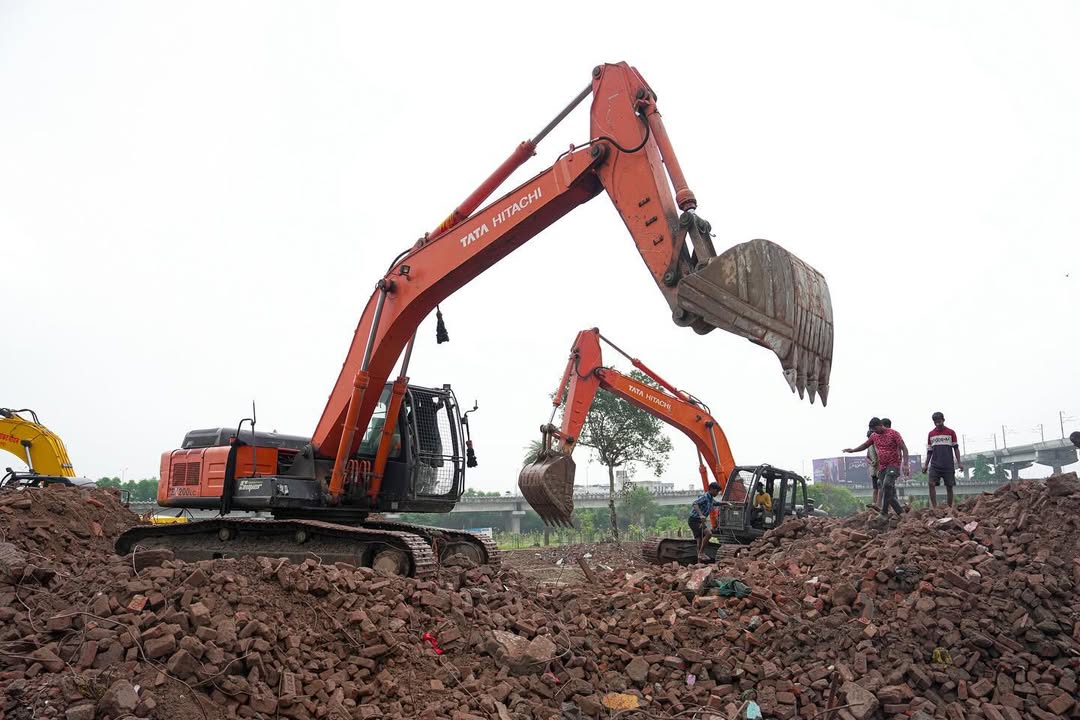
However, despite the Supreme Court’s verdict, “bulldozer justice” continues in several states.
Notably, a POCSO court in Uttar Pradesh’s Ayodhya last week acquitted Samajwadi Party leader Moid Khan in the 2024 gang-rape case after DNA evidence failed to link him to the crime, nearly two years after his arrest had been followed by the demolition of his properties in a bulldozer drive, highlighting the grave and irreversible consequences of punitive demolitions carried out before guilt is judicially established.