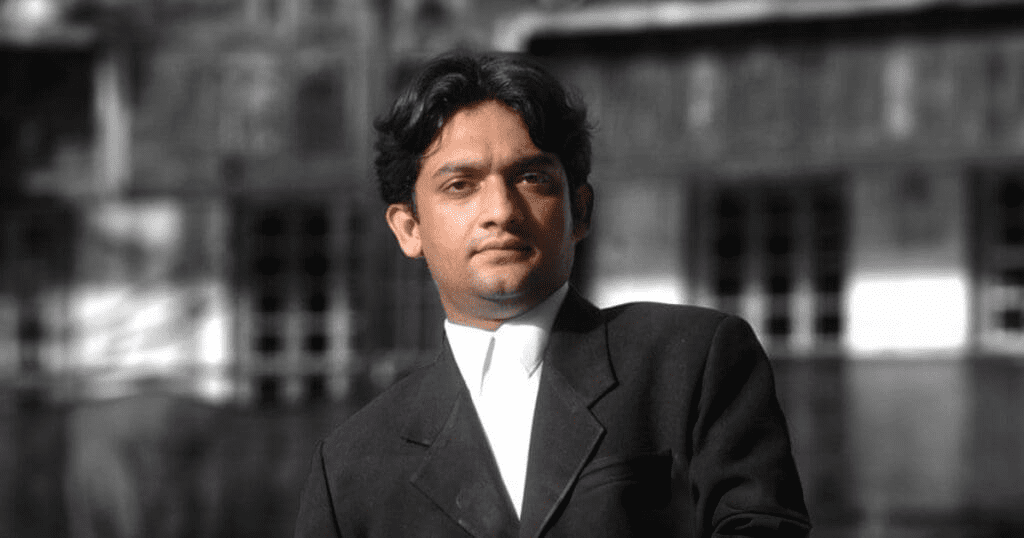
Remembering Shahid Azmi: Lawyer who fought for the wrongfully accused

For seven years, Shahid Azmi stood in courtrooms defending those falsely accused in terrorism cases, insisting on due process and the right to a fair trial, even when doing so invited hostility and risk. Sixteen years ago, on February 11, 2010, lawyer Shahid Azmi was shot dead in his office at Kurla Taximen's Colony in Mumbai. He was just 32 years old.
Azmi was killed by assailants who posed as prospective clients and shot him at point-blank range. He was rushed to hospital, where he was declared dead.
His assassination took place at a time when he had become known for fighting for individuals falsely accused in terrorism-related cases, much like he himself had once been.
Born and raised in Shivajinagar, Mumbai, Shahid Azmi lost his father at a young age. As a teenager, he was deeply affected by the 1992 Mumbai riots. In the aftermath, he briefly left Mumbai and travelled to Kashmir, but returned within months.
In 1994, he was arrested by the Special Investigation Team (SIT) of the Delhi Police on allegations of involvement in a conspiracy to assassinate a political leader.
He spent seven years in prison before being acquitted of all charges in 2001. Azmi later stated that he had been subjected to torture during his custody and forced to sign false confessions.
While in Tihar Jail awaiting trial, he completed his Class 12 education and earned a Bachelor of Arts degree. After his acquittal, he returned to Mumbai, completed his law degree from KC College, and began practising as a criminal defence lawyer.
Azmi went on to represent several individuals accused in high-profile terrorism cases, often taking up cases pro bono. His work included defending those accused in the 2002 Ghatkopar bombing, the 7/11 Mumbai train blasts, the 2006 Aurangabad arms haul case, and the 2006 Malegaon blast case.
In 2008, he filed a petition in the Bombay High Court alleging custodial torture of accused persons in the 7/11 case. An inquiry later confirmed allegations of custodial abuse.
Among the cases he handled was that of Faheem Ansari, accused in connection with the 26/11 Mumbai attacks. Ansari was later discharged by the court, though Azmi did not live to see the outcome.
Over the course of his seven-year legal career, Azmi secured multiple acquittals in cases involving allegations of terrorism. His work focused on due process and fair trial rights, particularly for those he believed were wrongly accused.
In the case relating to his murder, several individuals were arrested and charged under provisions of the Indian Penal Code and the Arms Act. Proceedings in the case have continued over the years, with trial stages progressing gradually.
Shahid Azmi’s work has continued to influence many young lawyers. His younger brother, Khalid Azmi, is now a practising lawyer and has taken up cases involving alleged wrongful incarceration and civil liberties issues.
Abdul Wahid Shaikh, one of the accused acquitted in the 7/11 Mumbai train blasts case, later completed his law degree and has been involved in advocacy concerning wrongful imprisonment.
Sixteen years after his death, Shahid Azmi is remembered for his legal work in defending those accused in sensitive cases and for his emphasis on due process and constitutional rights within the criminal justice system.