Equity on trial: Savarnocracy and UGC’s equity regulations

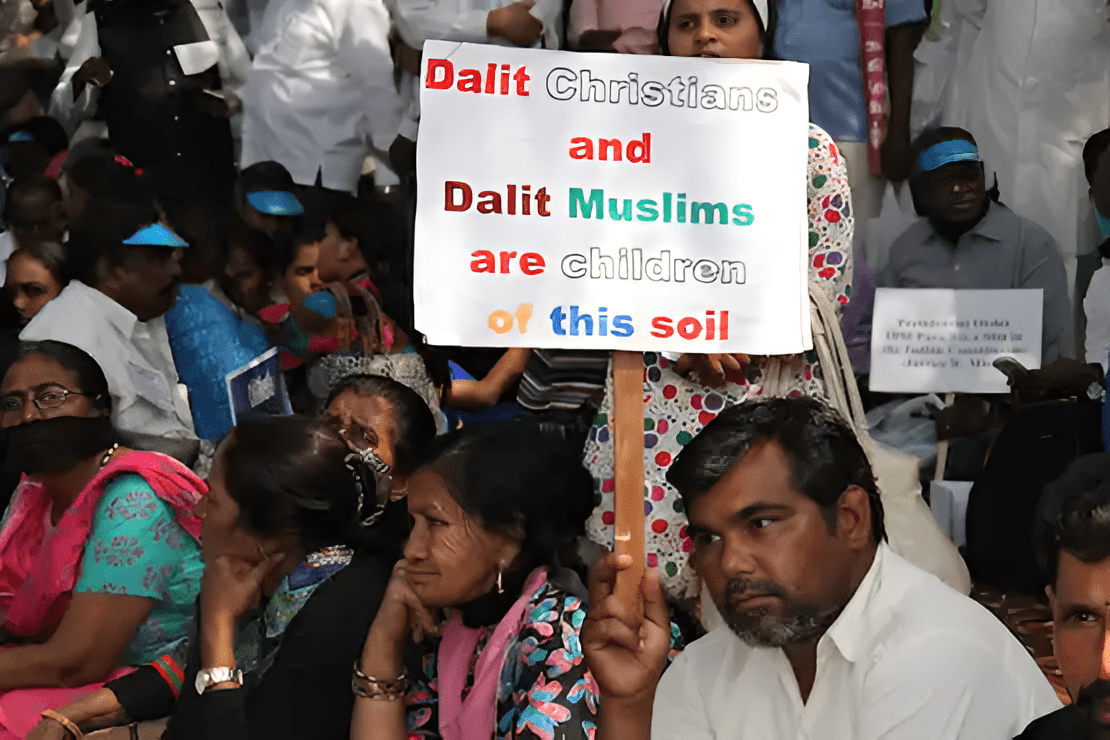
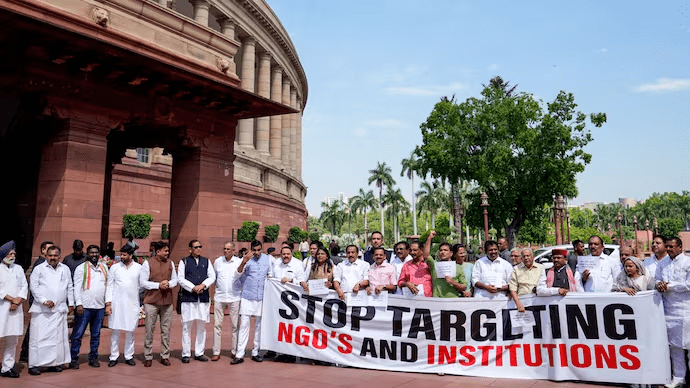
The University Grants Commission (“UGC”) notified the Promotion of Equity in Higher Education Institutions Regulations, 2026 on January 13, 2026, after decades of struggle against caste-based discrimination in Indian higher education institutions. Almost immediately after the notification, a section of students, bureaucrats, and academics from a specific social group – Savarnas or the “General” category- mobilised against the regulation. Their argument was familiar and revealing: caste discrimination does not exist in higher education; Savarna students eat, sit, and live with OBC, SC, and ST students; therefore, no protective regulation is required.
The agitation in the wake of the regulation culminated in a judicial stay by the Supreme Court of India following petitions filed by Mrityunjay Tiwari, Vineet Jindal, and Rahul Dewan against the Union of India. The argument advanced on behalf of the Petitioner was that the regulation discriminates against Savarnas – an argument resembling ‘a lion claiming persecution by a herd of deer’. Metaphorically speaking, this familiar battle as well as argument has been replayed yet again, and ironically, the Supreme Court has sided with the protestors.
When comedian Kunal Kamra, reflecting on a wider public critique, once described the Supreme Court as a ‘Brahmin-Baniya Arbitration Centre’, it was dismissed as irreverent humour. In light of the Supreme Court stay on the regulation, Kamra’s description of the Supreme Court compels one to be sceptical- and for good reasons. That a regulation meant to address caste-based discrimination is being framed as a dangerous, divisive intervention, and the protestors having the backing of the Apex Court in the form of a stay, speaks volumes about the institution and priorities of the Republic.
This article is neither an exercise towards questioning the regulation nor does it seek to defend the same. Instead, it attempts to foreground the deeper philosophical, social, economic, and political questions of Savarnocracy in Indian higher education – a concept I draw from Mahesh C Donia’s article, “Savarnocracy: Uttarakhand – What it takes to build an upper-caste state,” published in The Caravan.
Why equity provokes Savarna backlash
The philosophical foundation of this agitation lies not merely in opposition to the regulation itself, but it has a long gestation period. The long-suppressed Savarna rage, dating back to the early 1990s, when reservations for OBCs were extended to Central government services and public sector institutions on the recommendation of the Mandal Commission, has come to the forefront in a nasty way. Affirmative action in higher education institutions and public employment remains a minimal corrective against centuries of exclusion- a history explicitly codified in texts such as the Manusmriti.
Mythological and historical narratives reinforce the exclusionary logic which forms the logic of protests in the wake of the regulation. Examples abound to this effect: Parshuram teaching only Brahmins; Dronacharya restricting knowledge to Kshatriyas; and Eklavya’s forced sacrifice of his thumb. These are not isolated instances from history; rather, enduring symbols of epistemic violence, cultural domination, and physical coercion exercised against non-Savarna communities. Over centuries, dominant caste groups have institutionalised this hegemony through organisational, cultural, social, and economic power.
One of the petitioners who approached the Supreme Court, in one of his public appeals, has called upon Hindus and Savarna groups to rise against the regulation. Philosophically examining this appeal shows that it is directed against all forms of affirmative action and constitutional protections for non-Savarna communities. This methodology is neither novel nor surprising. Rather, when observed historically, whenever constitutional measures have sought to protect oppressed groups – whether through caste-based safeguards or gender justice – privilege, sections have mobilised against such progressive endeavours. The underlying logic, largely speaking, is quite consistent: the perceived loss of privilege is framed as a greater injustice than the centuries-long suffering of the oppressed. This pattern is not unique to India; globally, movements for equality have always faced backlash from those who benefit from entrenched hierarchies.
From denial to domination
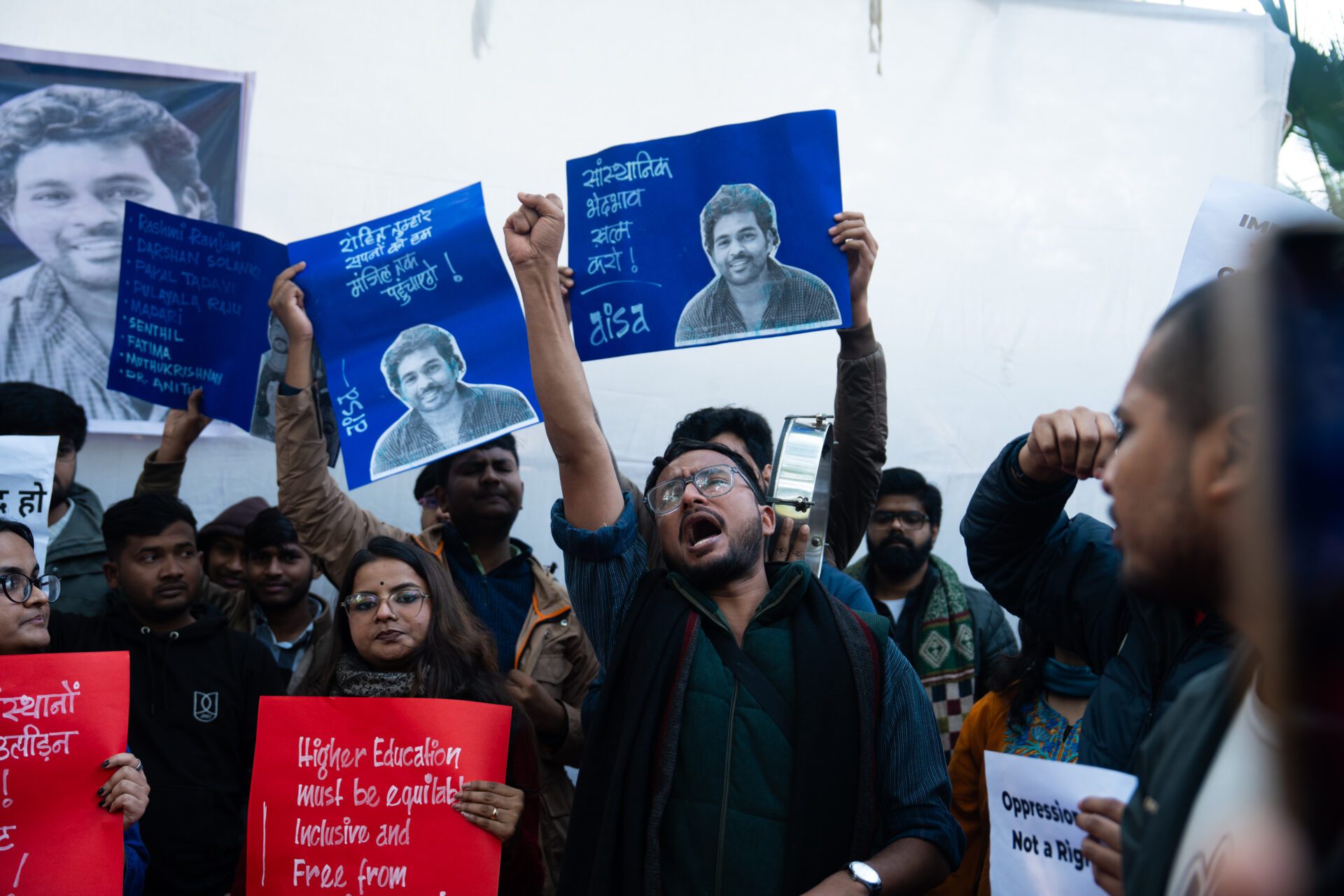
Seven decades after Independence, academic research continues to document the persistence of caste-based discrimination within higher educational institutions. Student suicides, particularly among SC and ST students, which are quite endemic, stand as grim evidence, inter alia, of the mental health violence inflicted by casteist environments created, nurtured, and disseminated by Savarna. This violence is not individual or accidental; it is institutional and systemic, which has been documented by researchers, activists, and human rights organisations. What many scholars and activists have described as the institutional murders of Rohith Vemula and many others, expose the structural oppression faced by first-generation learners coming from marginalised communities, who dared to produce knowledge from the standpoint of the oppressed.
In a short span, scholars from marginalised communities have contributed to the emergence of new epistemologies that question exclusion, representation, and justice, making the subaltern voice part of the mainstream. It is precisely this intellectual intervention that has provoked hostility and resentment from privileged groups – manifesting as what sociology terms micro-aggressions, though their cumulative impact is anything but minor.
The task before epistemologically oppressed communities
Indian society continues to be governed by casteist and brahmanical values at a micro level – a reality often ignored in mainstream discourse despite constitutional guarantees of equality and equity. In this context, Babasaheb Ambedkar’s clarion call to “Educate, Agitate, Organise” remains not just relevant but dangerously urgent. Education as resistance, peaceful agitation as assertion, and collective organisation as survival strategies are indispensable for oppressed communities for both visibility, sustenance and all-around development
Students from marginalised groups must assert their right to belong within the higher education spaces. The struggle ahead is long, as history teaches us that dominant caste groups do not relinquish privilege voluntarily; it is preceded by intense struggle and challenges. Yet the assertion of dignity and presence cannot be deferred.
At the same time, an appeal must be made to privileged groups – to engage with the lived realities of the oppressed, to listen rather than deny, and to recognise the everyday trauma inflicted through caste markers such as surnames, accents, and social origin, rather than dismiss the same. Additionally, those who are served with tags like not-found suitable (NFS) even after hard-earned degrees and merits must be subject to serious scrutiny. Experiencing centuries of historical violence is impossible for those who have not endured it. But understanding, humility, and accountability are not. Only a sincere attempt is to be made. The struggle of oppressed groups in higher educational institutions is not merely about their own emancipation; it is about the humanisation of society per se. As Paulo Freire reminds us in Pedagogy of the Oppressed, “The oppressors do not perceive their monopoly on having more as a privilege which dehumanizes others and themselves.” Until this monopoly is acknowledged and dismantled, the promise of equity in Indian higher educational institutions will remain contested – and unfinished.
Shishu Ranjan is an educational researcher and is associated with the All India Forum for Right To Education. He has studied MSc Education and Social Justice at Birkbeck University of London as a Chevening Scholar