Eminent sociologist Prof. T. K. Oommen dies at 88

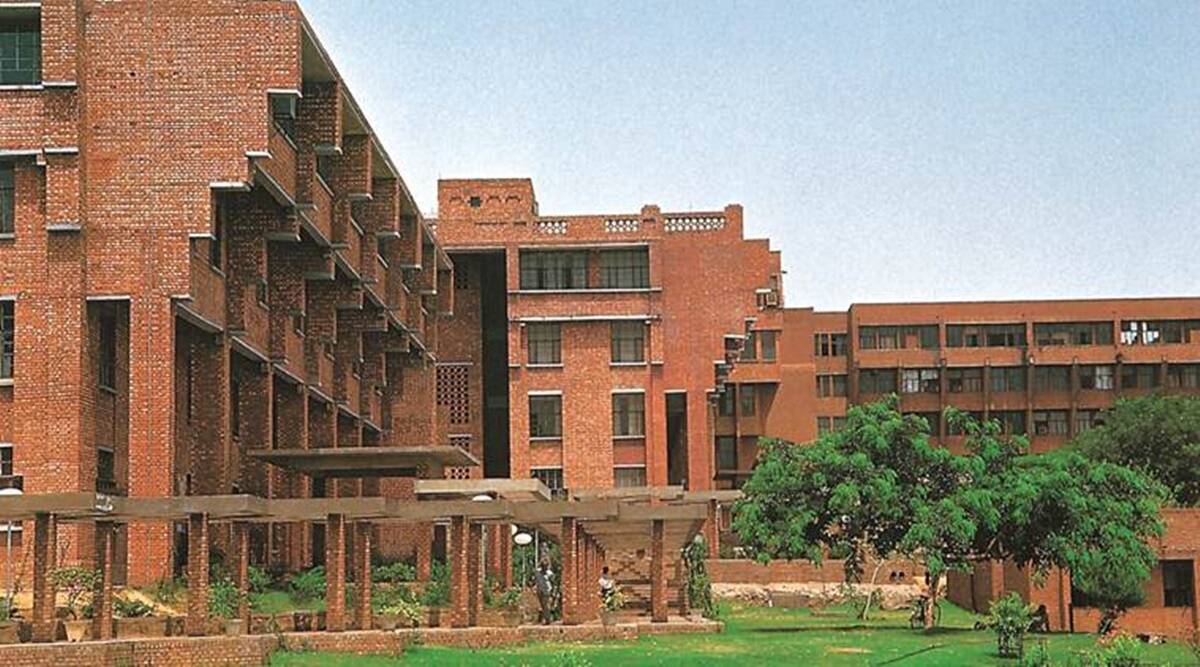
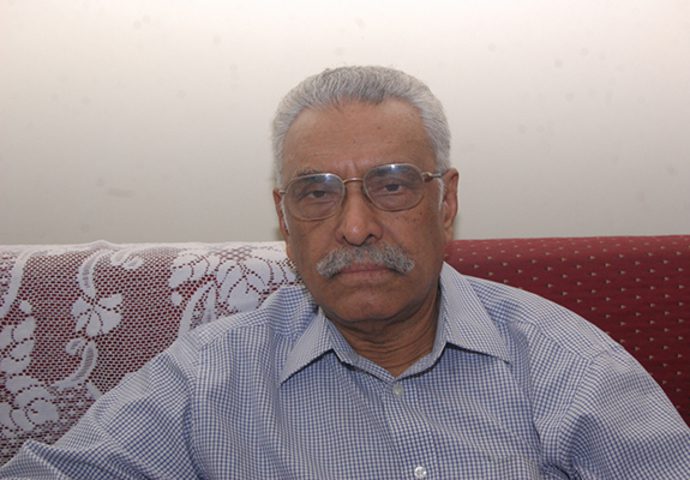
Tharailath Koshy Oommen, known as T.K. Oommen, veteran Indian sociologist, author, teacher, and Professor Emeritus at the Centre for the Study of Social Systems, Jawaharlal Nehru University, has died today.
He was 88.
He was the 12th President of the International Sociological Association (1990–1994).
T.K. Oommen was born on 16 October 1937, the second son of Saramma and Koshy of the Keerikattu family at Tharailath, Venmony, Alleppey, Travancore.
After early schooling in Alappuzha, Oommen obtained his BA in Economics from Kerala University, Thiruvananthapuram, in 1957 and an MA in Sociology from Pune University in 1960. He continued at Pune University for his doctoral research and obtained his PhD in 1965 on Charisma, Stability and Change: An Analysis of the Bhoodan-Gramdan Movement in India under the supervision of Prof. Y. B. Damle.
Oommen started his career as a Lecturer in Social Sciences at the Delhi School of Social Work, Delhi University (1964–70), where he later worked as a Reader in Sociology (1970–71). He then moved to the Centre for the Study of Social Systems (CSSS), Jawaharlal Nehru University, as Associate Professor (1971–76) and later became Professor of Sociology (1976–2002).
He was the Chairman of the Advisory Committee of the Gujarat Harmony Project, which sought to explore the possibility of reconciliation between Hindus and Muslims after the 2002 Gujarat Muslim genocide.
He was also a member of the Prime Minister’s High-Level Committee to study the Social, Economic and Educational Status of the Muslim Community of India, popularly known as the Sachar Committee.
In 2007, he was made Professor Emeritus at Jawaharlal Nehru University.
He was also UGC National Lecturer in Sociology (1985–86); Visiting Professor, Department of Sociology, University of California, Berkeley, USA (Fall 1990); Visiting Professor, Maison des Sciences de l’Homme, Paris (June–July 1992); Visiting Professor, Wissenschaftszentrum, Berlin (May–July 1993 and June 1994); Visiting Fellow, Research School of Social Sciences, Australian National University, Canberra (December 1993); and Senior Visiting Fellow, Institute of Advanced Studies, Budapest (October 1994 – July 1995).
Oommen was awarded the Padma Bhushan, the third-highest Indian civilian award, in 2008 for his services to the fields of education and literature by the President of India.
“The passing of Prof. T. K. Oommen marks the quiet end of a great chapter in Indian sociology. He belonged to that distinguished generation of scholars who treated the classroom as a civic space and scholarship as a form of public responsibility,” said RJD MP and Delhi University professor Manoj Jha.
Jha went on to say: “His work on citizenship, nationhood, ethnicity, and pluralism offered not merely analytical frameworks but an ethical compass for understanding India. By foregrounding questions of identity, exclusion, and belonging, he expanded sociology beyond academic boundaries into the lived anxieties and aspirations of ordinary people.”
He added: “Prof. Oommen’s legacy will endure in the vocabulary he gave us to think about citizenship in a fractured world. At a time when societies everywhere are tempted by the comfort of homogeneity, his work shall keep reminding us that pluralism is not a weakness but a moral achievement.”
“We have lost today one of the most radical thinkers that Indian sociology has produced. In many ways, he was an iconoclast who dared to challenge entrenched categories and frameworks be it the understanding of social movements, the unsoundness of 'nation-states', relationship between caste and race, agrarian politics, the untenability of a category called 'Indian society', the connservatism in early Indian sociological thought and so on,” wrote author and sociologist Tanweer Fazal on Facebook.