The Veil, Bomb and Liberation

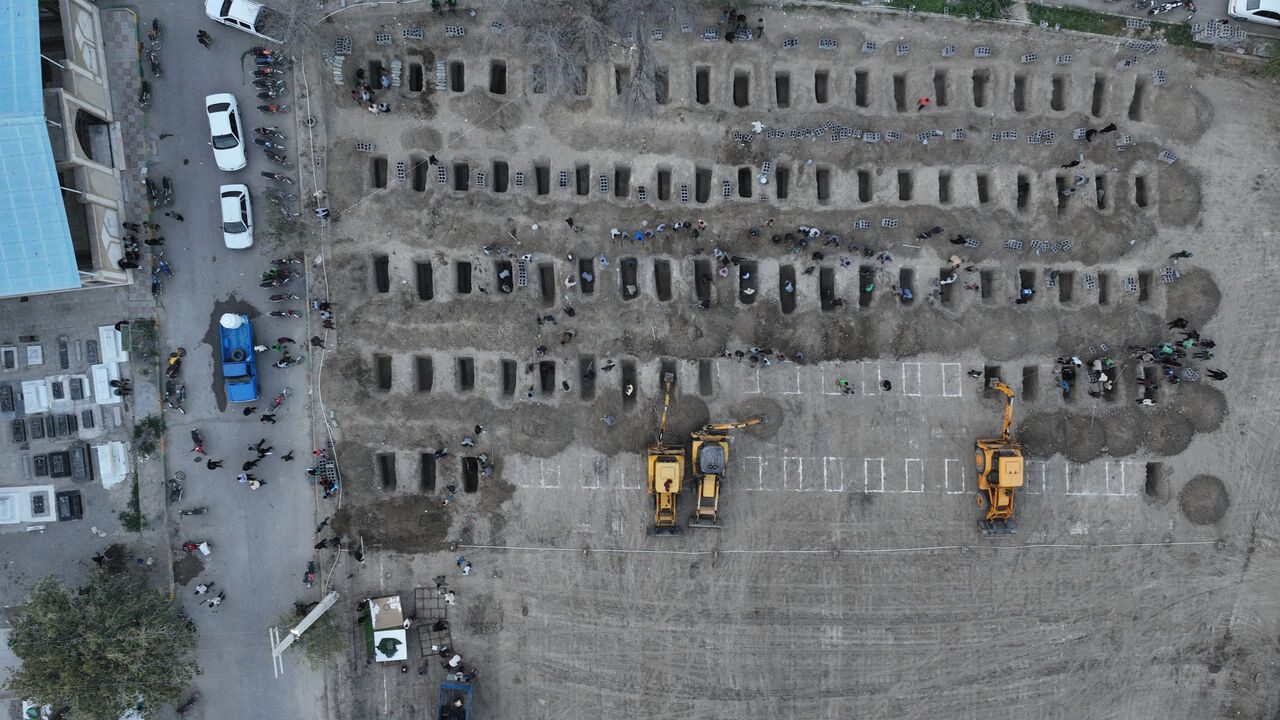
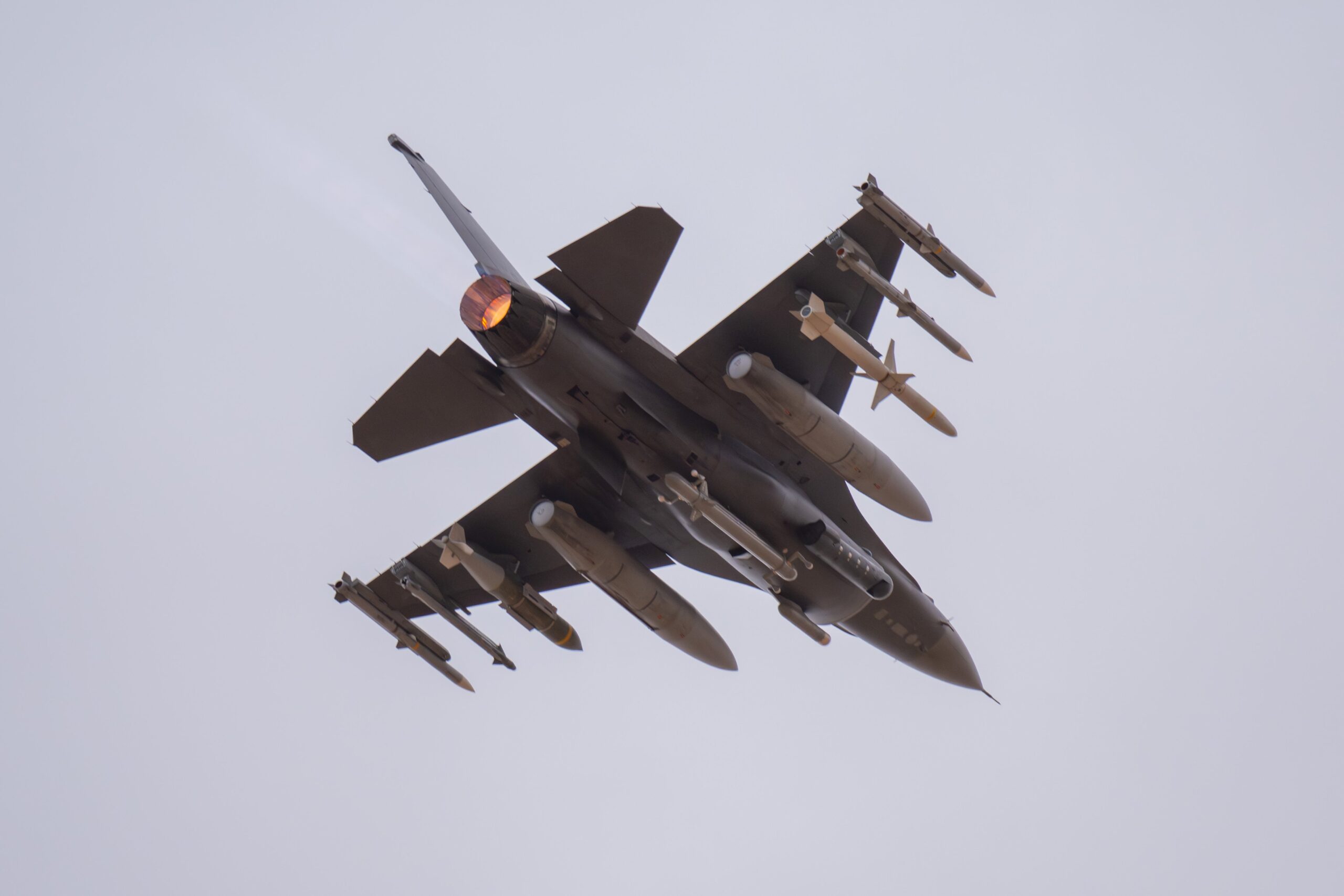
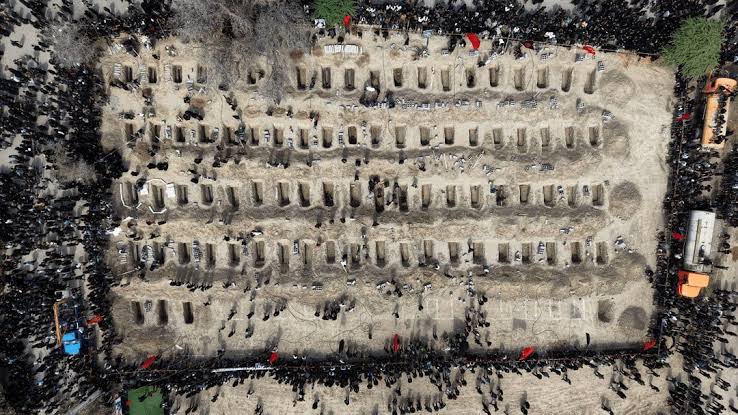
On 28 February, 2026, the military attacks not only killed the Supreme leader Ali Khamenei but also tore through a school in Iran's Hormozgan province and killed more than 165 girls. The international feminist press that runs features on glass ceilings and the underrepresentation of women in corporate boardrooms, said almost nothing. No vigils held . No open letters signed by prominent female academics. The story moved through the news cycle, buried under the usual business of geopolitical military commentary in which the deaths of brown girls in Muslim-majority countries tend to function ‘collateral damage’.
I want to sit with that silence before moving anywhere else, because the silence is not incidental to the argument I am making. It is the argument.
There is a long tradition in Western feminist thought of what Chandra Talpade Mohanty, writing in 1984, identified as the production of the "Third World Woman" ,a figure so thoroughly victimised, so stripped of historical specificity and political agency, that her suffering can be invoked without consequence, deployed in the service of almost any narrative her invokers require. Mohanty was writing about feminist scholarship, but the logic she anatomised in the academy has found its fullest expression not in journals but in press briefings, in the language of military intervention and media framing. Gayatri Spivak's shorthand for this was "white men saving brown women from brown men" is so well known now that it risks becoming glib, something you cite and move on from. But it is worth pausing to register what Spivak was actually describing ,a rescue narrative, one that requires the Muslim woman to be passive, perpetually endangered, waiting. The moment she speaks for herself, in terms that do not confirm her need for rescue, she becomes inconvenient. The moment her daughters are killed by the rescuers, the narrative simply cannot accommodate it. It has no grammar for that.
Frantz Fanon understood this half a century before the phrase 'war on terror' was coined. His account of Algeria under French occupation in A Dying Colonialism traced the obsessive colonial attention to the haik (veil) with a precision that still holds water. The French administered Algeria through unveiling its women and that became its measure of success/conquest. 'If we want to destroy the structure of Algerian society,' Fanon quoted the colonial discourse, 'its capacity for resistance, we must first of all conquer the women.' The veil, in this colonial logic was the last line of enemy fortification. To remove it was to win something.

What the colonial administration could not tolerate, and now what its contemporary inheritors cannot tolerate, is the possibility that the veil might mean something other than defeat. That the Algerian woman who kept her haik was making a political choice, not a submission to male authority. That the Iranian women who flooded the streets in the winter of 1979 wearing chadors were not endorsing theocracy (most of them were not) but were refusing a particular vision of modernisation that had been installed over their heads, without their consent, by a monarchy backed by American intelligence services.
Women in the Iranian Revolution
The Iranian Revolution is regularly reduced, in Western retrospective accounts, to the moment Khomeini returned from Paris from exile and the women lost their freedom. What actually happened in the winter of 1979 was a mass uprising in which women were central participants and not bystanders, not victims-in-waiting, but agents with their own political analyses, their own reasons for being in the street, reasons that were not always or even primarily religious.
Parvin Paidar's meticulous account in Women and the Political Process in Twentieth-Century Iran traces how women from wholly different ideological positions including communist women, Islamic feminist women, secular nationalist women, women from the urban bazaari classes and women from the universities converged on a shared anti-imperialism that had been building for decades, through the CIA coup of 1953 that removed Mossadegh, through the White Revolution of the 1960s with its top-down land reforms and its SAVAK secret police, through the systematic suppression of any political life that was not organised around loyalty to the Shah. When these women wrapped themselves in the chador and marched, many of them were not making a statement about Islam. They were making a statement about sovereignty. The chador, as Hamideh Sedghi has argued, functioned in that moment as a political uniform, a sign of opposition to the Pahlavi monarchy and its Western-sponsored vision of what Iranian modernity should look like.
That this revolutionary energy was then captured and constrained by the theocratic state that followed is something Iranian women have known since 1980, when the mandatory hijab was imposed and the Family Protection Laws that had offered women limited but real legal recourse were suspended. Afsaneh Najmabadi's work on Iranian feminist thought shows us that the debates Iranian women were having about gender, modernity, and Islamic jurisprudence long predated the revolution and continued with extraordinary persistence against Islamic Republic's attempts to foreclose them( with sharia laws in place). Shahla Sherkat founded her journal Zanan in 1992 and ran it for sixteen years. She published feminist legal analysis, critiques of male guardianship laws, discussions of sexuality and domestic violence, all within a framework that engaged with Islamic jurisprudence rather than dismissing it, she developed a feminist praxis that is genuinely difficult to categorise by Western standards, which is partly why it has been so consistently ignored by the Western feminist press that claims to speak on Iranian women's behalf and is befuddled by its decolonial, anti-imperialist and Islamic feminist thought
The Women, Life, Freedom (Zan, Zendegi, Azadi) uprising of 2022 was the most visible recent manifestation of this long internal resistance, which in no time, was appropriated by Western commentators and media who had barely been able to locate Iran on a map six months earlier. The Mahsa Amini protests were real along with the courage of the Iranian women in the streets and so was their grief. But the narrative that attached itself to these events used ‘the women’ to argue for regime change, sanctions, military pressure and repeated with rehearsed fidelity ,the same moves that Fanon had described of the suffering woman as a justification for external intervention, her agency acknowledged just long enough to be conscripted into somebody else's geopolitical project.
Women in Chador
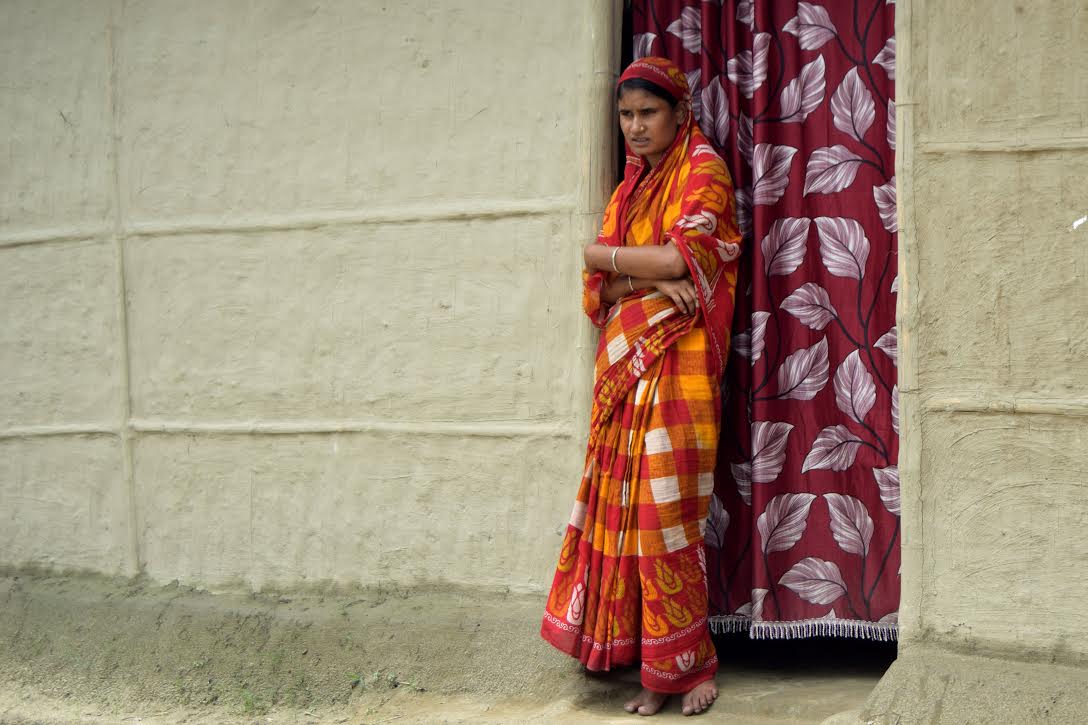
The chador has never been one thing. In Iran it is black, voluminous, worn without pins so that it must be held closed with the hand or teeth, it is associated with particular regions, with particular class positions, with Shi'a religiosity and with the culture of mourning, with Ashura and with the colour of grief. It is also, at times, a form of protective cover that allows women to move through public space in ways that other garments do not permit. Women who wear it are not, for the most part, wearing it as a symbol. They are wearing it as a garment that has accumulated meanings over their lifetimes, in families, in neighbourhoods, in rituals, meanings that cannot be reduced to a single statement or meaning about patriarchy or its absence.
Leila Ahmed was at pains to distinguish between what she called the 'discourse of the veil' and the actual practice of veiling, and she located the origin of the former, the idea that the veil represents Muslim women's oppression is not in Islam but in the colonial encounter, specifically in the work of British colonial administrators like Lord Cromer, who governed Egypt with spectacular condescension and simultaneously fought against women's suffrage back in England. Cromer was a founder of the Men's League for Opposing Women's Suffrage in Britain. In Egypt, he declared the veil the primary evidence of Islamic backwardness. Ahmed's point is not that the veil is therefore fine, but that its meaning as a sign of oppression was produced by people who had no interest in women's actual freedom ,people who needed it to mean something specific in order to justify something else.
This is the intellectual history that contemporary feminist imperialism either does not know or chooses to forget. When American and European politicians invoke the liberation of Afghan or Iranian women as grounds for military action, they are not drawing on feminist theory. They are drawing on Cromer. They are working in a tradition that has always used the figure of the veiled woman as a resource, a justification, a way of dressing up strategic interests in the language of human rights. The women themselves ,what they actually want, what they are actually fighting for always remain secondary.
The Ungrievable Lives
Judith Butler's concept of precarious lives, that do not register as lives within the prevailing moral economy, whose loss is not experienced as loss as it was worked out partly in response to 9/11 and its aftermath. The 165 girls in Minab are precarious lives in Butler's sense. Their deaths do not generate grief in the international community because grief is a learned response, structured by media, by political community, by the slow accumulation of images and narratives that teach us whose face to recognise as a ‘face’. The face of the Afghan woman on the cover of National Geographic, her green eyes looking directly at the camera, became one of the most reproduced images in the magazine's history. Not surprisingly her name, Sharbat Gula, was not known for eighteen years. For the West, she represented ‘the suffering, beautiful, waiting Muslim woman’. What Gula thought about the Soviet-Afghan war, about the American involvement that preceded it, about her own life was never the point.
The schoolgirls of Iran had no such image and they remain nameless in the international press, not only because the information is unavailable but primarily because the image of a Muslim girls killed by Western-backed military action does not fit the narrative structure that has been built to accommodate Muslim women. That structure has room for the victim of her own culture, of her own men, of the veil. It has no room for the victim of the liberation project itself. To make room for her would be to unravel the full story, and that is not something the institutions invested in that story ,the NGOs, the governmental bodies, the liberal newspapers that run International Women's Day supplements ,are prepared to do.
This is what I mean when I say the silence about those girls is not incidental but structural and embedded. It is produced by the same logic that made Fanon's Algerian women's unveiled faces into trophies, that made the Taliban's treatment of women the primary justification for a twenty-year occupation, that makes the hijab in a French schoolroom a crisis of the Republic while the ongoing killing of Muslim girls in active conflict zones generates no emotion. The logic is consistent here. Only the Muslim woman as victim of her own culture is politically useful. The Muslim woman as victim of ours is a problem we do not have the language to address.
What a Women’s Day could mean
What I am arguing is something more specific which is that the framework through which Western liberal feminism has understood Muslim women ,the framework Mohanty diagnosed forty years ago and has not changed in any fundamental way. That framework does damage to the women it claims to represent, by making their bodies and their clothing into symbols before it makes them into people. It does damage to feminist politics more broadly, by lending the language of liberation to projects that are interested in women only instrumentally, only for as long as their suffering can be made to justify something else. And it does damage to the possibility of actual solidarity, which would require Western feminist institutions to be as interested in the deaths caused by Western military action as they are in the deaths caused by patriarchal cultural practices ,to be consistent, in other words, in their grief atleast
Consistency is not a high bar. It should not require an op-ed. And yet here we are, on the morning of another International Women's Day, with more than 165 names that will not be read out at any ceremony, in a country whose women have been fighting for their own freedom and on their own terms and not to forget in their own language, within their own history and for longer than most of the institutions currently claiming to speak for them have existed.
The chador was never a problem. The problem is the story we have told about it, and about the women inside it. That story has a body count. And on this International Women’s Day we should at least be willing to count.
Amina Hussain teaches at Jamia Millia Islamia.
Works Cited
Abu-Lughod, Lila. Do Muslim Women Need Saving? Harvard University Press, 2013.
Afary, Janet, and Kevin B. Anderson. Foucault and the Iranian Revolution: Gender and the Seductions of Islamism. University of Chicago Press, 2005.
Ahmed, Leila. Women and Gender in Islam: Historical Roots of a Modern Debate. Yale University Press, 1992.
Butler, Judith. Precarious Life: The Powers of Mourning and Violence. Verso, 2004.
Fanon, Frantz. A Dying Colonialism. Translated by Haakon Chevalier. Grove Press, 1967 [1959].
Mohanty, Chandra Talpade. "Under Western Eyes: Feminist Scholarship and Colonial Discourses." Boundary 2, vol. 12, no. 3, 1984, pp. 333-358.
Najmabadi, Afsaneh. Women with Mustaches and Men without Beards: Gender and Sexual Anxieties of Iranian Modernity. University of California Press, 2005.
Paidar, Parvin. Women and the Political Process in Twentieth-Century Iran. Cambridge University Press, 1995.
Sedghi, Hamideh. Women and Politics in Iran: Veiling, Unveiling, and Reveiling. Cambridge University Press, 2007.
Spivak, Gayatri Chakravorty. "Can the Subaltern Speak?" Marxism and the Interpretation of Culture, edited by Cary Nelson and Lawrence Grossberg, University of Illinois Press, 1988, pp. 271-313.
Tohidi, Nayereh. "Gender and Islamic Fundamentalism: Feminist Politics in Iran." Third World Women and the Politics of Feminism, edited by Chandra Talpade Mohanty et al., Indiana University Press, 1991, pp. 251-271.