Dhurandhar The Revenge review: The crude terrorism of Dhurandhar

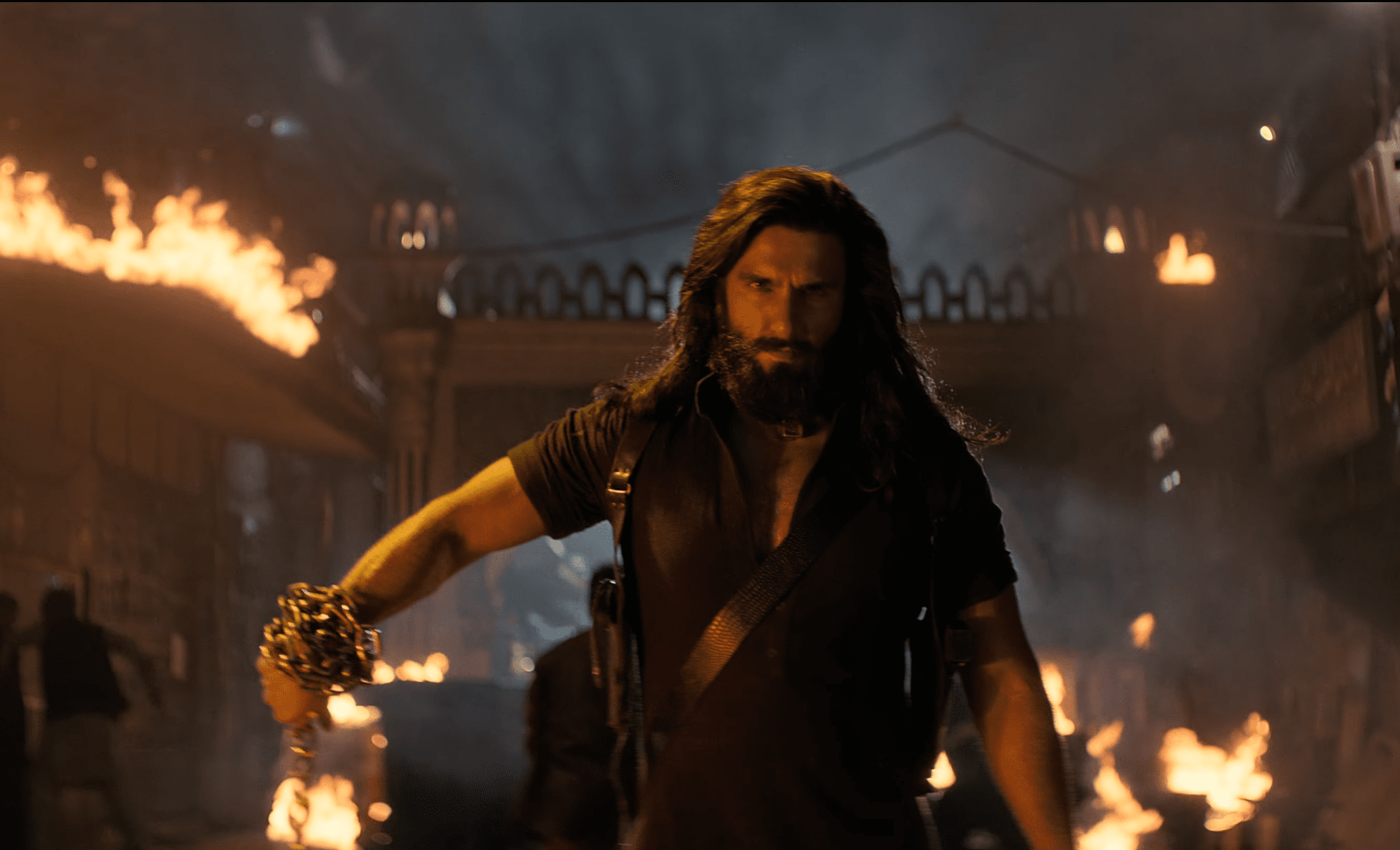
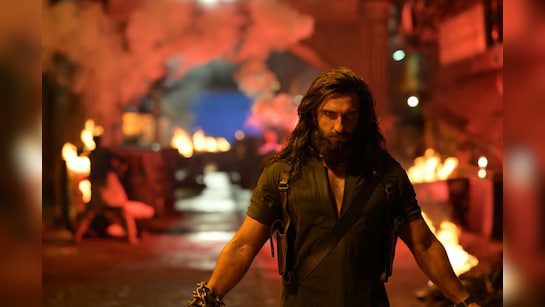
Quite early into Dhurandhar’s sequel Dhurandhar: The Revenge, the turbopop spy thriller from premier propaganda artist Aditya Dhar, R Madhavan’s Ajay Sanyal mentions the word mard. He says to Ranveer Singh’s Jaskirat, a wounded young man whose fate misled him to criminality over serving the nation in its army—before his recruitment as Indian agent Hamza Ali Mazari in Pakistan—"hum mard hain humara kartvaya hai ladna”. We are men, our duty is to fight. No other quote encapsulates the blood-soaked adrenaline driven contemporary cinema of the mainstream in India. Some of the biggest film industries in the country—Hindi, Tamil, Telugu—are all prey to the idea, and in the era of pan Indian cinema that sucks joy and jettisons emotion for violence, the one-man army—the titular mard—is the last remaining hero. The slipshod masculinity is its backbone and Dhar’s Dhurandhar films double down with gusto.
Dhurandhar: The Revenge, like its predecessor, hits the ground killing and unleashing mayhem. The films collectively approximate to a runtime of 450 minutes and no narrative twist misses the beat, probably the most charitable thing you can say about the film and Dhar’s writing. Both films are divided into chapters. While the first film’s plotting and chapter driven narrative are more intricate and stand independent of each other, The Revenge’s chapters are more loosely coupled. It begins in 2000, almost half a decade before Jaskirat is deployed in Pakistan, when he exacts revenge in the form of home invasion murder spree for the rape of his two sisters and murder of one of them along with their father. He is sent to prison where two years later Sanyal recruits him for India’s covert operations following the IC 814 Kandahar hijack and the 2001 Parliament attacks, sufficiently documented by the first film.
Dhurandhar became such a phenomenon—financially and emotionally—that any and every criticism was dismissed with hate, accusation and threat. The fans’ favorite buzzwords became form and filmmaking. Dhar is obviously a talented filmmaker, and he brings to the table the kind of craft that modern day Hindi cinema that loves to genuflect at the altar of the ruling government has lacked. His set pieces throb with effervescent energy and his talent for fusing needle drops with hyper violent action, sadly, has almost no competition. Here, along with Shashwat Sachdev’s originals, he brings everything from Bappi Lahiri’s Tamma Tamma to Doja Cat’s Aaahh Men! to Tirchi Topiwale to Khaled’s Didi to even Boney M’s Rasputin. And it’s not like he cuts around a film like a jumpy animal on keyboard a la Prashant Neel, here is a director who has respect for silence, like in The Revenge’s intermission scene, the film’s best sleight of hand. But can you even separate form from content, when that’s exactly why it is lethal, the reason it is so incisive in its messaging and dangerous in its selective marrying of fact and fiction.
It is common knowledge that both the films are almost entirely set in Pakistan and Hamza builds his life as a Lyari gangster in Karachi. In the sequel, with Akshaye Khanna’s Rehman Dakait eliminated, Hamza only goes from strength to strength, by practicing sheer unmitigated violence on his foes. Pakistan and Islam are the film’s favorite punching bags, the film doesn’t just punch, it rips and tears out the entrails unflinching in its path towards bloodshed. But with Pakistan as the pivot point, the Dhurandhar films train their eyes on all Muslims, not bothering to distinguish Indian or Pakistani. Sanyal vaguely alludes to Muslim gangsters of Uttar Pradesh in the first film, and they show up here as Atif Ahmed (Salim Siddiqui)—not so loosely based on Atiq Ahmed—smuggling drugs, running a mafia and even aiding Pakistan’s ISI and terrorist organizations to wreak havoc in India. No such evidence exists against the gangster turned politician, but Dhar goes on to recreate his assassination on film, leaving out the part where his assailants chanted Jai Shree Ram when they surrendered after the killing on camera. Dhurandhar’s plot design might be sophisticated, but it retains a certain obscene tone for the dog whistling. Sanyal too gets his personal comeuppance. As Hamza gets a freehand and eliminates wanted criminals across Pakistan, Zahoor Mistry, one of the terrorists in Kandahar, is forced to utter Bharat Mata Ki Jai with a gun to his head. The image sure recalls the modern reality of India where Hindutva votaries routinely harass and lynch Muslims and minorities in India and force them to chant Jai Shree Ram or Bharat Mata Ki Jai, the evidence of which is only a google search away.
The film formulates the vocabulary for this dog whistling throughout. When Major Iqbal’s (Arjun Rampal) father Brigadier Jahangir, veteran from the 1971 war, talks about the loss and the creation of Bangladesh, he says “Hindus brought us shame”. Not India but Hindus. The film codes its language in obvious terms, throwing words like “slaughterhouses” (of Uttar Pradesh) and phrases like “Kashmir sympathizers”. Its dialogs include the usual glossary from documented violence in the country—sending women to brothels, forced circumcision or imposing the kalmas on Hindus. The film doesn’t even pretend to hide its intentions.
What more, it’s not just the Indian Muslims who are the targets this time. Dhurandhar: The Revenge is finally where Prime Minister Narendra Modi makes an appearance, following Sanyal’s smirk in the first film about waiting for a stronger government. The film puts words in Brigadier Jahangir’s mouth again as he watches Modi take oath in 2014. Resoundingly bitter about the change of government in India, he alludes to Pakistan funding NGOs and “universities” in India, another blatant allegation on anyone in India that opposed Hindutva and the Bharatiya Janata Party and has continued to do so since. In another instance, the film once again twists fact into fiction to suggest that everything from PFI in Kerala to Naxals in rest of India to separatists in Punjab were funded by Pakistan and related terrorist organizations. The ideas in this film are so vicious, its poison let loose on a country one show at a time, that every scene contains a checkpoint to influence a seemingly smart audience, a blueprint to further justify the acts of a government that jails peaceful dissenters under draconian acts without trial and passing motions unopposed in parliament.
The film does paint some delusions that can be unintentionally funny. It projects post-2014 India as a geopolitical superpower, in the subcontinent if not the world, that can handhold and control its immediate enemies. Hamza becomes the muscle power for every ruling party in Pakistan, his ideological jumps possessing the alacrity of every politician that jumped ship to BJP in the last twelve years. The film gets the perfect doppelgangers for Asif Ali Zardari and Nawaz Sharif as governments topple and form in our closest neighbor. Dhar wants us to believe that Sanyal and his henchmen are so astute that they even sent a man 45 years prior to be a political kingmaker in Pakistan (how exactly was he helpful if terrorist attacks still rained on India? We can’t ask such nonsensical questions). This is some sort of hallucinatory trip that the film gets on, falling for its own deception game. It looks at its endgame like a pipe dream where Pakistan is a puppet country for India to control, adopting lessons from the Cold War and Hollywood films where the masters of this game, the United States of America, make and orchestrate regimes and their changes all over the world. There is even an unconvincing moment where Hamza declares that he is here to save the people of Pakistan from their own country, liberate them the way America “liberates” the global south. It’s all quite laughable.
The Dhurandhar films can never look inward. As if its Islamophobia isn’t enough, the film sings praises for the Modi government and demonetization. As old 500-and-1000-rupee notes ceased to be legal tender on that fateful day in November 2016, chaos rained upon the country, both immediate and long term. People died, the GDP collapsed and small industries and agriculture suffered. Yet Dhar would go on to paint this as a masterstroke in curbing black money and, in the context of the film, terror funding. Nothing could be further from the truth but since when did this film care for such utopic endeavors. He simply wants to put the fear of the “chaiwallah” in Pakistani hearts, as he repeatedly does in a couple of scenes.
There was a time when Indian films on terrorism invited conversation about Islamophobia and the trope of the “good” Muslim. Contemporary Hindi film has erased that out of imagination. Why “good”, there are no Muslim heroes in these films anymore because their whole beating heart is that they are all villains. The images that inspire cheers and battle cry today are exploding minarets, domes and madrassas as we see in the film’s climax, the elimination of a religion as well as the idea of secularism in India. There was also a time when figures like Jawaharlal Nehru and VK Menon adopted non-alignment and stood tall against colonial powers on the international stage. Today, we regress to raw muscle power behaving exactly like those that we refused to align with back then. It’s about incorporating the bad precedents of the superpowers, strong-arming neighbors and poorer countries, and a wolf warrior approach to diplomacy. And of course, the cinema of the country is an effective messenger.