India’s new Transgender Bill threatens to reverse hard-won rights

A new bill introduced in the Lok Sabha could dramatically narrow who counts as transgender under Indian law. On 12 March 2026, the Union Minister for Social Justice and Empowerment, Dr Virendra Kumar, introduced the Transgender Persons (Protection of Rights) Amendment Bill, 2026. The bill proposes sweeping changes to the Transgender Persons (Protection of Rights) Act, 2019 – the first legislation in India to give statutory recognition and legal protections to transgender persons.
The government’s rationale is that the existing definition of “transgender person” is “vague and broad”, making it impossible to identify the “genuine oppressed persons” for whom welfare benefits are intended. The bill, it says, is not meant to protect those with “self-perceived gender identities”, but only those facing “severe social exclusion due to biological reasons, for no fault of their own”.
What the government presents as a clarification is instead a contraction – one that will leave a significant proportion of transgender and gender-diverse people in India without legal recognition, without identity documents and without the protections they were promised.
The 2019 Act followed the Supreme Court’s landmark judgment in National Legal Services Authority v. Union of India (2014) – the NALSA judgment – in which the court declared transgender persons a “third gender” and affirmed their fundamental rights, including their right to self-identify their gender.
Gender identity, the court held, is not a biological fact to be verified by a doctor or magistrate. It is an “innate perception” – deeply personal, psychological and beyond the reach of medical gatekeeping. Requiring surgical or biological proof was declared unconstitutional.
The 2019 Act carried these principles into statute. Though imperfect in implementation, it extended protection to trans men, trans women (whether or not they had undergone gender-affirming surgery), genderqueer persons, persons with intersex variations, and those belonging to socio-cultural communities such as Kinner and Hijra – some of the oldest and most historically documented forms of gender diversity in South Asia.
Section 4(2) explicitly recognised the right to self-perceived gender identity. Gender was what a person said it was. Legal recognition did not require a medical file. But the 2026 amendment proposes to dismantle this framework.
The bill replaces the 2019 definition with a restricted one covering only the following three categories: (i) persons belonging to specific socio-cultural identities (Kinner, Hijra, Aravani, Jogta, or Eunuch); (ii) persons born with medically recognised intersex variations, defined by congenital differences in chromosomal patterns, gonadal development or hormone production; and (iii) persons who have been forcibly subjected to surgical or hormonal procedures against their will.
The consequences are stark. Trans men – people assigned female at birth who identify as men – are written out of this definition entirely. So are trans non-binary persons, trans women outside the listed communities and genderqueer persons. For all of these individuals, there will be no transgender certificate – and without it, no legal recognition or access to the welfare schemes and protections the certificate unlocks.
The government’s argument that this targeted definition protects the “genuinely oppressed” collapses on examination. Trans men face acute discrimination in employment, housing, healthcare and within their families. Trans non-binary persons navigate daily hostility. Oppression does not require a community membership card.
The bill proposes to delete Section 4(2) of the 2019 Act – the provision that recognised the right to self-perceived gender identity and the one most directly grounded in NALSA. The judgment held that the right to determine one’s gender falls within personal autonomy and cannot be made contingent on medical verification. It declared unconstitutional any requirement that a person undergo surgery or biological testing to have their gender recognised.
Deleting Section 4(2) contradicts this ruling directly. The amendment’s reliance on medical and biological characteristics as qualifiers departs from NALSA’s reasoning. By removing self-identification as the basis for gender recognition, the government is asking Parliament to enact a law that contradicts binding Supreme Court precedent.
The assault on self-identification does not stop at the definition. The bill also overhauls the certification process.
Under the 2019 Act, a person could apply to the District Magistrate for a certificate based on their gender identity. Under the amendment, the Magistrate must consult a medical authority – a board headed by a Chief Medical Officer – before issuing any certificate. Hospitals may additionally be required to report gender-affirming procedures.
Inserting a medical board into a process that the Supreme Court said requires no medical intervention is a direct reversal of NALSA. The medicalisation of gender identity has a troubled international history. For decades, legal gender recognition was tied to diagnoses of “gender dysphoria”, sterilisation requirements or mandatory surgery. Many countries have since moved away from this model, recognising it as a violation of bodily autonomy. The 2026 amendment revives it.
In practice, medical boards mean delay, expense and subjectivity. Applicants will likely face a bureaucratic medical process overseen by officials with little training in gender diversity – and who may reflect the same prejudices that make trans persons vulnerable. Requiring hospitals to report gender-affirming procedures raises the spectre of surveillance and risks deterring people from seeking care.
A transgender identity certificate is not a mere formality. It is the gateway to welfare schemes, to reservations in states such as Karnataka – which has introduced affirmative action quotas in employment and education for transgender persons – and to the anti-discrimination protections in employment, education, healthcare and housing that the 2019 Act nominally guarantees.
Strip that certificate from trans men, non-binary persons and trans women outside the listed communities, and those protections become unreachable for them all.
The 2019 Act was already poorly implemented, and community groups had long demanded stronger execution rather than rollback. The answer to imperfect implementation was investment in it: training officials, streamlining processes and bringing community voices into oversight.
There is no evidence that the 2026 amendment was developed with substantive input from trans communities or gender-rights organisations. The government’s rationale – that the old definition was too vague – was not accompanied by any analysis of how it had been misused or what harm had resulted.
India’s Constitution guarantees every person the rights to dignity, equality and life. In 2014, the Supreme Court held that the right to name one’s own gender sits at the heart of that guarantee. Legislation that delegates gender recognition to medical boards, erases entire categories of gender-diverse persons from the statute books, and contradicts settled constitutional law is not protection. It is erasure dressed in procedural language.
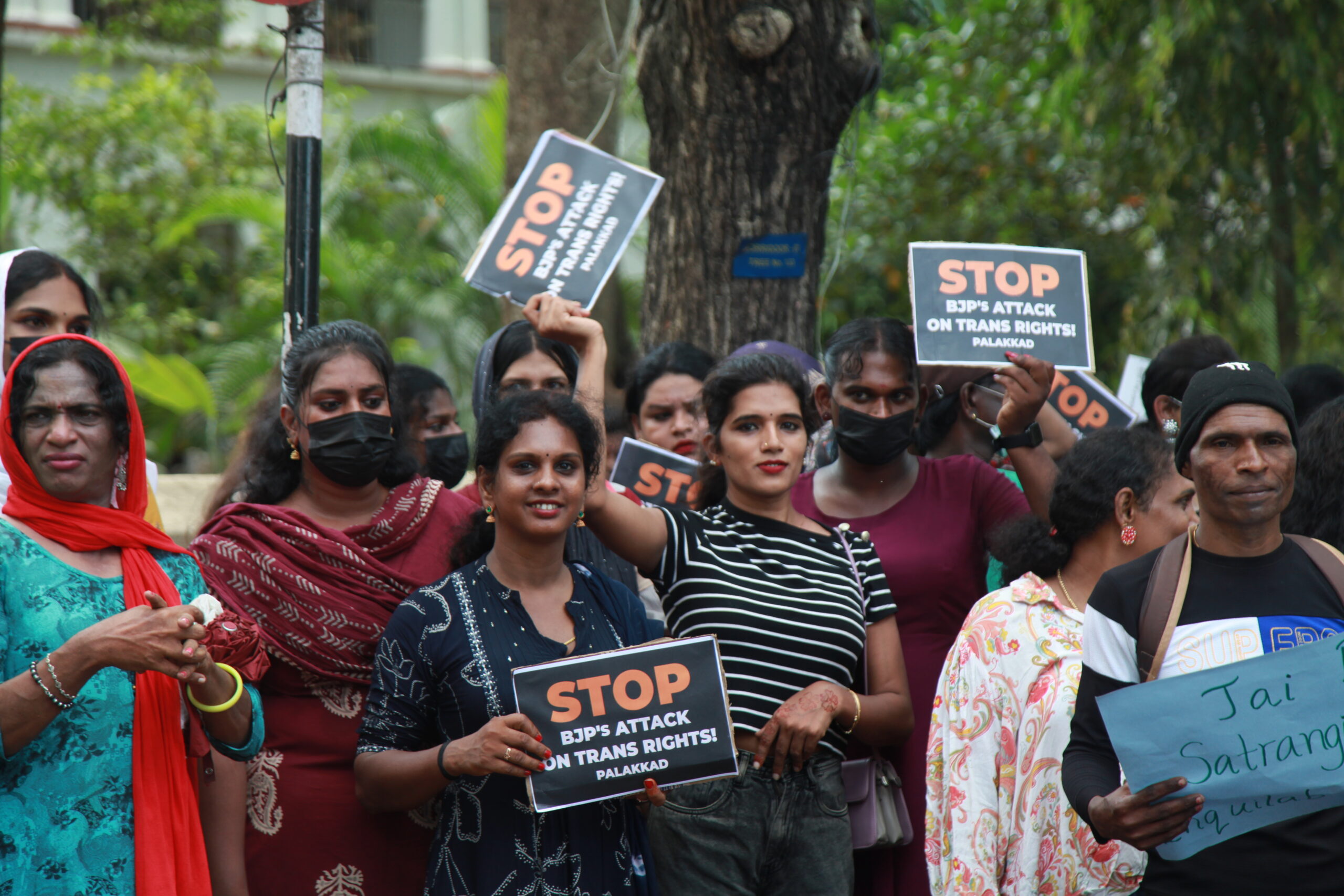
The battle for trans rights in India has been long and hard. This bill threatens to undo in one stroke what took decades to win.
Vishal R. Choradiya is an assistant professor with the Department of Professional Studies, Christ University, Bengaluru