From its earliest years, India chose to engage with questions that extended beyond immediate national interest. Its opposition to apartheid in South Africa was consistent and unambiguous, raised at the United Nations at a time when such positions offered little strategic reward. During the Suez crisis, India spoke firmly against military intervention by major powers, reinforcing a wider commitment to sovereignty and decolonisation. These were not isolated gestures. They reflected a pattern of engagement in which India’s positions were informed by both its own historical experience and a broader view of international responsibility.
This approach found its most coherent expression under Jawaharlal Nehru. Nonalignment, as he conceived it, was not an exercise in neutrality for its own sake. It was an assertion of independence in judgment, combined with a willingness to take positions when circumstances demanded it. India’s leadership within the Non-Aligned Movement drew strength from this posture. It was seen as a country that could engage across divides without relinquishing the ability to take a clear stand.
The events of 1971 remain a defining illustration of how this balance was maintained. Faced with the humanitarian consequences of the Bangladesh Genocide, India did not confine itself to expressions of concern. Under Indira Gandhi, it combined diplomatic outreach, humanitarian response, and ultimately military action. The decision carried high economic and political costs, yet it was grounded in a clear assessment that silence or inaction would be incompatible with both regional stability and human dignity. That moment continues to inform how India's role is remembered, particularly across the Global South.
India's longstanding support for Palestine must be situated within this broader trajectory. Its early recognition of the Palestine Liberation Organisation and its continued advocacy of a two-state solution reflected a consistent position on self-determination. These positions were articulated across governments and political contexts, lending them a degree of continuity that extended beyond immediate policy considerations.
India’s evolving relationship with Israel is visibly political. The public warmth between Narendra Modi and Benjamin Netanyahu, reinforced through high-profile visits and carefully staged moments, has altered the optics of India’s position. In such a setting, restraint begins to appear less like careful calibration and more like reluctance, particularly when moments arise that demand uncomfortable clarity.
A discussion of restraint also invites reflection on continuity. Shashi Tharoor has, over the course of his diplomatic and parliamentary career, been associated with articulating many of the very principles that shaped India’s global voice, particularly during his tenure at the United Nations. That legacy has emphasised clarity on questions of sovereignty, self-determination, and civilian protection. The present argument in favour of calibrated silence, therefore, sits in marked tension with that earlier articulation. It reflects a broader shift in discourse and outlook, where the emphasis has moved from stating positions with conviction to managing them with caution. To frame restraint as strength without equal emphasis on clarity risks narrowing the very idea of strategic autonomy that India once sought to expand.
There are also more recent precedents that underline how India has, in the past, been able to articulate its position even in the presence of powerful partners. In 2005, speaking in Washington, Manmohan Singh expressed India’s opposition to the Iraq war, making clear that differences on matters of principle could be conveyed without diminishing bilateral engagement with the United States. That moment illustrated a certain confidence in India’s voice. It demonstrated that strategic relationships need not preclude clarity in articulation. In the present context, the absence of comparable clarity, even when expressed from within India, raises questions about whether that confidence has narrowed.
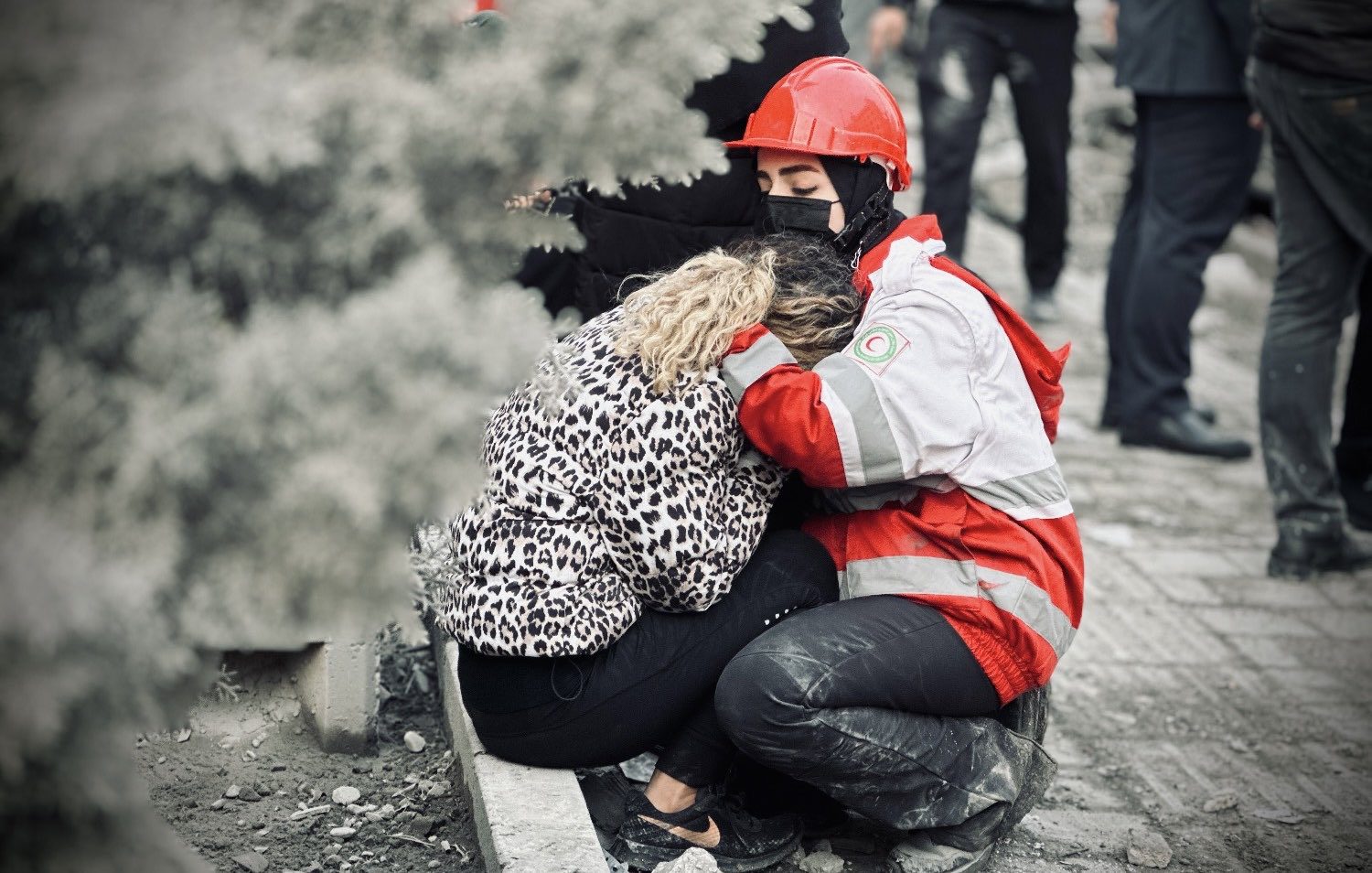
The question of consistency extends beyond a single theatre of conflict. The missile strike on a girls’ school in Minab, Iran, which killed more than 160 civilians, most of them children, has been described by international bodies as a grave violation of humanitarian law. Incidents of this nature, involving clearly protected civilian spaces, have drawn explicit condemnation across the world. In this context, the relative absence of equally clear articulation from India becomes difficult to overlook. Even as high-level diplomatic engagement in the region continues, the lack of a corresponding public expression of concern or solidarity in the aftermath of such events creates an impression of unevenness. For a country that has historically emphasised both sovereignty and protection of civilians, such restraint in articulation risks being read not as a balance, but as a narrowing of its own long-held positions.
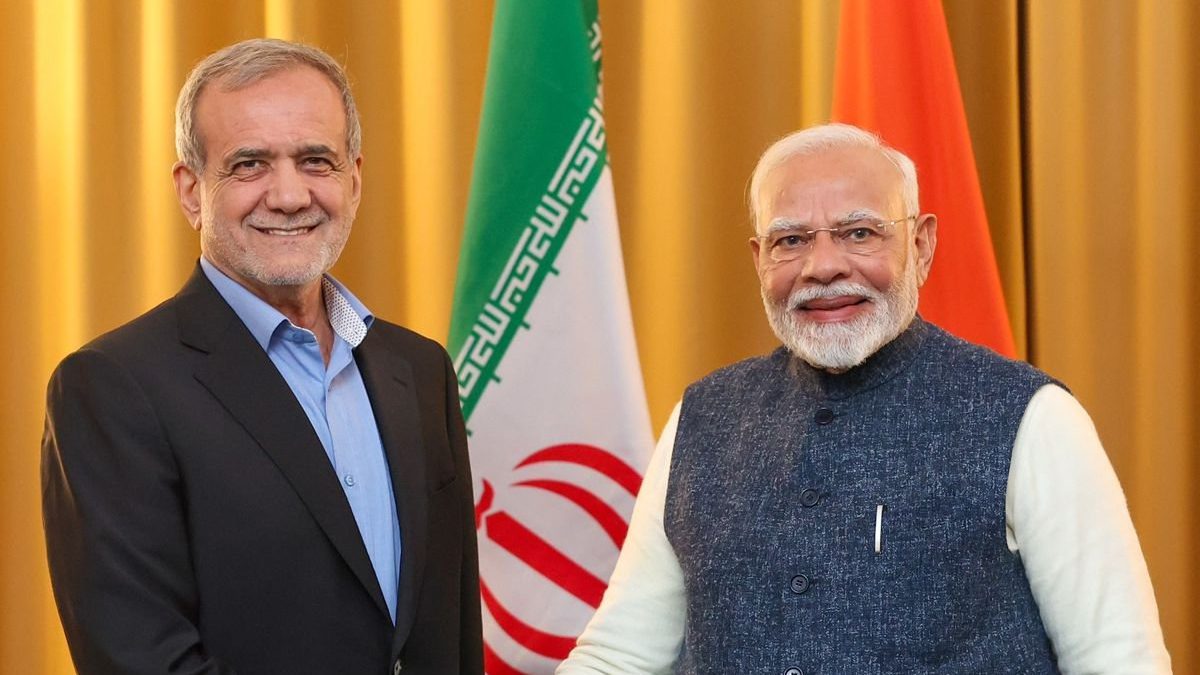
Public signalling also shapes how intent is understood. India’s expanding relationship with Israel in the last decade reflects strategic interests, but when such engagement is not accompanied by an equally clear expression of concern during moments of acute crisis, it can appear unbalanced. When restraint is evident in some situations and not in others, it risks blurring the line between pragmatism and convenience and raises questions about consistency. Even silence is read closely by partners, adversaries, and the domestic audience. The challenge, therefore, is to ensure that restraint is supported by a clear sense of purpose, as this has implications for India’s role in shaping outcomes. In a period where efforts at de-escalation have involved multiple regional and international actors, the absence of India from emerging conversations calling for a truce has been noted.
To describe silence as responsible statecraft is to stretch the meaning of responsibility itself. Statecraft has never required the avoidance of discomfort; it has required the ability to manage it. When the cost of speaking rises, choosing not to do so may preserve relationships in the short term, but it also signals the limits of one’s independence.
The question is not whether India should adapt to a changing world. It must, as all nations do. The question is whether, in doing so, it retains the qualities that have given its voice meaning. Among those, the ability to speak with quiet but unmistakable clarity has been central to how India has been understood across regions and generations. When that clarity recedes, influence does begin to thin. What remains is presence without the same degree of trust, and that is a far more difficult deficit to recover.
Meenakshi Jha is an Educator and Freelance Writer, currently authoring a book on Adolescence.