“Unconstitutional”: Muslim Personal Law Board opposes UCC in Gujarat, Uttarakhand

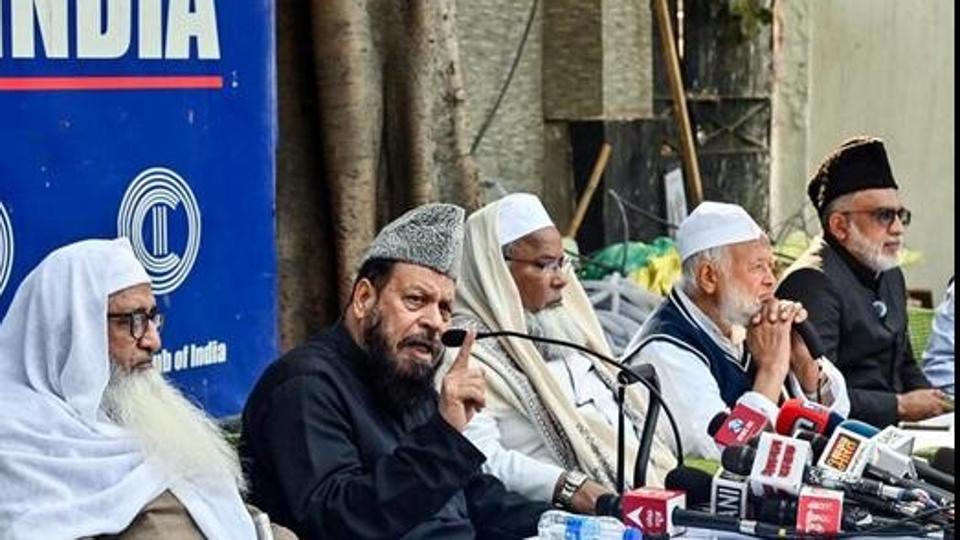
The All India Muslim Personal Law Board (AIMPLB) has strongly opposed the Uniform Civil Code (UCC) recently passed by the Gujarat Legislative Assembly and earlier implemented in Uttarakhand, calling it “constitutionally flawed, legally untenable, and fundamentally violative of religious freedom and civil liberties.”
Addressing the media in New Delhi, senior representatives of the Board said the Gujarat UCC Bill, currently awaiting the Governor’s assent, raises “grave constitutional, legal, and democratic concerns” across the country.
They argued that despite being labelled as a “Uniform Civil Code,” the legislation does not conform to constitutional principles and infringes upon fundamental rights guaranteed under Part III of the Constitution, including religious freedom, equality, and personal liberty.
The Board stressed that the UCC is mentioned under Article 44 as a Directive Principle of State Policy and is not directly enforceable like fundamental rights, noting that any such code must be uniformly applicable across the country.
They pointed out that the Gujarat law neither applies nationwide nor uniformly within the state, as Scheduled Tribes and other protected communities have been exempted.
“This legislation cannot be described as a genuine Uniform Civil Code. The nomenclature itself is misleading and deceptive,” they said, adding that, as reflected in Constituent Assembly debates, Dr. B. R. Ambedkar had assured that no such law would be imposed without public consent.
It also noted that both the 21st and 22nd Law Commissions had sought public opinion on the issue, and that the AIMPLB had formally submitted its objections.
According to the Board, the 21st Law Commission had observed that a UCC was “neither necessary nor desirable” under prevailing conditions.
The Board also expressed concern over the lack of transparency in the consultation process undertaken by the Gujarat government, stating that although a committee was formed to gather public feedback, its report has not been made public, stating, “This raises serious questions about transparency and suggests that the consultative exercise was merely a procedural formality rather than a genuine democratic process.”
Further, the Board termed the law an attempt to impose majoritarian social and cultural norms on minority communities, particularly Muslims.
It argued that matters such as marriage, divorce, inheritance, and succession are integral to Islamic jurisprudence and religious practice, and that state interference in these areas violates constitutionally guaranteed religious freedoms.
The Board alleged that several provisions rooted in Islamic personal law have been criminalised or rendered invalid under the new code, while alternative frameworks based on majoritarian norms are being imposed.
Raising concerns over the timing of the legislation, the Board suggested that the move appears politically motivated, particularly in view of upcoming elections.
“The timing of this legislation gives rise to a reasonable apprehension that constitutional law-making is being subordinated to electoral considerations and political expediency,” the statement read.
The AIMPLB has demanded an immediate halt to the implementation of the UCC in both Uttarakhand and Gujarat and called for a comprehensive constitutional review.
It also emphasised that any reforms in family laws must be carried out through broad-based consultations with all stakeholders, in line with constitutional safeguards and due process.
The Gujarat Assembly passed the Uniform Civil Code (UCC) Bill, 2026, which seeks to establish a common legal framework governing marriage, divorce, succession, and live-in relationships irrespective of religion, and will apply across the state as well as to Gujarat residents living outside its territorial limits, while excluding members of Scheduled Tribes and certain constitutionally protected groups.
The Opposition strongly criticised the Bill, with Congress leaders alleging that it was introduced in haste ahead of the 2027 elections, violates constitutional guarantees, and interferes with religious practices, particularly those of the Muslim community, with some terming it “anti-Muslim” and vowing protests and legal challenges.
Earlier in 2024, Uttarakhand became the first Indian state to implement a Uniform Civil Code.