Walking the tightrope: Decoding Shah Rukh Khan’s puzzling politics

In the tumultuous landscape of Indian politics today, Bollywood ‘stars’ often find themselves walking a precarious tightrope when it comes to expressing their views. While most A-listers dodge political questions stating that it is not ‘their place’ as they are mere entertainers, critics argue that since celebrities yield massive influence over the common public, they should utilise their position to stand against injustice — hoping that their fans would follow suit.
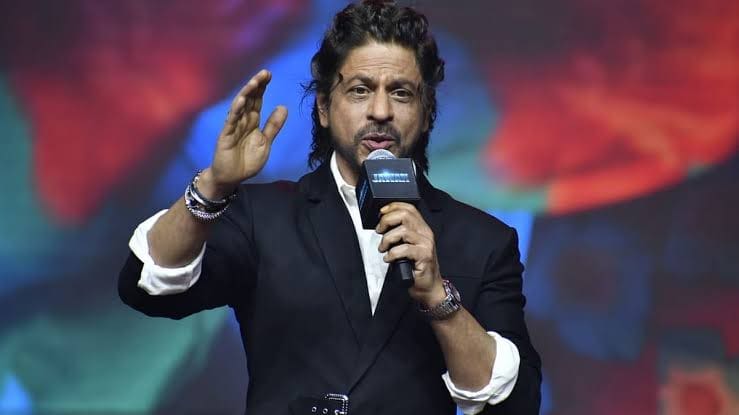
Bollywood’s ‘King’ Shah Rukh Khan, known for his magnetic on and off-screen presence and eloquence, has found himself in a particularly perplexing position over the years. On one hand, he has been a vocal critic of the ruling dispensation through his films. On the other hand, he has consistently praised India's Prime Minister Narendra Modi and backed Union government’s various programmes.
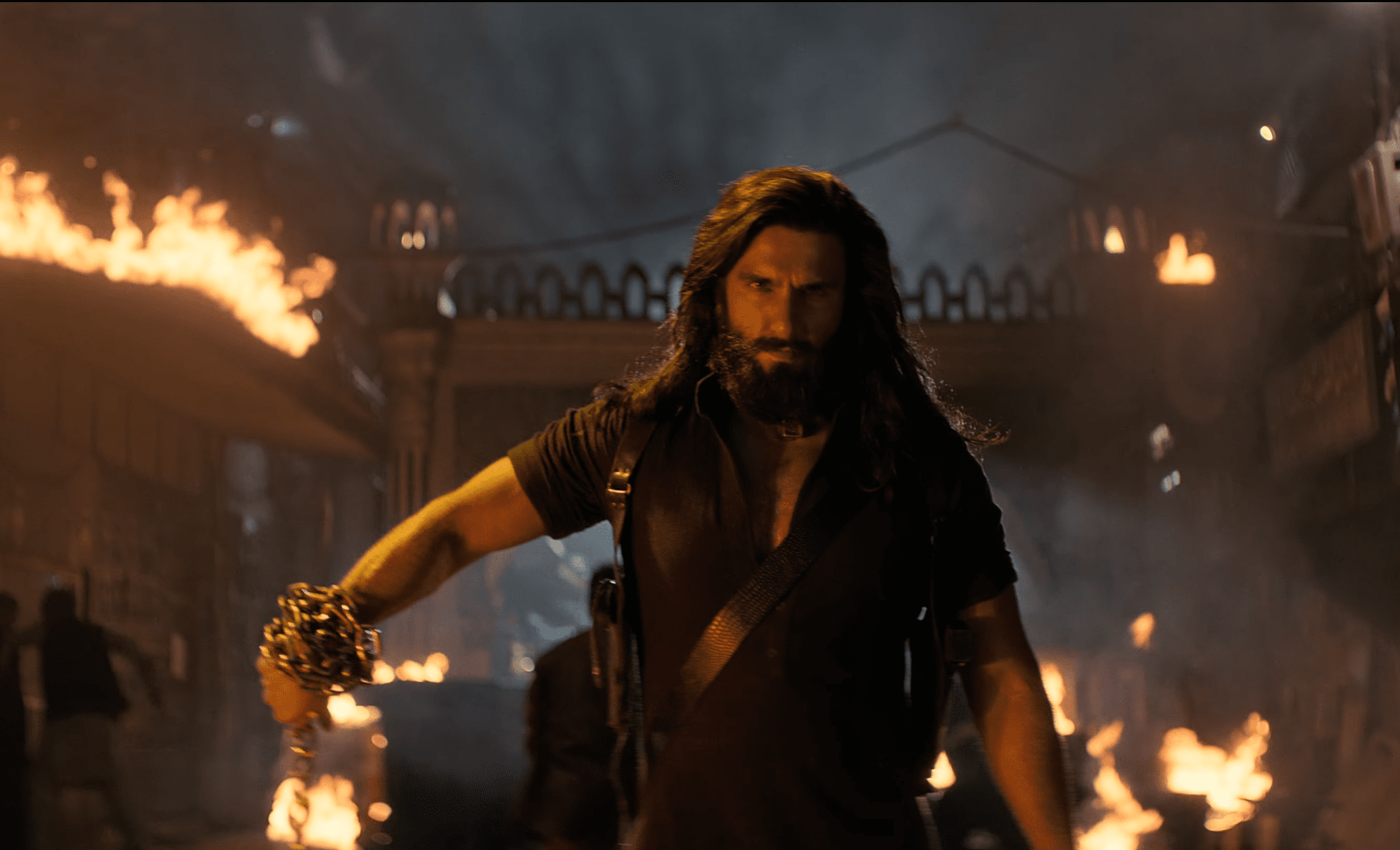
His recent blockbuster Jawan (2023) adopts a line of questioning aimed at the ‘system’ — which in its own amorphous way, refers to government(s) controlled by industrialists. The Tamil action stylist Atlee directs this massive actioner, which manages to discuss several conspicuous but neglected flaws of those who run the country. The nearly 3-hour long high-octane masala entertainer with South Indian cinema’s characteristic twists and thrills is also a value-loaded epic that explores the age-old politico-industrialist complex — the fact that human lives are disposable for the rich and powerful through portraying Khan as a Robin Hood-esque messiah who is set on a mission to right the wrongs of the ‘system.’
The plot draws parallels with real-life horror caused by government inaction such as the 1984 Union Carbide Bhopal gas tragedy, the nation’s worst industrial tragedy which killed nearly 20,000; the ever-increasing phenomena of farmer suicides, intelligently featuring Omkar Das Manikpuri who portrayed the struggling farmer in Peepli Live (2010); the 2017 Gorakhpur hospital deaths which killed several children as the Yogi Adityanath-led UP government neglected multiple requests to clear dues and supply oxygen.
With an anti-capitalist (seemingly socialist), anti-establishment, feminist, and humanitarian essence, Khan’s character – strategically named Azad – takes on big bad businessmen and attempts to protect the secular and egalitarian idea of India. In a short monologue directly facing the audience, Azad implores citizens to ask questions, go beyond caste, creed and religion and vote for the party that serves rather than loots the masses.
A similar line of questioning prevailed through his last blockbuster, Pathaan (2023), which very subtly pokes at corrupt politicians and the redundancy of equating religion with patriotism. The Badshah of Bollywood has previously led films that directly or indirectly portray a more complex, and thus a more real India, separated from modern-day jingoism and saffronisation of Bollywood, such as Swades (2004), My Name Is Khan (2010), and Raaes (2017). But what does SRK, the man himself, truly stand for?
Khan, who in some ways represents the ideal ‘secular Indian’, has time and again been questioned for his Muslim identity — despite the slew of Ram, Rahul, Raj and the various other upper caste Hindus he has portrayed through the years, which have grown to become his most loved characters.
His carefully curated balancing act — naming his son AbRam, loudly proclaiming that his family celebrates Eid and Diwali with equal excitement, seeking blessings at Tirumala Tirupati temple and several similar gestures has not saved him the wrath of the right wing. The resistance against his film Raaes from the Vishwa Hindu Parishad (VHP) since it told a ‘Muslim story’ and featured Pakistani actor Mahira Khan; and the vitriol that followed his son's arrest are significant examples.
“Khan is by far India's biggest global brand among individuals and that includes the PM. He has used his star power to do the talking through Pathaan and Jawan at a time when all other Bollywood A-list stars have opted to crawl before the powers that be. In Pathaan, he asserted his identity as a Muslim who is loved by all across the divides of religion, ideology, gender and class. And in Jawan, he has gone a step further by making his political leanings clear in a way that the Southern movie stars have traditionally done over the decades through their films,” film critic Saibal Chatterjee told me.
Khan has in the past attempted to counter the growing hatred and religious fundamentalism in India, through largely generalised statements. “[If we] keep on talking about our religion, we’re going to go back to the dark ages,” he had said in a 2015 interview. “I read somewhere that negativity increases social media consumption and thereby increases its commercial value as well. Such pursuits enclose the collective narrative, making it divisive and destructive,” he said at the Kolkata International Film Festival in December last year.
However, off-late, he has slipped into a stoic silence resembling his contemporaries. Many believe that Khan has been ‘intimidated’ into silence, while others have criticised him for being mute when it comes to the staggering crimes against Muslims under BJP’s regime.
“Despite being intimidated into silence and facing intense scrutiny, Khan has refused to join the rest of the industry in its sycophantic praise for the Modi government,” read The Caravan’s cover story on Khan. Would lending his voice to hype up Modi’s New Parliament inauguration, while not uttering a word about the simultaneously occurring wrestlers' protest count as sycophancy or fear of expressing his views in public?
“SRK is probably acutely aware that issuing statements in his capacity as the person behind the supernova would be counter-productive. To my mind, the strategy of not speaking out of turn is working for him. He has completely foxed the RW troll army. They do not know what ammunition to use against him even as his films smash box office records,” Chatterjee adds as Jawan crossed the 1000cr-mark.
Some interpret Khan's ‘neutral’ stance as an attempt to maintain a nuanced perspective in an increasingly polarised political climate. “He may be striving for a balanced approach by acknowledging the government's ‘positives’ while critiquing its shortcomings through his films, but that indeed create confusion for us,” Md Zakir, a ‘die-hard’ SRK fan tells me, after catching Jawan for the second time in Hyderabad.
“People questioning Khan’s politics are of two kinds, first is the right wing nationalists, and the second consists of well-meaning twitter warriors who have no skin in the game, an upwardly mobile privileged class totally clueless about narrative building in the big picture of Indian society and politics. In Dostoevsky’s last novel The Karamazov Brothers one of the characters say: “The awful thing is that beauty is mysterious as well as terrible. God and the devil are fighting there and the battlefield is the heart of man. But a man always talks of his own ache.” Khan said the same in Jawan, answering his critics when Azad says Main punya hoon ya paap hoon? Main bhi aap hoon,” acclaimed filmmaker and screenwriter Ronny Sen tells me.
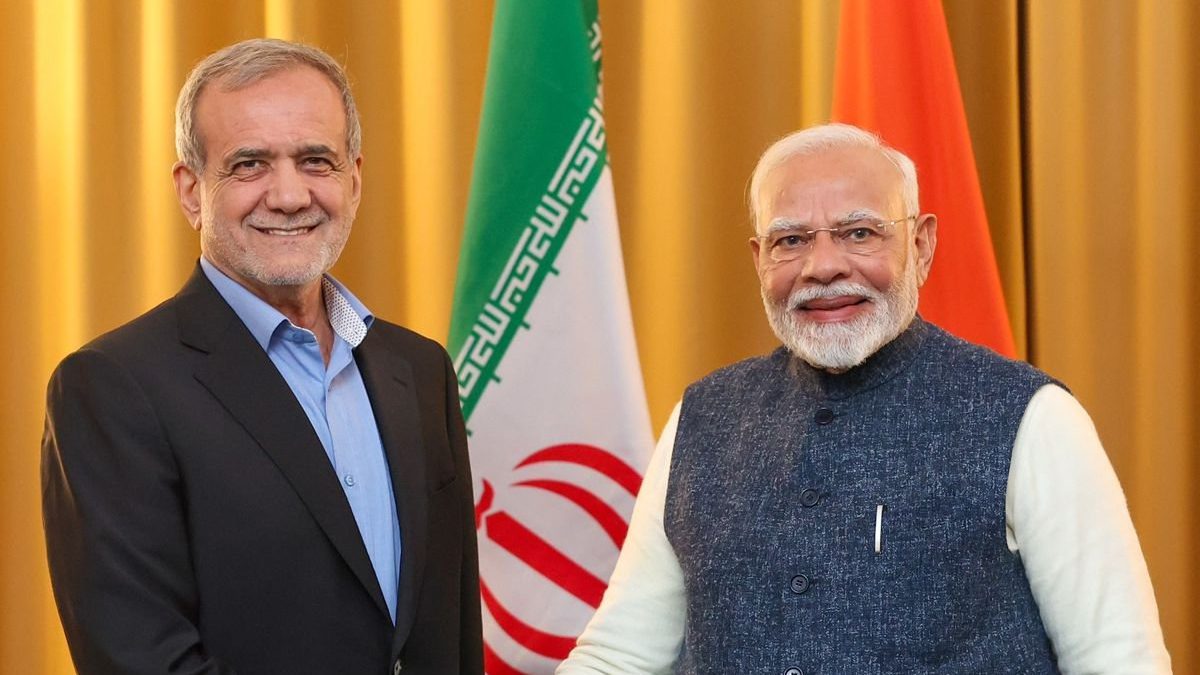
However, unlike ‘common man’ saviour Azad, Khan appeared at Union Minister Smriti Irani’s daughter's wedding in February this year and is frequently seen supporting Ambani's ventures. He has promoted the ‘Make in India’ campaign, Modi’s leadership during times of crisis, such as the COVID-19 pandemic. While several of his ‘common’ fans flayed the government for hiding Delhi’s poverty beneath green sheets to present a glossy picture to G20 delegates, Khan congratulated Modi for the “success of India’s G20 presidency and for fostering unity between nations”.
Critics argue that Khan's attempts at balancing his politics are superficial and self-serving. They argue that he should take a more unequivocal stand, given his immense influence and responsibility as a public figure. By sitting on the fence, they contend, Khan may be doing a disservice to his own legacy and failing to fully leverage his platform.
“When the new parliament was being inaugurated and wrestlers were getting thrashed outside, he was expressing his awe and admiration for the prime minister and the new parliament. Today when crores have been spent on G20 preparations, slums have been demolished and hidden, he is once again expressing his admiration for the prime minister. Somehow the Badshah of Bollywood doesn't have the courage to call out loud the fascist regime or at least he could choose to not participate in this nuisance at all and be a mute spectator,” read a comment by the user @vishakhasarkarr on journalist Faye D’souza’s post exalting Khan as the “hero we need”.
“His job is to act, draw audiences in the theatre by all means possible. That's what he does and that's all he cares about. He and other billionaires like him constantly lecture people to chase success, which pushes people to be competitive in the meritocratic system. And he's very well aware of the impact he has on the liberal star crazed audiences of this country. So ya, if this defines him as a hero then I guess he is one,” the comment further reads.
The gap between Khan’s on-screen ‘heroes’ and off-screen actions, or the lack of which, continues to widen. And we, the audience ask: if his only job is to entertain and act, then must we pedestalise and worship him as a revolutionary driving change?