‘Lost faith’: Bhole Baba's Satsang ‘stampede’ leaves many dead

Last week, outside the emergency ward of Aligarh’s Jawaharlal Nehru Medical College, dozens of bodies lay, mostly women in sarees, brought from Hathras following a tragic incident during the Satsang (religious gathering) of the popular preacher Suraj Pal Singh—also known as 'Bhole Baba'—where over 120 people lost their lives.
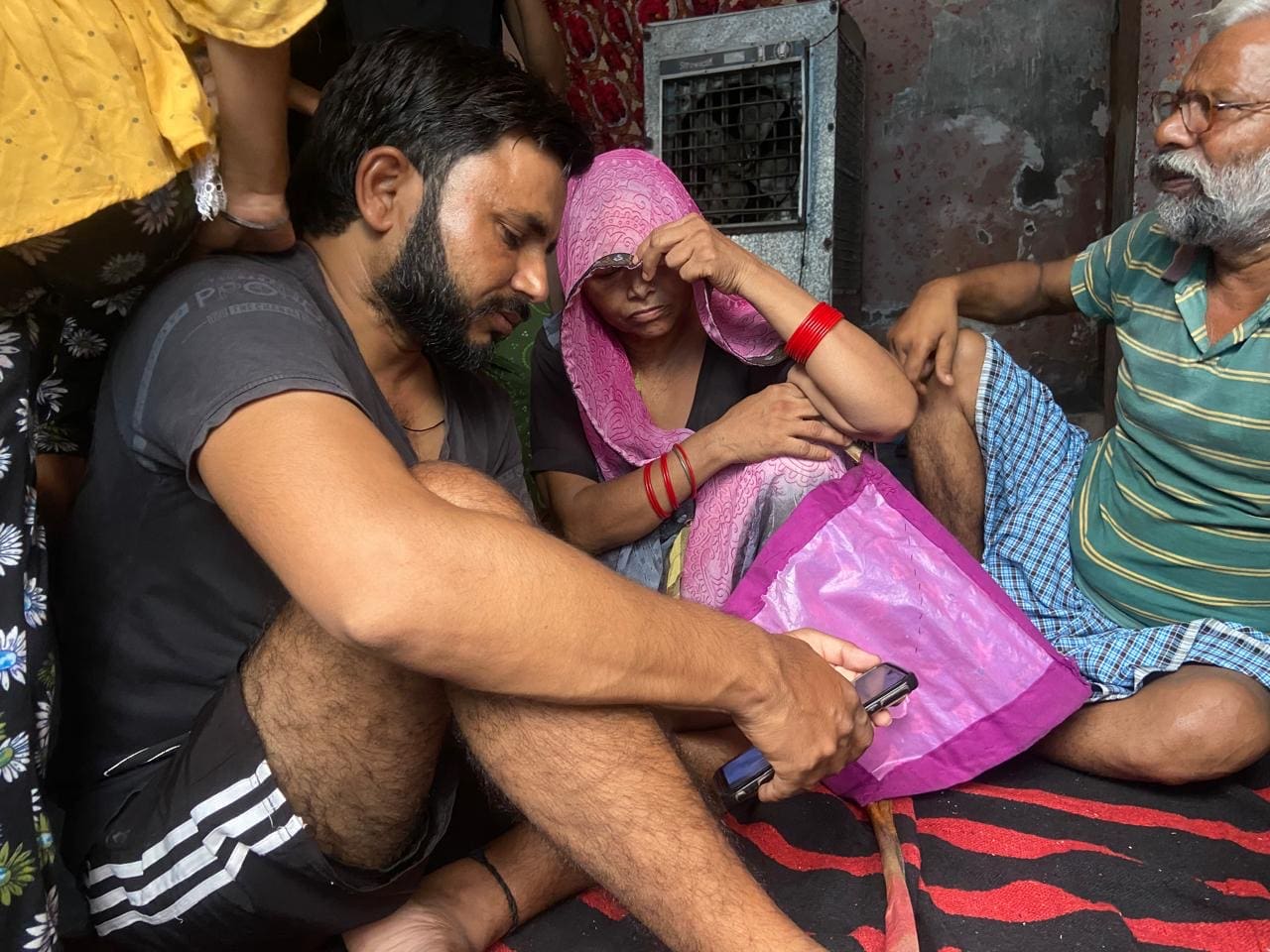
Eyewitnesses recall the chaotic scene as Baba prepared to depart, with thousands of devotees attempting to touch his feet, resulting in a stampede that claimed many lives. Hridesh Kumar, grieving his loss, said, "I lost my wife, who had gone there with her sister-in-law. Now, they are both gone," speaking to Maktoob.
Sarvesh Devi, survived by her 32-year-old husband and two young children, was one of the victims. Unaware of the tragedy, her children played innocently as their father recounted the ordeal. Devi had left for Hathras’s Sikander Rao to attend the Baba's satsang with her sister-in-law, Neeraj Devi, on 2nd July. That evening, Hridesh received a call informing him they were missing. "We searched until we learned more bodies were at Aligarh hospital," he shared. “I rushed to the hospital immediately.”
Thousands had gathered for the event which reportedly led to overcrowding in the sweltering late-afternoon heat, at a time when reports of heat-related deaths have been increasing across India. At least 123 people, mostly women and children, tragically lost their lives in a stampede during a religious gathering in a village in Hathras district, Uttar Pradesh, around 200 km southeast of New Delhi, with over 150 individuals hospitalized due to injuries, marking one of India's most devastating tragedies of this kind in recent years.
The preacher is believed to have followers in states such as Madhya Pradesh, Rajasthan, and Haryana. Most of the deceased, mainly women and children, were from economically vulnerable sections of society. In various videos on the internet, people were seen carrying the bodies of those killed or injured in the incident to hospitals using two-wheelers, trucks, auto rickshaws, and load carriers, and even carrying them on their backs.
Photos and videos of the tragedy surfaced on social media, depicting scenes outside hospitals where devastated individuals sat with their deceased loved ones, some in disbelief and others wailing inconsolably upon identifying the bodies. The piles of dead bodies were sent to the hospitals in different regions including Aligarh where Hridesh along with his family were anxiously waiting for Devi’s body.
Among the pile of numerous bodies that were scatted in the JN medical hospital compound, Hridesh found his 28-year-old wife lying lifeless with dried blood on her nose and stomach. Eight months earlier, she had lost a baby. Her stitches were reopened amidst the chaos of the stampede. "Her clothes were stained with blood," he recalled. Her body was sent for postmortem after identification.
At dawn, the next day, Devi's lifeless body, stitched and bruised, returned to her family in Aligarh amid mourning and disbelief. "She was so kind, and respected everyone," said her mother-in-law. "What can we do now?"
Devi's sister-in-law, Neeraj suffered a similarly tragic fate, her face purple and swollen, blood and foam on her nose, barely recognizable except by her clothes. "Her husband couldn't believe it was her," Hridesh said. "Her clothes identified her as her condition was extremely bad, like many others."
Both families now harbor deep mistrust toward Baba following the loss of their loved ones. "We won't attend his satsang again," they said collectively. "Our faith in him is shattered."
The family, however, might be grieving alone but are apparently not the only ones losing their faith in Bhole Baba. Many mourning families have raised questions about the divinity of the preacher. In one of the reports on the stampede, injured people, and the families of the dead said. "If the baba really has powers and cares about us, he should come here and heal us..."
At Devi’s home in Aligarh, the relatives expressed frustration that Baba did not check on his devotees' well-being after the stampede. "He should have taken an update about the situation," one mourner expressed. "After all, those who died were his devotees only."
He also said that the venue was overcrowded. “It couldn’t accommodate that many people,” the relative said. “It is all on the arrangements of the management.”
Reportedly, despite authorities granting permission for only 80,000 attendees, approximately 250,000 people gathered for the event in Uttar Pradesh’s. The overcrowding significantly exceeded the venue's capacity and contributed to the tragic incident, highlighting severe deficiencies in event planning and management.
In India, the Hathras satsang stampede adds to a grim history of crowd disasters. In recent decades, India has witnessed several tragic stampedes and crowd incidents.
The most devastating include the 2005 pilgrimage stampede in Maharashtra that claimed over 340 lives, followed by an incident in 2008 where nearly 250 people died. In 2013, a stampede in central India resulted in 115 fatalities. More recently, a stampede at Mata Vaishno Devi shrine in Jammu and Kashmir in 2022 led to 12 deaths, and a political rally stampede in Andhra Pradesh the same year caused eight fatalities. In 2023, a university concert crowd incident in Kerala resulted in four deaths and numerous injuries. These events underscore persistent challenges in crowd management and safety during large gatherings across the country.
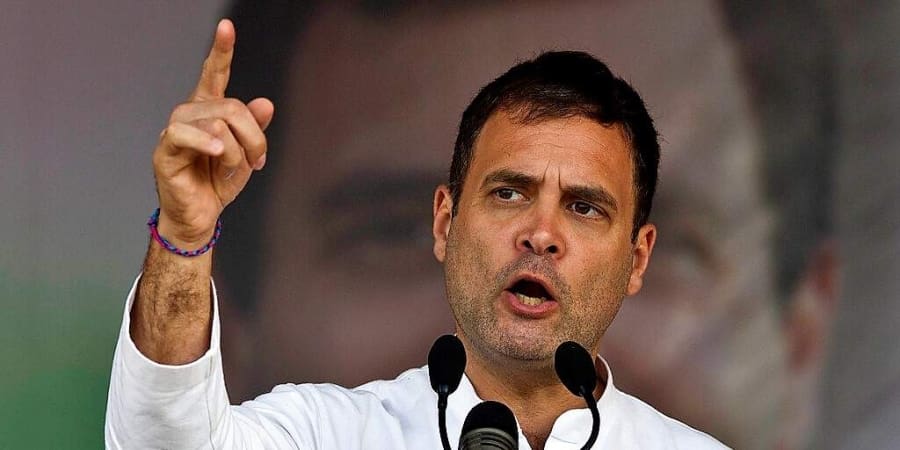
Three days after the tragedy, former Congress president Rahul Gandhi visited Hathras to meet with grieving families. He criticized the administration for negligence, emphasizing that while it cannot be ruled out in the incident, the top priority should be providing the affected families with the best possible compensation.
Many of the victims' families were poor and urgently needed help, he said during a media briefing. Gandhi urged Uttar Pradesh Chief Minister Yogi Adityanath to ensure quick and adequate compensation, stating, "They are poor people who need it right away. If you give them aid after six months, after a year or delay it, it won't help anyone."
Gandhi expressed sadness over the loss of lives and the suffering of many families, avoiding political statements but acknowledging mistakes by the administration. According to reports, he said, "I don’t want to speak through a political prism, but there have been some lapses on the part of the administration. There have been mistakes, which should be identified."
Gandhi also mentioned that many families had complained about the lack of “adequate” police presence during the event.
A senior state official, Chaitra V, told local media that the incident may have occurred when people slipped on wet mud while looking for water in the heat. "There was wet mud at one place where people may have slipped," she said. "Also because of the heat, people may have made their way to the spot where water was kept and that could have caused the incident as well.”
Indian Prime Minister Narendra Modi offered condolences to the affected families and tweeted, “My thoughts are with those bereaved in Hathras. Prayers with the injured. The UP Government is working to assist those affected.”
Uttar Pradesh's Chief Minister Yogi Adityanath, in a post on social media platform X, formerly known as Twitter, said that the loss of life in the “unfortunate” accident in Hathras district is “extremely sad and heart-wrenching”. He offered his condolences to the bereaved family.
He added: “Instructions have been given to the concerned officials to conduct relief and rescue operations on war footing and to provide proper treatment to the injured.”
Adityanath further added that, “a team has been formed under the leadership of ADG, Agra and Commissioner, Aligarh and instructions have also been given to investigate the causes of the accident.”
The stampede, as per the CM, happened as Baba was departing from the venue when a group of women rushed towards his convoy to gather the 'charan raj' - soil touched by his feet. This action triggered a chain reaction among the crowd, leading to the stampede.
However, Bhole Baba's lawyer, AP Singh, disputed these claims earlier. The Supreme Court lawyer asserted that Baba never asks anyone to touch his feet.
According to the First Information Report (FIR), the police depicted a scene of chaos as the preacher departed in his car. Thousands of devotees shouted and hurried towards the vehicle, resulting in a stampede where some individuals were trampled after slipping into an adjacent field of slush and mud.
As per the reports, the FIR was filed on the same day, naming organizers of the prayer excluding the Baba, under several sections of the Bharatiya Nyaya Sanhita (BNS), including 105 (culpable homicide not amounting to murder), 110 (attempt to commit culpable homicide), 126 (2) (wrongful restraint), 223 (disobedience to order duly promulgated by a public servant), and 238 (causing disappearance of evidence).
Following the FIR, the UP Police carried out a search at Ram Kutir Charitable Trust in UP’s Mainpuri for Bhole Baba. The police said that he was not found there.
Meanwhile, the UP government-appointed Special Investigation Team (SIT) reported that it had taken statements from 90 survivors.
Anupam Kulshrestha, the Additional Director-General of Police for the Agra Zone and head of the SIT, told the media that a preliminary report had been submitted to the relevant authorities.
“Definitely, the gathered evidence suggests culpability on part of the organisers of the event,” she said.
Four days after the incident, Bhole Baba spoke publicly for the first time, and speaking to a news agency, he expressed his sadness about the stampede. "We are very sad after the stampede incident. God should give us and the congregation strength to overcome this sad moment.”
“Everyone should have faith in the government and administration. We are confident that whoever is responsible will not be spared. Our committee will help the families of the deceased and the injured," he said.
Late on Friday night, Devprakash Madhukar, the main accused, was arrested from Delhi, with police now investigating his political connections. Hathras Superintendent of Police Nipun Agarwal, speaking to the media after the arrest, revealed that Madhukar had been responsible for fundraising for Bhole Baba's satsang and had recently been in contact with several political parties for this purpose.
“During the investigation, he told us that some political parties had approached him in the recent past. We are probing if the arrangements for the religious gatherings were being funded by any political party,” she said. “During the course of interrogation, we have found that a political party is trying to connect with him to gain political benefits.”
The SP emphasized that the organizers of the event were aware that a stampede could occur if the crowd was left unattended. “We have found that the organiser of the event only let the vehicle of the Bhole Baba to pass and then left the crowd to fend for itself. It was their [organisers’s] sole responsibility to manage the crowd at the venue and they failed to do that,” Agarwal said.
The cult of Bhole Baba has been built on claims of supernatural powers, including healing illnesses and even resurrecting the dead. He was a policeman in Uttar Pradesh until the late 1990s when he left the force and transformed himself into a godman. Since then, the Baba has gained a substantial following in UP and neighboring states.
In recent years, spiritual leaders in India, including figures like Sadhguru, Sri Sri Ravi Shankar, and Baba Ramdev, have seen a significant rise in their followership. These leaders attract devotees seeking spiritual guidance, blessings, and solace through their teachings, events, and robust presence on social media.
However, a relative of Hrides, who requested anonymity citing the perceived power of the Baba, disagreed with the blind devotion towards him. "When educated and influential people attend these events and follow such babas, it lends credibility and authenticity to others, especially the less privileged," he said. "I attended one of these events years ago and found it meaningless and futile."
He struggled to understand why people gather at such events and follow the Baba's teachings.
Hridesh, who was working as a laborer until he suffered an injury months ago, expressed uncertainty about his future after the death of his wife. Left alone to care for his son and daughter, he gently held his son's head in his lap, saying, "I have to take care of them now. I can only miss her. And I do."