Situating the chronic backwardness of Pir Panjal in J&K politics

In a democracy, it is always expected by underprivileged communities that socio-economic reforms will be brought about through political means. After all, democracy is said to be a government of the people, or in other words, the voice of the individual, his community, and his region are central factors in getting elected, represented, and raising issues in the state assembly or parliament. Contrary to this expectation, Pir Panjal's socio-economic status has remained at the periphery and static since independence, a stark contrast to the progress expected of other regions. If Pir Panjal had been covered by an outsider (which ironically, has not happened till now), they would have been shocked to witness the plight of one of the most developed Union Territories (J&K) being reminiscent of a pre-modernisation era.
Although geographically located in high altitudes, Pir Panjal refers to the north-west of J&K, comprising roughly two districts (Poonch and Rajouri) inhabited by various socio-religious communities speaking multiple languages and dialects, with Gujjar/Goujri and Pahari being the most prominent. The majority population is Muslim. The region shares its geographical and demographic ties with the greater subcontinent, and very little (pre-1947) with India in general and J&K in particular. After J&K’s accession to India on 26 October 1947, the region initially expressed some unsuccessful resistance. However, the tribal invasion of 1947 led to its division between India and Pakistan, with a significant portion going to PoK. This division ruptured the socio-economic and political ecosystem, with effects that are still felt today.
In each passing term of assemblies, either at the Centre (Lok Sabha) or in different states, rapid development and progression have raised voter expectations. Voters generally demand advanced and progressive goals from the contesting parties. For example, they may demand clean water and sanitation, 24/7 electricity, renovated roads with thick blacktops, more internet connectivity in remaining villages and towns, or the extension of highways to two or three lanes. They may also ask for government model schools in each village, improvements in quality education, a massive upgrade in hospital infrastructure and staffing, enhanced quality of life, more opportunities for job security, and a reduction in inequalities and injustices.
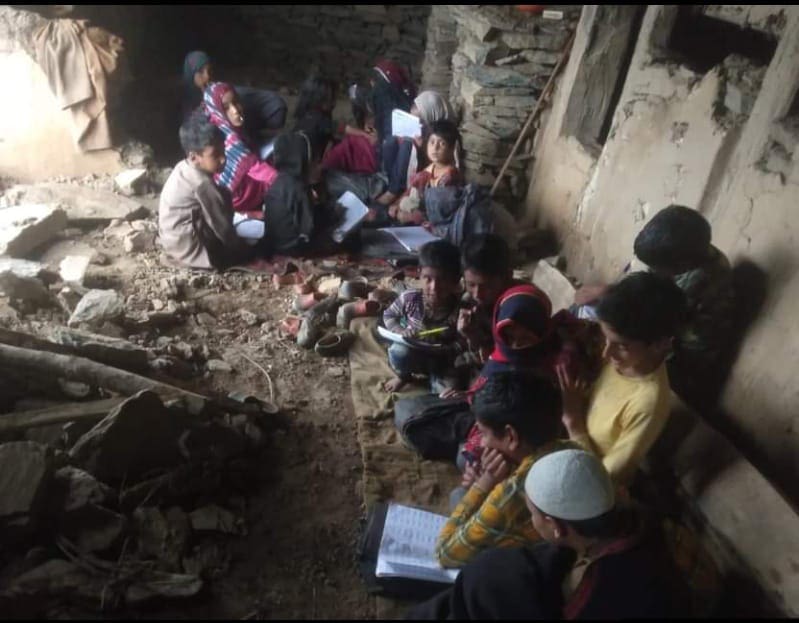
However, in rural areas like Pir Panjal, where I come from, the opposite phenomenon can be observed. What we request (not expect) from our leadership at the Union and state levels are bare minimum necessities like enough water for our livestock to survive, at least two to four hours of electricity per day, a tractor road for easy transport in the hilly regions, a school building (or the renovation of an existing one) with at least one permanent teacher to provide elementary education for our children, and a dispensary with at least two rooms and some doctors, instead of rented homes used as makeshift camps. Every election season, we beg for these necessities, and every time, we are manipulated, divided from our real issues, and left with no expectations of receiving these very basic facilities. My people never demanded more than survival essentials such as water, electricity, roads, schools, and healthcare, but these have never been assured or even considered by the ruling parties.
Instead, we are promised the so-called protection of caste, cult, community, and region. Elected representatives disappear after the election season, and our basic needs are never part of their rhetoric, nor are topics like tourism development, job opportunities, and addressing inequalities.
Through the prism of the 2024 manifestos
Why has the state government failed for decades to provide us with these amenities despite the massive turnout in every election from Pir Panjal? Why do the manifestos of every party remain urban-centric, focused on Jammu or Srinagar, without giving special attention to regions with distinct problems like Pir Panjal? What development and ease of business are planned for the Mughal Road, which remains inaccessible for much of the year? Has anything been mentioned in the manifestos about this key ‘chicken neck’ between Kashmir and Pir Panjal? Are there plans for a railway tunnel or alternative direct route with Jammu or Srinagar? When will NH-144 be upgraded to national highway standards so that road accidents can be reduced? How much funding has been promised for BGSBU compared to other state universities? How many medical and engineering colleges have been granted to the region in the past or included in this year’s manifestos? What about existing polytechnic colleges, which have little more than small huts for buildings? When will GMC Rajouri be upgraded to the standards of Soura Hospital or GMC Jammu? When will sub-hospitals in Poonch be staffed and equipped properly so patients don’t die en route to Jammu, which takes 7-8 hours?
Under the SDG goals and JJM, have any political parties considered providing taps with running water in every household or proper water supply in Poonch and Rajouri villages? Have the manifestos mentioned digital infrastructure for the region, given that the existing network and electricity are not enough even for basic communication, let alone the 60% of students who rely on online education? Apart from these critical issues, have they talked about tourism, sports, and the protection and implementation of FRA? Have they addressed fund allocation or employment generation in tourism and sports at the local level? The answer, ironically, is very little, if not nothing. We have been ignored and neglected, considered only as a vote bank for decades.
In the history of electoral politics, both in J&K and specifically in Pir Panjal, the dominant parties were INC, NC, and later, PDP. However, Pir Panjal’s politics remained personality-cult-centric rather than policy-centric. This raises two important questions: First, why have the state or central parties failed to include the region and its people within their democratic framework? Or have they intentionally preferred to maintain the status quo, using elections merely to increase voter turnout by leveraging personality cults, as voter turnout has been very low in the valley since the 1980s? Second, why have most influential state and national leaders ignored the developmental needs of the entire region, remaining loyal to party lines rather than representing public interests? If the answer to both these questions is yes—and of course, it is—then we have been used as political pawns, stuck in a mire of caste, cult, community, and regional politics, never considered integral to the state's political landscape.
The emerging political trends in Pir Panjal are increasingly focused on social media campaigns, where political actors engage in unethical editing and trolling of opposing groups to build false narratives. This new wave of visionless leadership reflects a deeper problem: utter neglect by state-run parties and the absence of a strong local leadership cadre. In this vacuum, BJP’s steady rise since the abrogation of Article 370 has swept the region, despite people knowing little about the party’s ideological positions. They have joined out of frustration with previous regimes and optimism about the BJP's promises for comprehensive development.
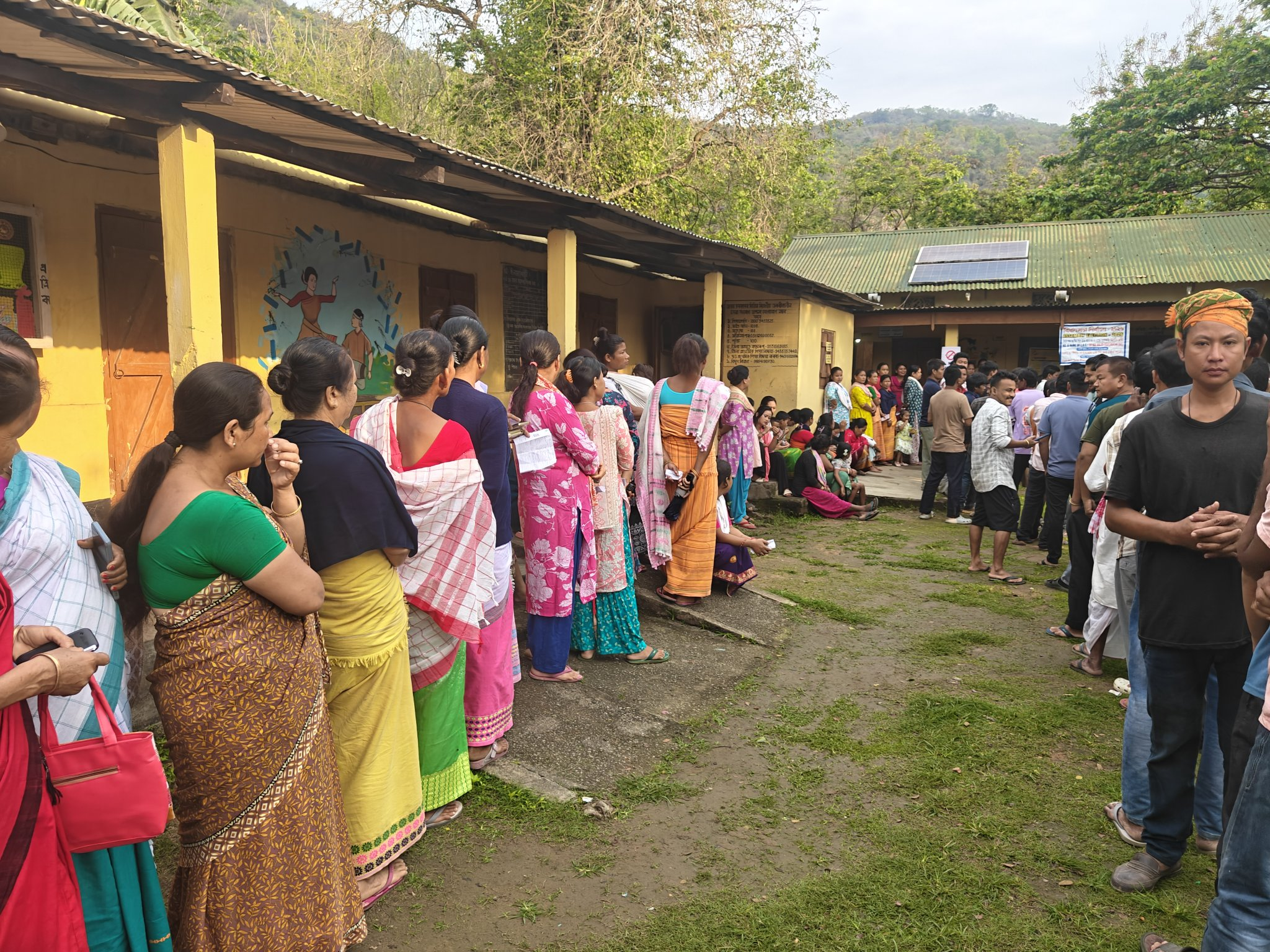
Oh, dear contestants and political parties! I have witnessed the excitement of the people since the beginning of this election season. This is, of course, the echo of democratisation across the hills of Pir Panjal. But the unacknowledged efforts of locals, both on the ground and online, have never been recognised. They shed blood, broke social chains, and made hostile relations with family and neighbours for you, even though you give them nothing more than a roadshow every five years. Many have become so pessimistic that they believe this election season is nothing more than a recurring storm, coming and going every five years, without truly penetrating the region with a genuine spirit of democratisation and a people-centric approach.
Ghulam Server Shaheen is a Research Scholar of Modern Indian History at Aligarh Muslim University (AMU), Aligarh, and hails from Surankote, Poonch, Jammu and Kashmir.