Who is Anura Kumara Dissanayake, Sri Lanka’s president-elect?

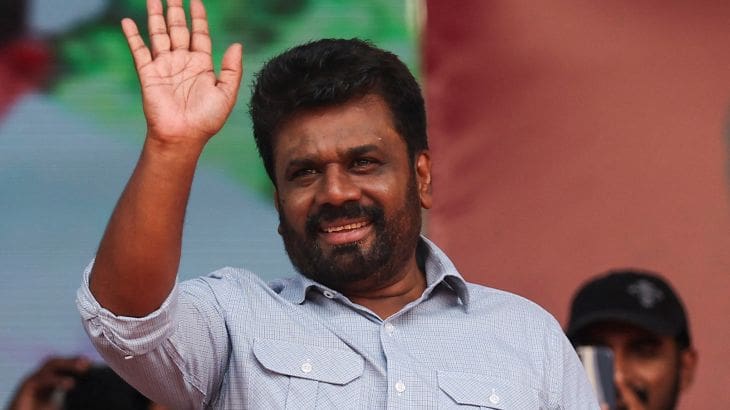
Anura Kumara Dissanayake has been declared the winner of the presidential election, according to the Election Commission of Sri Lanka.
The election commission made the announcement after a second vote count, the first in the Sri Lanka’s history.
Opposition leader Sajith Premadasa finished second while incumbent President Ranil Wickremesinghe came third and was eliminated after the first round.
The 55-year-old Janatha Vimukthi Peramuna (JVP) leader had been involved with the Marxist-leaning JVP since his school days and first became a member of parliament in 2000.
Dissanayake was appointed the JVP leader in 2014 and has since tried to reimagine the party’s image as distinct from its violent past.
JVP has never previously been close to national power and twice led Marxist insurrections against the very state Dissanayake now selected as the chief.
The turning point for the party and the National People’s Power (NPP), the coalition it leads, came in 2022, when the country’s economy collapsed, leading to widespread shortages of essential goods and skyrocketing inflation.
The JVP has only three seats in the country’s 225-member parliament, where it’s the fourth-largest force.
The Marxist leaning party has often been seen as close to China and has long been against any intervention in Sri Lanka by India.
Since independence in 1948, the country has been led by the two dominant political groupings, the United National Party (UNP) and the Sri Lanka Freedom Party (SLFP), alliances led by them, or by breakaway factions.
JVP led failed Marxist-inspired insurrections in 1971 and again in the late 1980s. The armed uprising launched by the JVP in 1988-89, aimed at overthrowing what they perceived as the imperialist and capitalist regime of Presidents JR Jayawardene and R Premadasa, resulted in one of the bloodiest periods in Sri Lankan history. At least 60,000 people were killed in the government crackdown, including most senior JVP leaders, among them its founder Rohana Wijeweera.
Dissanayake was appointed to the JVP politburo after the failed insurrection when the party abandoned violence and turned to electoral democracy.
JVP opposed the Tamil rebel movement in Sri Lanka because of its goal of a separate nation that would divide Sri Lanka. In the 2000s, as Sri Lanka under then President Mahinda Rajapaksa crushed the Tamil separatist movement, the JVP backed the government.
While Sri Lankan Tamils and sections of the international community have long been asking for accountability for war crimes committed during the civil war against Tamils in the country, Dissanayake has said he does not regret supporting the Rajapaksa government’s war against the Tamil Tigers, the Tamil militant group leading the rebellion.
The critics say that the JVP has historically identified itself with the Sinhala Buddhist ideology and its rhetoric reflects the concerns of Sri Lanka’s majority community.
In 2014, in a BBC interview, Dissanayake apologised for the party’s past crimes.
Born in a rural middle-class family in the village of Thambuttegama, 177km from the capital Colombo, in Sri Lanka’s Anuradhapura district, Dissanayake graduated with a science degree from the University of Kelaniya.
Dissanayake served as the Minister of Agriculture, Livestock, Land and Irrigation from 2004 to 2005 and Chief Opposition Whip from 2015 to 2018.