BJP's plot for ethnic mobilisation in Pir Panjal

Sajid Bukhari & Garima
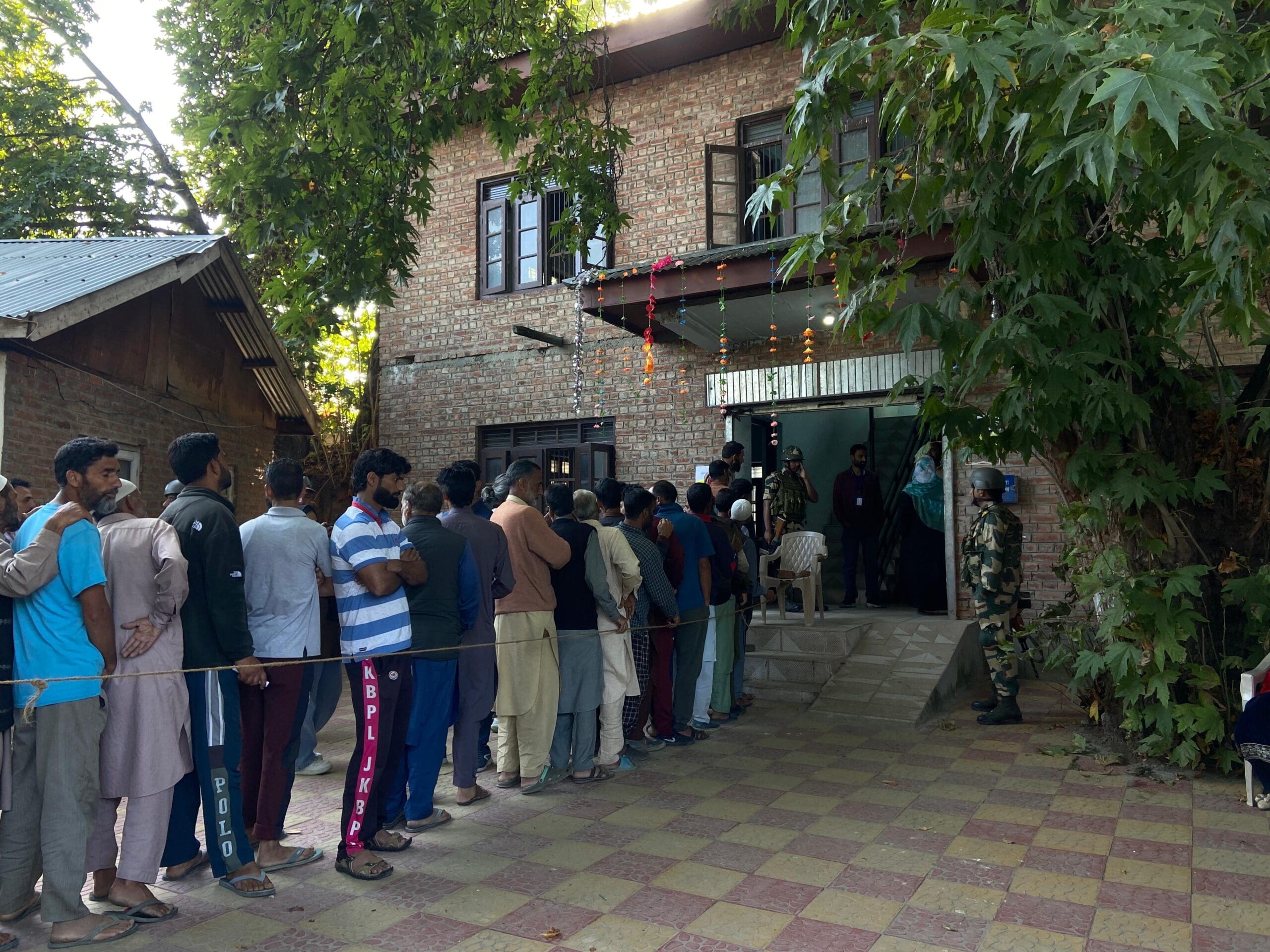
In contrast to the politics of the Kashmir Valley, where electoral boycotts have been prevalent, Poonch and Rajouri have always witnessed a sense of urgency among voters to resolve their multitude of issues. The voter turnout reached 80% in the 2014 state assembly elections, with votes usually divided along ethnic lines — Gujjar-Bakarwals and Paharis. This division is even more evident now due to the dispute over the recognition of the Paharis under the Scheduled Tribes Act.
This election is a significant moment in Kashmir’s history, where after 30 years, people are looking forward to electoral processes, albeit in despair. Banned organisations, such as Jamaat-e-Islami Kashmir, are reportedly resurfacing in electoral politics by backing members as independent candidates. The vote bank in the Kashmir Valley appears increasingly divided, a dynamic that could potentially benefit the BJP and its affiliates. Meanwhile, in the Pir Panjal region, the political narrative is heavily influenced by ethnic divisions, with the BJP strategically exploiting these fault lines to strengthen its position.
With the abrogation of Article 370 and the bifurcation of the erstwhile state of Jammu and Kashmir, the Pir Panjal Valley has experienced a turbulent political landscape. The Gujjar and Pahari communities, two prominent groups in the region, have been locked in a dispute over the recognition of Paharis under the Scheduled Tribes Act. This conflict extends beyond politics, with tensions flaring as Paharis advocate for long-standing demands for reservation, while the Gujjar-Bakarwal community strongly opposes these claims. The ruling BJP has been accused by locals of using this conflict to its advantage, seeking to entrench itself in the Pir Panjal Valley, a significant region and vote bank for any political party. Advocate Mobeen Khan of Poonch argued, “It’s now a concern that will also impact the future of Pir Panjal if mobilisation on ethnic lines continues. BJP’s campaign violates the Model Code of Conduct by using caste and ethnic terms to influence the masses.”
After the abrogation of Article 370, the BJP has made concerted efforts to establish itself in all regions of Jammu and Kashmir, beyond the Jammu plains. This was evident in the 2024 Lok Sabha elections, where the BJP did not field its own candidates beyond Jammu but was accused of backing proxies like Altaf Bukhari’s Apni Party. For the longest time, Pir Panjal has alternated between National Conference (NC) and People’s Democratic Party (PDP) candidates in assembly elections. However, many long-serving politicians and activists have now aligned themselves with the BJP, contesting elections under its banner.
In light of this, both the PDP and NC have done little to rectify their past mistakes in Pir Panjal. Their failure to implement strategic planning has already placed them at a disadvantage in the Valley. Consequently, the familiar promises of improved roads and infrastructure for Poonch and Rajouri are no longer sufficient. Voters appear disillusioned by the lack of new agendas that address the structural changes needed in the region. When Amit Shah argues that regional parties have treated Poonch and Rajouri as a “stepchild,” it underscores the need for the NC and PDP to clarify their commitment to the region.
In the assembly elections, the BJP anticipates a clean sweep in the Pir Panjal region by securing the support of the Pahari community, having addressed their long-standing demand for ST status. However, a closer analysis reveals that the BJP is leveraging the ST status primarily in only two constituencies of Pir Panjal — Surankote and Darhal-Thanamandi.
In the Mendhar constituency, despite Amit Shah’s campaign, the situation remains uncertain for the BJP’s candidate Advocate Murtaza Khan. Independent candidates from within the Pahari and Gujjar communities appear to have significant sway over voters.
In Haveli, the BJP unexpectedly selected a candidate from the Gujjar community, as it did in Budhal. In both constituencies, alliance candidates are putting up a tough fight, further complicating the BJP’s prospects in the region. Though the BJP has made inroads in the region by using reservation issues, being a Muslim-majority area, it has struggled to gain the confidence of the people due to its broader anti-Muslim policies.
Amit Shah, in his recent speech at Mendhar in Poonch district, claimed that the BJP was the first party to have championed the cause of tribal communities in Poonch and Rajouri. He accused the NC and PDP of overlooking the region's distinct challenges, contributing to its underdevelopment and long-standing conflicts. However, these claims by the BJP need to be scrutinised. Their approach to winning the support of the Paharis may have lasting repercussions. Instead of fostering cohesion, the divide between the two communities has widened, with the divisions becoming increasingly apparent. This growing animosity is being overlooked by the ruling government, which continues to mobilise the region along these lines, especially during election periods.
Another important point from Shah’s speech was his assertion that Poonch and Rajouri are experiencing a state of “normalcy.” This claim stands in stark contrast to the ground reality, where civilian killings, encounters, and counterinsurgency operations are on the rise. The recent civilian deaths in Dhangri and Topa Peer, Bufliaz highlight the government’s failure to maintain control. After years of unrest, the roads and pathways in Poonch and Rajouri remain under constant alert, raising critical questions about the BJP's narrative of "normalcy." Decades of conflict have severely impacted the lives and livelihoods of both the Gujjars and Paharis. As tensions continue to escalate, the ethnically divided region faces increased challenges rather than solutions.
Garima is a PhD scholar at the Department of History and Archaeology at Shiv Nadar Institute of Eminence. Sajid Bukhari is an alumnus of Aligarh Muslim University. Currently practising at Jammu and Kashmir and Ladakh High Court.