Who has a right to the city?

The projection of the metropolis as an international Singaporean hub has been deeply embedded in the technocratic imagination that engulfs contemporary Bengaluru. The imagination of the city has been in constant negation of itself as it remained restless in the early 1980s and 1990s, the planners of the city imagined a future for Bengaluru as a transformation into the ‘Silicon Valley’ of the country. However, the ramifications of such an aestheticised image economy have been the material marginalisation of slums, ghettoes, and the residents within. The neoliberal imagination of the city is rife with contradictions, as it claimed to protect the second-class citizens it hoped to evict. This is no accident, as the public space was imagined with the fictitious assurance of retaining the old with the new, however unattainable it might be. Could the old and new be only euphemisms to excuse pushing out the city’s poor?
The beautification of the metropolis has been a country-wide phenomenon. While Hyderabad has resisted the efforts at ‘beautification’ in pockets, the Musi Riverfront project is set to displace over a lakh of the inhabitants living on the riverbed. As of last month, more than 160 houses and structures in the Malakpet area were demolished with just a day’s oral notice. With residents being strongarmed into accepting the proposal, even the language of uprooting people’s houses and lives and setting them aside assumes such a benevolent dialect of its own. The lexicon of displacement seeks to guise its obtuse interests behind the thinly veiled brutality of ‘resettlements’ and ‘beautification’ — the invisible price that comes grandfathered into these development projects is the naked ousting of the city’s most deliberately dehumanised communities and their myriad livelihoods.
Indiscriminately cleared out to make room for the ‘new’, the state exercises utmost carceral callousness in uprooting its urban undesirables. There is a bone to be picked with the grammar of benevolence that even academic research and scholars bestow upon the working class, in their elucidations of the often ‘overlooked’ poor. The assumption of neglect would imply that it is a simple accident that can be remedied, given it is brought to the attention of the authorities, and yet that cannot be farther from the truth. The fundamental structure of development is entirely reliant on the disenfranchisement of the city’s most vulnerable. For example, Bengaluru, in the 90s, was spearheaded in the direction of replacing unplanned private shops with shopping complexes. The ‘randomness’ of the city and its inhabitants has always posed a problem to the bourgeois imagination of a City Planned!
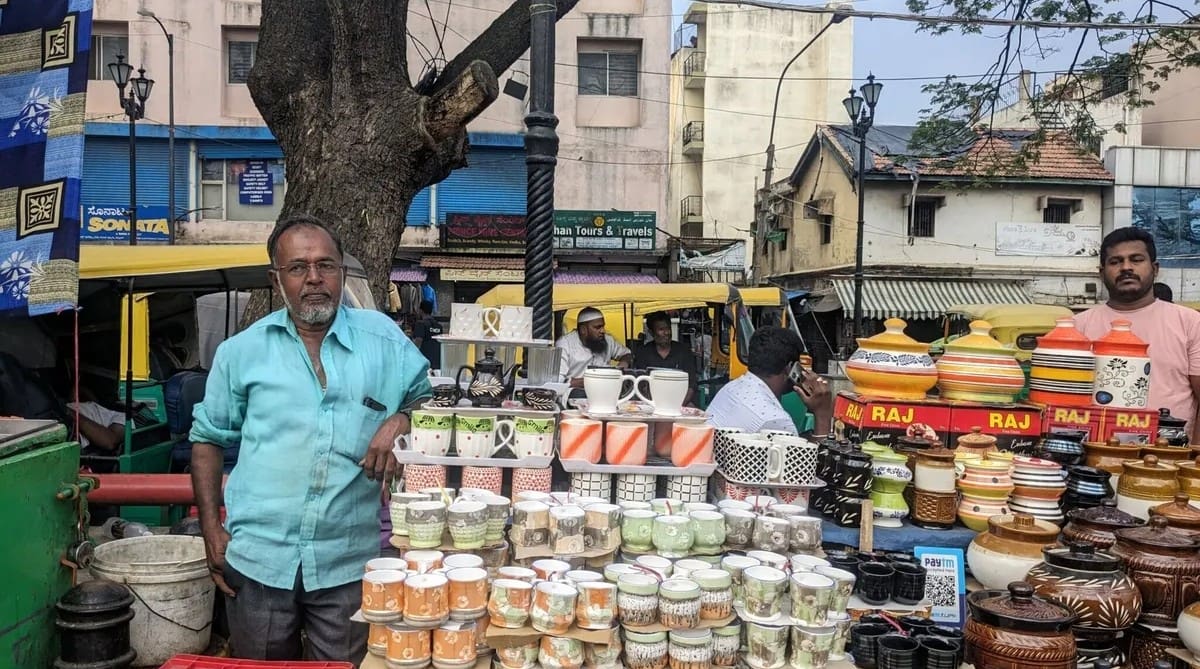
As of recently, the city’s informal economies have been at the receiving end of surveillance and eviction, and while this is a routine process, it has dealt a significant blow to the livelihoods of these street shopkeepers, often belonging to the margins. MG road in Bengaluru, often bustling with the lineup of informal shops from small food enterprises to knockoff kicks sold at retail prices, has encompassed the city’s largely informal fabric since time immemorial, alongside many such street shopping areas scattered across the city. However recently, untimely raids and onslaughts focused on ‘cleansing’ the streets have evicted nearly every single shop in sight. While this is a routine occurrence, it is revelatory of an insidious ‘sanitisation’ project that is undertaken under the excuse of maintaining residential decorum.
One cannot view beautification, sanitisation, and a radical restructuring of the city in isolation from the economic factors ushering this desertion in, the beautification project was based on something larger i.e the establishment of a modern IT corridor that would transform Bengaluru into a place to be, for capital and its accumulation. The city subsumed villages as it expanded rigorously, the invisible hand of the free market gobsmacked and absorbed many heritage infrastructures under the promise of resurrecting longstanding mall complexes, one cannot navigate Bengaluru today without running into a mall every five kilometers. When the expansion of the city had hit a limit, the focus became central to the brutal eviction of forced relocation of urban poor settlements. Their spatial marginalisation translated into them occupying the outskirts of the city, money poured into towering luxury housing projects made it so it so that the city’s residents belonging to the lowest rung of the socio-economic strata were pushed further into the margins; numerous apartments and gated society projects sprung up in residential areas, eating away at the lives of the urban poor, in a mechanical continuous fashion.

The legacy of Bengaluru city planning is a violent one, the posturing of informal economies of households, chawls, slums, and their sea of street shops were considered as the antithesis of the city, the development plans of Bengaluru were contingent on eradicating the ‘problem’ (the poor and the underprivileged) and transforming them into extensions and prosthetics of the city, they no more formed the center of a loosely imagined lucid landscape, they were but the spillage systematically displaced. Who then has a right to the city? While the question remains unanswered, it becomes inexplicably clear as to who has been historically denied the right to the city, the public space, and the mobility it seeks to offer.
The material dispossession of the urban poor is rooted in the belief that they are the inconvenient ‘surpluses’ of the city, all while their bodies and labor are relentlessly exploited to build the very nucleus of the city. From the scores of domestic workers, often working under deplorable grossly underpaid conditions to the city’s cleaners, routinely toeing the line of life and death, the city seems to fall apart at its seams every time their labor is not readily available for denigration. Even the urban ghettos that populate the city rarely make it to the city’s cultural nomenclature, these ghettos that are central to the pulse of Bengaluru, are not given room to breathe, let alone exist as areas within their own right. At the heart of this conversation, aren’t the poor migrants who enter the city in the hopes of accessing even the barest of its promises, but the insidious nostalgia of ‘Old Bengaluru.’
Nostalgia is a site that needs to be relentlessly examined and investigated to grapple with the understanding of Bengaluru’s dispossessed. The conversations and imaginations that displace its agitation against the ‘outsiders’ only hope to forget its equally violent past. The paradise that Old Bengaluru is made to me in the foray of memories often narrated by its diaspora returns encapsulates the landscape of upper caste gated societies. This perverse nostalgia incriminates itself in the way the city is imagined, stretched to the end with Brahmanical gated societies. Even with a departure from this nostalgia, not a lot has changed, with the city’s Muslims routinely being denied housing, the essence of the past remains preserved and untouched.
Yet, the disdain for the ‘overpopulation’ and migration from the north is ever present in dominant cultural and political discourse. The insider-outsider binary of the city becomes all the more elusive and a thing of fiction once the position of the city’s old residents as generational immigrants is brought into the forefront. After all, Bengaluru’s history has been shaped by a landscape of a 1000-year-old migration, the heritage architecture of the city is a result of the cultural intersection of Tamil models, Persian architectural ideals, and a dizzying melange of migrant dynasties. When the city was partitioned between the British cantonment and the old marketplace, it birthed a rich linguistic settlement of Tamil-speaking Madras sappers in Ulsoor, alongside Tamil, Telugu, and Marathi merchants. The history of the city is rife with such contradictions of identities and all of this begs the question — Who does the city even belong to? And more importantly, who does this idea of an ethno-nationalist homogeneous belonging service?
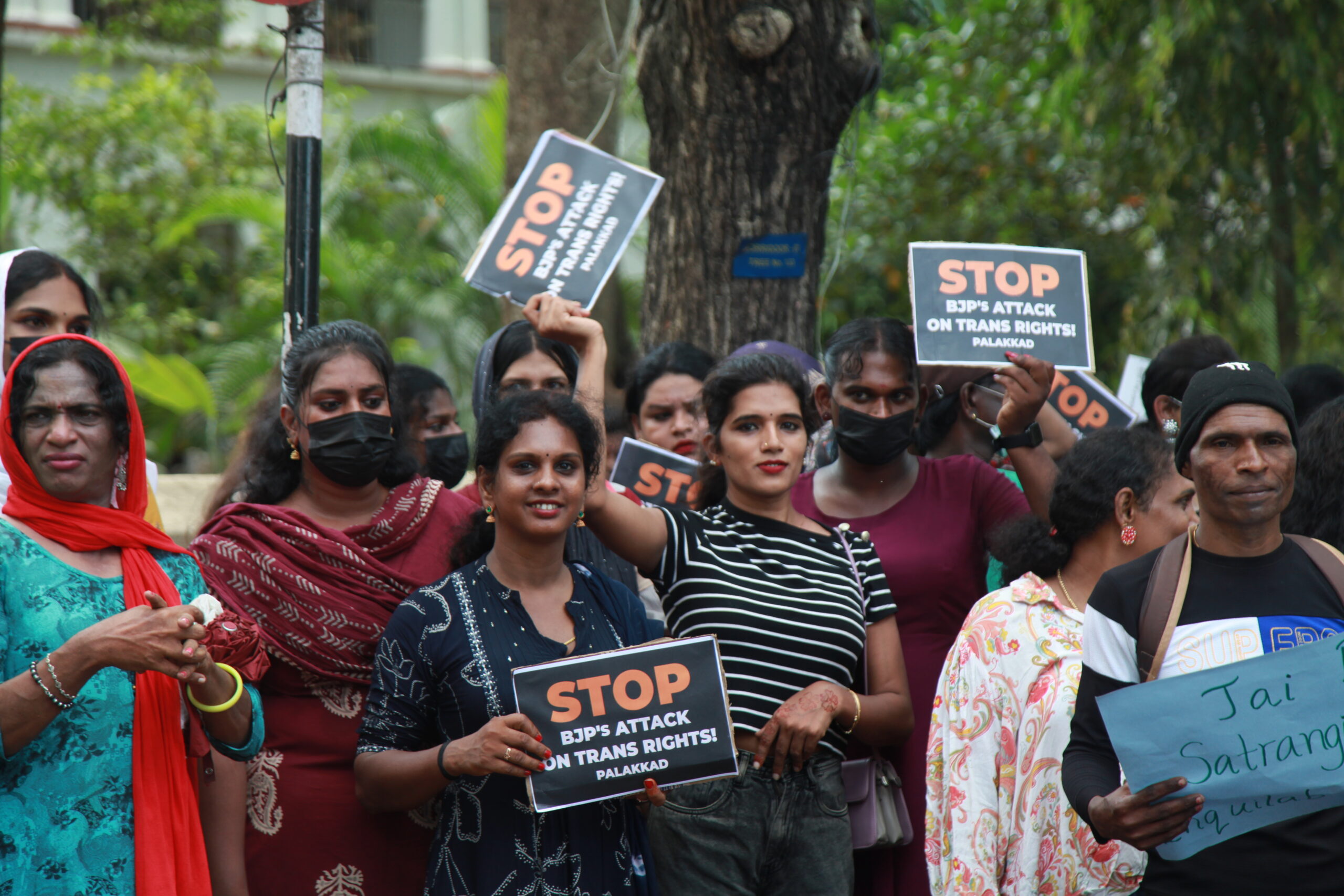
Both nostalgic and futuristic claims to the city are rooted in the rejection of its invisible citizens; this rejection however has not reduced the city’s urban poor to mere numbers and bodies. While the city carries a bloody history of exploitation, it also carries the material assertions from the margins staking their reclamation to the public space. Be it the growing cultural renaissance of Dakhni hip hop, the several gosht and seek shops occupying the public space, despite the fear of forceful removal, or the call for the reinstatement of civil rights for the street sex workers of Bengaluru – the carceral nature of urbanisation is such that it seeks to ‘protect’ the people it conveniently displaces. The violent crackdown on ‘crime-infested areas’ and the casual surveillance of ghettos is not only the manifestation of the city but also of the nation-state’s aspirations.
The city’s elite looks down upon its domestic undesirables, ‘soliciting’, the ‘unhygienic’ state of ghettos and slums with a sense of gratifying condescension. Their right to the city isn’t secluded as it continues to impinge upon the very bodies it erases, curtailing them in the throes bureaucracy while endangering their livelihoods in the public domain. The catastrophe of relegating the urban poor to the margins produces a mass amnesia – the cultural xenophobia that plagues the city of Bengaluru is merely a symptom of this crisis.
In the past three years alone, the Pourakarmikas of the city have been on strike multiple times to protest the contractual nature of their employment, demanding that they be employed as permanent workers. Trade union workers and labor movements have sprung up for decades in the city, only recently the KITU protest demanded an end to the Labour rules exemption for the Tech sector; so on and so forth, the oppressed claim to the city has seeped into the city’s spatiality despite the state’s repeated negation of it. The space makes up the public as much as the public makes the space, the question of who has a right to the city and by its extension, the city’s resources, infrastructure, and delineated rights must be answered in light of the resistance of the oppressed to reckon with their bodies beyond the myopic lens of bourgeois care politics, surveillance, and festering pity.