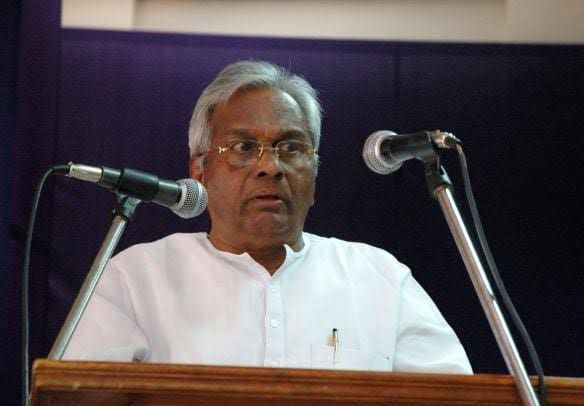
VT Rajshekar: The man who questioned the State

When the Babri Masjid was demolished by Hindutva forces in 1992, few political leaders, thinkers and journalists thought that it was a racial atrocity against Indian Muslims and that Muslim protests against it needed to be strengthened. Many saw it as a stain on Indian secularism and worried that Muslim voices raised against it would be reduced to communalism. But when the Babri Masjid was demolished by Karsevaks, a brave journalist came to see Maulana Abdul Hasan Ali Nadvi, who was carrying out his intellectual activities in Lucknow, UP. His name was Vonthibettu Thimmappa Rajshekar known as VT Rajshekar.
VTR asked Abul Hasan Nadvi to lead a protest march from Lucknow and assured him of his full support. Abul Hasan Nadvi had agreed to it and started making efforts, but due to his advanced age, he was unable to do so. VT Rajshekar, a strong caste critic and founding editor of Dalit Voice, was a journalist with a keen understanding of the Muslim political crises in India. The country lost that great man two days ago.
V.T. Rajshekar occupies a unique and transformative position in the history of Indian journalism. Beginning his career in 1959 with Deccan Herald and later working with The Indian Express for 25 years, Rajshekar distinguished himself as a journalist with a sharp and meticulous analysis of India’s political and cultural landscape.
In 1981, he founded the magazine Dalit Voice, which left an indelible mark on the political history of India. During the 1970s and 80s, a period when Dalit issues received scant attention in the Indian social and media spheres, Rajshekar’s writings brought Dalit life and politics to the forefront. He created a counter-public sphere by consistently challenging Brahminism and dismantling caste hierarchies through his incisive critiques.
Rajshekar’s relentless writing significantly contributed to the strengthening of India’s anti-caste political movements, inspiring numerous activists and movements across the country. As a close associate of leaders like Kanshi Ram, he played an instrumental role in shaping and supporting Dalit political activities. His work positioned him not only as a chronicler but also as a driving force behind the anti-caste movements that gained momentum during this transformative period.
Many scholars have observed that the 1970s and 80s marked the emergence of new political subjects in India. V.T. Rajshekar was a pivotal figure in shaping this era, fostering a radical reimagining of the socio-political landscape and contributing to the ongoing struggle for social justice and equality.
V.T. Rajshekar’s thoughts and writings posed a persistent challenge to the State, often making him a target of its repressive measures. At one point, he was arrested under the draconian Terrorist and Disruptive Activities (Prevention) Act (TADA), and his passport was confiscated following a controversial editorial. The State's relentless pursuit of Rajshekar can be attributed to several factors, chief among them being the sharpness of his critiques and the far-reaching influence of his writings. His ability to inspire anti-caste activists and movements across the country magnified his impact, further heightening the State’s apprehension.
What made Rajshekar particularly "threatening" to the State, however, was not merely his influence but the distinctiveness of his anti-caste thought. His critical stance against systemic caste oppression and his bold critiques of Brahmanism carved out a unique intellectual and political space in a nation grappling with the pervasive spread of fascism across its institutions and ideologies.
V.T. Rajshekar, who began his intellectual journey and activism within the framework of Marxism, later shifted his focus upon recognizing caste as the central issue in Indian society. Engaging in debates with prominent Marxist leaders such as E.M.S. Namboodiripad, he ultimately distanced himself from the Marxist path, criticizing its tendency to dismiss political questions about caste as mere casteism.
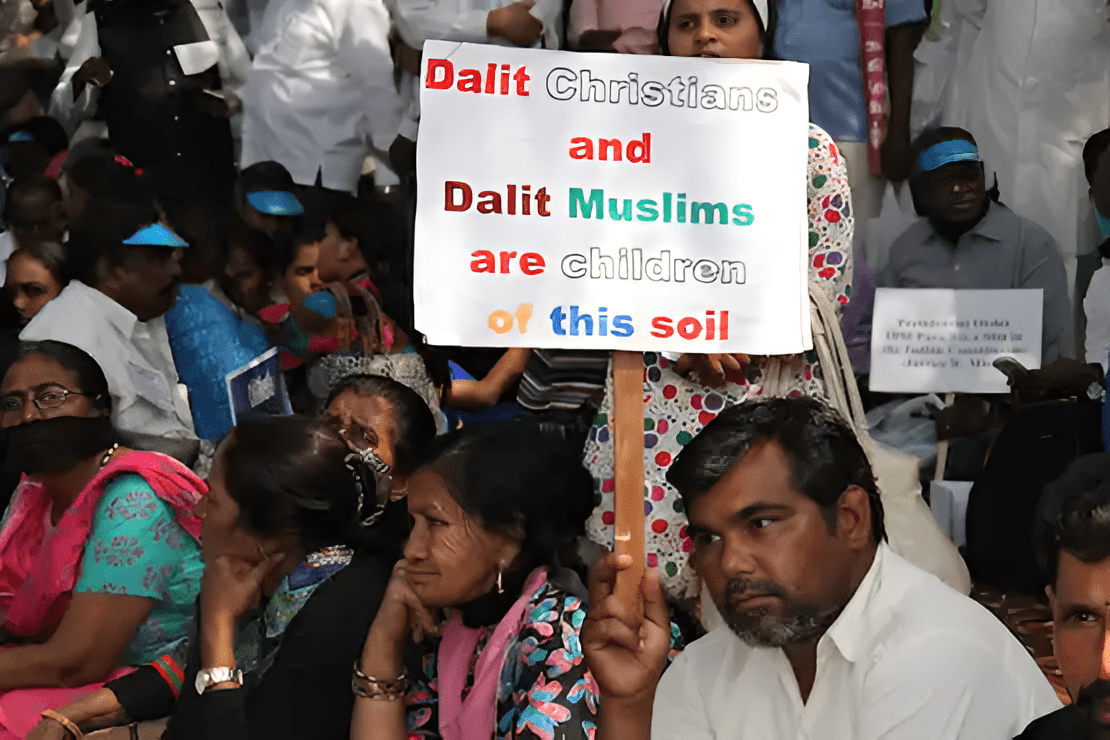
Rajshekar viewed Dalits, Muslims, and other marginalized groups as 'persecuted nationalities', arguing that Indian nationalism was inherently a manifestation of Brahminism. This critique of Indian nationalism constitutes a pivotal aspect of his thought. His incisive analysis of the dangers of nationalism further shaped his vocal advocacy for addressing the crises faced by Muslims in India. This perspective also contributed to Dalit Voice gaining a significant readership among Muslim communities, as it resonated with their experiences of systemic persecution. These critiques remain crucial for understanding the socio-political complexities of the country.
V.T. Rajshekar’s remarkable intellectual contribution lies in his ability to develop anti-caste thinking into a comprehensive worldview and global imagination. By applying the same perspective, he critiques global racisms and imperialist politics. In one of his works 'Brahmanism: Father of Fascism, Racism, Nazism', Rajshekar traces the roots of various forms of racial domination to Brahmanism. Similarly, in 'Apartheid in India: An International Problem', he situates the Indian caste system within the broader discourse of Afro-American thought and history, offering a critical analysis of the racial structures that shape the world.
Rajshekar’s political philosophy extends beyond caste critique to encompass a broader critique of global centers of power, positioning Muslims and Christians as integral to the Bahujan theme. His perspective on Zionism, which he interprets as an advanced form of Brahmanism, underscores his stance against Israel and American imperialism as extensions of his anti-caste ideology. This clarity of thought allowed Rajshekar to maintain an unwavering commitment to anti-caste principles and advocate for Dalit-Muslim solidarity, even during the rise of the Sangh Parivar. His characterization of the BJP as the "Brahmin Janata Party" and his resistance to oppressive ideologies endured despite the closure of 'Dalit Voice', his influential magazine, under the prevailing political climate.
The sharpness and clarity of V.T. Rajshekar’s political thought must be continuously remembered and engaged with in contemporary India. His vision offers a potent antidote to the fascist regime that seeks to consolidate power at the center while systematically marginalizing the peripheries. The liberation discourses articulated in Dalit Voice —described by Human Rights Watch as "India's most widely circulated Dalit journal"—must not fade into oblivion. These writings encapsulated a diverse array of liberation imaginations, addressing the aspirations of marginalized communities across various spectra of oppression. Notably, the magazine's engagement with Islamic theological visions of liberation has been examined by Yoginder Singh in an article published in Economic and Political Weekly. Singh highlights how the writings of Muslim contributors to Dalit Voice reflected the theological imaginations of liberation from an Islamic perspective. It lights on V.T. Rajshekar’s profound insight: that the Brahminical caste-based social order can be dismantled only through a fraternity rooted in the liberation theologies and collective imaginations of all oppressed communities. Reclaiming these transformative political and social visions is imperative for the emancipation of marginalized and backward communities from the grip of fascism. A thousand final tributes to V.T. Rajshekar, whose legacy continues to inspire struggles for justice and equality.
Abdul Wahid Koormath is a research scholar at EFLU Hyderabad.