In Odisha’s Sijimali, Adivasis resist Vedanta mining despite crack down

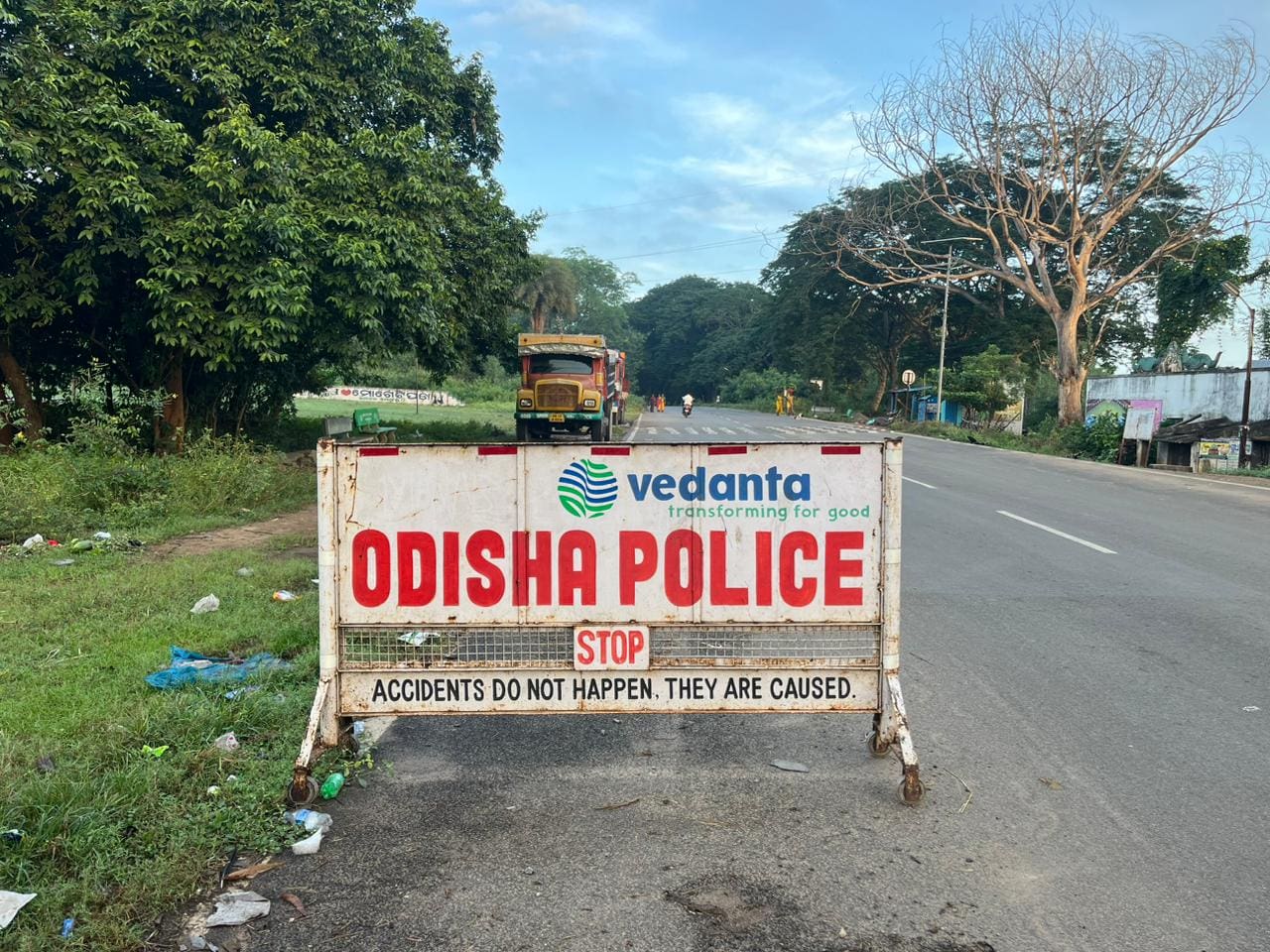
From 20 km to the Sijimali mountain range, spanning the districts of Rayagada and Kalahandi in southern Odisha, mining giant Vedanta Limited has installed traffic barricades with its name on them and a slogan that reads “Transforming for Good.”
However, the Adivasi communities in the region are not ready to buy this promise. When they opposed the mining lease granted to Vedanta last year, brute forces were unleashed on them.
Now, the Sijimali range, locally referred to as the Tijimali, has become a site of struggle for the region's Adivasis, primarily the Dongria Kondh tribes.
“It is a concerted effort to force us to give up our constitutional demand for our land, which the company seeks to destroy by displacing us and launching an offensive against our resistance to its illegal actions and routine harassments,” Govind Majhi, a villager from Kantamal, said.
The company's consistent effort to secure bauxite in the region has lasted for more than two decades. The Dongria Kondh tribes previously struggled to block Vedanta’s mining plans in the Niyamgiri mountains in the Kalahandi district of Odisha, when it sought to mine bauxite for its Lanjigarh refinery.
After facing setbacks in Niyamgiri, its interest shifted to the Sijimali as part of its strategy to secure bauxite. Vedanta Limited has received the letter of intent for the Sijimali Bauxite block over an area of 1,549.022 hectares, having an estimated bauxite reserve of 311 million tonnes.
The mountain ranges of southern Odisha hold over 50% of India’s bauxite reserves. Besides Vedanta, Adani was granted the lease for the mining of Kutrumali bauxite mines. Another company, Larsen and Toubro (L&T), is in the process of acquiring a lease for the Majinmali mountain ranges.
Kantamal, a village two hours from the Rayagada city, situated deep inside the dense forests, has become the movement's epicentre. Ma Mati Mali Surakhya Manch, an organization of locals at the helm of the movement against the mining operations, has been opposing the mining for over a year.
The opposition against the mining operations reveals the corporate interest in the resource-rich lands inhabited by the Adivasis. Despite being protected under the Fifth Schedule of the Constitution—which subjects the tribal land to their consensus—the constitutional mandates have been flouted, threatening displacement of more than 30,000 Adivasis and other inhabitants.
Arrests, FIRs: Tools to quell resistance

Kartik Naik, an Adivasi from Banteji village in Odisha, was arrested on September 19, based on a First Information Report (FIR) filed on January 1, by Trilochan Gouda, a spokesperson for Mythri Infrastructure Mining Company, a contractor for Vedanta Ltd.
Gouda alleged that he and three associates were attacked by villagers during a visit to the contentious Sijimali mines.
The FIR initially listed 28 individuals, but police later added seven more names, bringing the total to 35. Authorities claim several suspects had been "absconding" and obtained arrest warrants from the First Class Judicial Magistrate’s court in late August.
Manju Naik, Kartik’s wife, refuted the absconding claim.
“He was returning from a bank when the police arrested him. They recorded his statement at a hospital before taking him to Kashipur police station, where he remains in custody,” she told Maktoob.
The charges against Kartik Naik and others range from rioting and dacoity to attempted murder and criminal intimidation under multiple sections of the Indian Penal Code. His lawyer, Santosh Majhi, calls the charges exaggerated and designed to stifle dissent.
“These open-ended FIRs are being weaponized to intimidate Adivasis and activists,” Majhi said.
Naik’s arrest follows another wave of detentions in August 2023, when leaders of the Ma Mati Mali Surakhya Manch were apprehended. The earlier FIR named 94 individuals and more than 100 unnamed others, with police issuing additional warrants for 20 people.
Umakant Naik, one of those arrested in August, recounted an incident in which police allegedly stormed his home at 1 a.m. on August 12.
"I had returned from the hospital to rest – my wife was there, pregnant with our first child. They demanded that I come fix their car because I’m a mechanic. My neighbours, Damroo Naik and Niranjan Naik, stepped in to help, trying to oppose the arrest, but they were taken too and added to the list of accused”, Umakant told Maktoob.
Villagers allege that authorities and the mining company conspired to portray their resistance as violent. Umakant Naik said police pressured him to confess to crimes he didn’t commit. “I told them, ‘If you want to beat me, beat me to death. But I won’t confess to false accusations.’ All we want is our right to livelihood and land,” he said.
Before the arrest, the villagers determined to voice their concerns, decided to meet the SP of the Rayagada district and the company representatives when they visited the Sijimali hills. However, they were accused of abducting the company staff, after the Police allegedly vacated the area.
The villagers allege that It was a premeditated plan of the company to intimidate and accuse the Adivasis of taking on violent means.
On the eve of 19 September, more than 1000 villagers walked more than 15 kilometres from their villages in Sijimali to the Kashipur police station to demand the release of Kartik Naik. They protested against his arrest, and eventually, the police signed a bond with them, writing in agreement that Kartik would be released within four days and wouldn't be implicated further.

“We won’t arrest anyone under any false charges. If the company files an FIR, we will take responsibility for understanding the demeanour of the company and not take any illegal action or arrest anyone. I, hereby, guarantee that the members of the Ma Mati Mali Surakhya Manch won’t be intimidated or accused under false charges”, the bond signed by the Inspector In-charge Suryaprakash Naik of the Kashipur Police Station stated.
Unaccountability to facilitate the mining
On 13th September 2023, Odisha’s State Pollution Control Board (OSPCB) put up notices for the conduction of public hearings seeking environmental clearance for the proposed mining.
On 25 September, more than 80 prominent activists and lawyers, including Gautam Bhatia, Prashant Bhushan, Sudha Bhardawaj, and others, sent a petition to the governor of Odisha, highlighting how the company had been filing FIRs to quell the movement.
The Petition demanded the immediate closure of the FIR dated 12 August 2023, filed by an official of Mythri Ltd., naming 94 persons along with a hundred unnamed others.
“It was a premeditated plan to suppress the movement by forced arrests of the leaders and other individuals before the public hearing, and to spread fear and terror among the population”, Lakhman Majhi said.
The lawyers criticized the police for conducting midnight raids and raised concerns about the proposed bauxite mine, highlighting its location in Fifth Schedule areas.

In the 1997 decision of Samatha v. State of Andhra Pradesh, the Supreme Court prohibited the diversion of V Schedule lands in favour of non-adivasis, including public and private corporations.
In 2013, the Supreme Court in Orissa Mining Corporation v. Ministry of Environment and Forests affirmed that Gram Sabhas under the Scheduled Tribes and Other Traditional Forest Dwellers (Recognition of Forest Rights) Act, 2006 (FRA), have the ultimate right to make decisions about the protection and conservation of their community lands and forests.
This ruling also pertained to Vedanta’s proposed bauxite mine in the same districts, covering smaller areas than the current Sijimali mine, and was unanimously opposed, leading to its cancellation.
"Forced gram sabhas"
“In this case, there have been no prior consultations with the affected gram sabhas who have a right to participate in all decisions affecting their customary forests and homelands, but adversely, forced gram sabhas were conducted in November and December in 10 affected villages”, Lenin Kumar, poet and a member of the Niyamgiri Suraksha Samiti said.
The hearings were conducted in an atmosphere of fear and harassment, to garner support for the mining. The villagers wrote a letter to the Inspector in charge of the Kashipur police station, raising concern about how the company was using several aids and bribes to coerce people.
“The Mythri and the Vedanta are behind the violent eruptions in the villages. They aim to facilitate the displacement of the Adivasis so that the mining can begin without objection. Anyone who objects is a criminal in the eyes of the state and an enemy for the company”, the letter written in July 2023 stated.
Vedanta submitted the draft of the Environmental Assessment Report on 14 August, 2023. It claimed in the report that only 18 villagers are going to be affected, while land acquisition data reveals that more than 50 villages are affected. Based on erroneous claims, MoEF&CC granted Vedanta a Terms of Reference (ToR) under the Environment Impact Assessment (EIA) Notification, 2006.
Under the EIA Notification 2006, the full EIA report must be made publicly available in the local language of affected communities to facilitate their comments. District Collectors are required to invite public feedback to ensure all concerns are addressed. However, these provisions were ignored, and the EIA report was published with compromised implications.
“The pace with which the process was being carried out shows that this is just a mere formality, as there was a complete lack of compliance with the EIA-mandated public hearing process and that the implication is much larger, affecting more than 50 villages”, Narendra Mohanty, convener of the forum against fabricated cases told Maktoob.
Landless in their land
The villagers said that the Paramilitary forces were deployed across the villages after the notifications for the Public hearings were released. The Police threatened to instigate criminal cases if any opposition was formed.
Lai Majhi, Vice-President of the Ma Mati Mali Surakhya Manch, said that they were surveilled using drones, inciting fear of arrest and attack.
“The women who went to the forests to fetch wood were restrained by the police and forced to give assent for the mining during the public hearing” Lai Majhi said.
In August, the company officials had entered the village of Malipadar, where women had slept in front of their cars opposing the felling of trees. The company signed a written agreement to not enter the villages without their consent, but it was a false assurance.
“The company officials sent their men”, said Sabha Singh Majhi. “They took Aadhar cards and bank accounts across villages, coercing people for money and telling them not to oppose the mining”, he said.
“In the Tikri Village, they make everyone stand in a queue and distribute 1000 rupees and biryani. They penetrate here through NGOs to suppress and divert people’s attention”, Rina Majhi, an Adivasi woman from the village of Malipadar said.
On October 11, Villagers submitted a petition to the Governor of Odisha against the mining and the public hearings. They travelled through forests, avoiding company informers and police, to catch a bus at Rayagada for Bhubaneswar.
“The mining project would negatively impact our livelihood. The EIA did not address how our cultural and social life is tied to the mountain. For sustenance, we gather primary products such as fruits, wood, siali leaves, and honey from the forests, which will be destroyed. Furthermore, we will be displaced due to the mining, despite having land entitlements protected under the Forest Rights Act, the Panchayats (Extension to Scheduled Areas) Act, and the Fifth Schedule of the Constitution”, the petition read.
The concerns raised include the depletion of water resources, pollution, soil erosion, and the destruction of sacred and religious sites of the Adivasis. The petition highlighted the threatening consequences to their lives, all in the name of development that goes against their needs.
Disguised as Development
On 16 October, the first public hearing was held despite protests. It continued for around 2 hours, amidst the resounding opposition by over 600 villagers who attended it.
“We told them how is it fair to obtain a lease when we haven’t even consented for the land, it is a direct land grab. Hundreds of police patrol our villages day and night. They tell us that we have no other option but to sincerely allow the company to take over our land”, Lai Majhi said.
Before the public hearing was organized, villagers said that the company had brought several people in buses who held placards showing support for the immediate implementation of the mining. The outsiders were brought by the company to necessitate the mining and to show that villagers were in support of the progress.
On 18 October, another public hearing was organized at Kerpai High School in Thuamul Rampur Block of Kalahandi district and was attended by more than 1500 people. The meeting ended abruptly due to the protests by the Adivasis, who raised slogans of “No to mining”, “mythri go back” and “vedanta go back”.
“If they think Adivasis are poor and illiterate, why are they grabbing our lands from us? Our land is our sole inheritance; our life not only depends on it but is nurtured by it. This is a direct violation of law, but under the garb of development, the police and the state have submitted themselves to the Vedanta at the cost of our lives”, Rina Majhi said.
In August 2023, an ambulance entered the village of Kantamal. It threw school bags with a pencil box in them, sponsored by Vedanta, near the premises of the local primary school.
The villages lack health and sanitation facilities, and the school functions at the will of its administration. However, a development model being imposed carries a detrimental risk to the lives of Adivasis, whose existence is tied to the mountains and their land.
"They want us to bear the brunt of their so-called development. The routine harassment meted out to us is solely intended to facilitate the mining. They're clearly not concerned about Adivasis”, Kumeswar Naik, An Adivasi youth responsible for scribing for the Ma Mati Mali Surakhya Manch said.
The mandatory Gram Sabha meetings, required to obtain consent for acquiring land protected under the Fifth Schedule, were conducted without prior notice to the locals. Fake Gram Sabhas were held on 23 November and 8 December in eight villages of Rayagada district and two villages of Kalahandi district, respectively, without the participation of the concerned Sarpanchs of the gram panchayats.
“The villagers weren’t informed about it, nor were the respective Sarpanchs,” said Sharmila Majhi, Sarpanch of the Sunger block.

On 23 August, the villagers submitted an application to the Rayagada and Kalahandi district collectors, demanding FIRs against those involved in conducting the gram sabhas for violating Section 3(1)(g) Scheduled Castes and the Scheduled Tribes (Prevention of Atrocities) Act, 1989.
But their demands, far from being met, have been rejected with a severe lack of concern. The villagers revealed that the Fake gram sabhas were conducted illegally, and when they raised the concern through applications to the police and the collector, no heed was paid to them.
Subsequently, the villages conducted their own Gram Sabhas this year, the resolution of which resulted in a unanimous decision against the mining lease. The Gram Sabhas were held between the 30th of August and the 04th of September 2024.
After the Gram Sabhas, villagers notified the authorities in both districts, sending copies of their resolutions to the District Collectors, the Chairpersons of the sub-divisional Forest Rights Act committees for Rayagada and Kalahandi, and the Governor of Odisha, whose responses are still awaited.
“The Police were notified about the Gram Resolutions. They said that the Gram Sabhas had already taken place in 2023”, Sabha Singh Majhi said.
“As the head of the fifth schedule areas of Odisha, we urge you to uphold the decisions of this special gram sabha. We also demand a judicial inquiry into the non-consensual forced gram sabhas and forged signatures, along with the directions to the inspector in charge of the regions of the Kashipur and Thuamul Rampur for registering an FIR based on the complaints”, the copies of the resolutions and letter sent to the Governor of Odisha reads.
Showing the postal receipts, Villagers lamented that no response has been received so far.
“The company has been attempting to create divisions among the villagers, to show that they are in support of mining. The multiple stances of fake charges have been used to crush the movement and displace us from our lands”, Hiramal Naik, an Adivasi leader of the movement said.
Piles of papers, including several fact-checking documents, applications and letters to the government, doze in the files kept by the Adivasi leaders of the movement. They have prepared it with the aid of lawyers and a few literate locals. But all of them have been reduced to mere waste papers due to deliberate neglect and prolonged injustice.
Syed Affan is a writer and independent journalist based in Delhi. His reportage focuses on human rights, state repression, land conflicts, and violence engendered upon communities in resistance