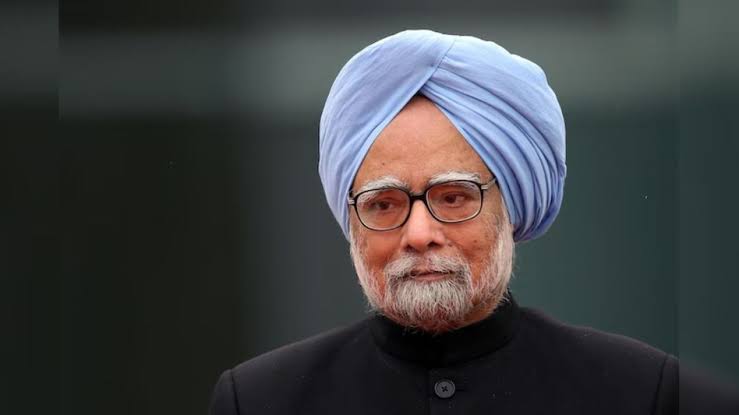
Former Indian Prime Minister Manmohan Singh dies at 92

Former Prime Minister Manmohan Singh, 92, passed away hours after being admitted to the emergency department of the All India Institute of Medical Sciences (AIIMS) in Delhi on Thursday.
"With profound grief, we inform the demise of Former Prime Minister of India, Dr. Manmohan Singh, aged 92. He was being treated for age-related medical conditions and had sudden loss of consciousness at home on 26th December 2024. Resuscitative measures were started immediately at home. He was brought to the Medical Emergency at AIIMS, New Delhi at 8:06 PM. Despite all efforts, he could not be revived and was declared dead at 9:51 PM," AIIMS said in a statement, confirming the death.
Singh, a renowned economist and statesman, was admitted to AIIMS Delhi on Thursday evening after his health deteriorated.
Manmohan Singh served two consecutive terms as Prime Minister, leading a coalition government under the Congress-led United Progressive Alliance (UPA) from 2004 to 2014.
A member of the Indian National Congress, Singh was the first prime minister of India belonging to a religious minority. He was also the first prime minister since Jawaharlal Nehru to be re-elected after completing a full five-year term.
Singh had been staying away from politics in recent years due to health reasons and had not been keeping well since the beginning of 2024. His last public appearance was in January 2024 at the book launch of his daughter. He retired from the Rajya Sabha in April 2024.
Singh was born on September 26, 1932, in Gah, a village in the Punjab province of British India, which is now in Pakistan. After the partition of India in 1947, his family migrated to India. Singh excelled academically, earning a first-class degree in Economics from Panjab University, Chandigarh. He later pursued postgraduate studies at the University of Cambridge, obtaining a degree in Economics in 1957, and went on to earn a DPhil from the University of Oxford in 1962.
After obtaining his doctorate in economics from Oxford, Singh worked for the United Nations during 1966–1969. He subsequently began his bureaucratic career when Lalit Narayan Mishra hired him as an advisor in the Ministry of Commerce and Industry. During the 1970s and 1980s, Singh held several key posts in the Government of India, such as Chief Economic Advisor (1972–1976), governor of the Reserve Bank (1982–1985) and head of the Planning Commission (1985–1987).
Singh’s legacy will forever be tied to the transformative economic reforms he initiated during his tenure as Finance Minister in 1991.