Beyond decolonization: Imagining future of minority institutions in India
Syed Shadab Asdaque & Mohd Rehan
Recently, a legal report on a premier law news blog captured our attention. It covered a speech delivered by the learned Senior Advocate and former Additional Solicitor General, Madhavi Divan, at a function. Though brief, the report is significant, as it helps to look upon some critical academic questions.
The theme, "Decolonisation: Supreme Court Judgments and the Indian Constitution," provided the backdrop for her remarks. During her speech, as covered by Bar and Bench, the respected advocate, while commenting on the role of the Supreme Court, stated:
"The way minority institutions have been treated by the Supreme Court is problematic because while you want the minority institutions to flourish, it cannot be at the cost of majority institutions, and it cannot become like a punishment... which makes people compete for minority status, and this is nothing but perversion."
At first glance, this might appear to be an ordinary remark. However, in the context of decolonization, it raises serious concerns and important questions. To comprehend the framework and scope of decolonization, one must first address a fundamental question: What does decolonization truly mean? Is it merely the withdrawal of colonial powers, or does it entail a deeper transformation of the socio-political and cultural structures imposed by colonialism?
The news report did not explicitly mention what the learned speaker intended by decolonization. However, she could not have been referring to the mere transfer of power from colonial authorities, as that process had already occurred. Nor did the report clarify whether she envisioned decolonization as a profound transformation of socio-political and cultural structures. To better understand her perspective, we reviewed the full recording of the program. In her speech, the speaker described decolonization as:
"Simply, Decolonization is the undoing of colonial influence, the liberation from the effects of colonization. The collective reclaiming of history or culture. It is a process of restorative justice through cultural, economic, and psychological freedom to achieve 'Poorna Swaraj,' (i.e.), indigenous sovereignty. It is the eradication of a slavish, subservient mindset cultivated over centuries of subjugation—a process of undoing a deeply ingrained sense of inferiority, a lack of self-belief that permeates our people."
This definition frames decolonization as an ongoing process aimed at achieving independence and sovereignty by undoing colonial influence. However, it raises a further question: Did the post-constitutional society, shaped by the adoption of the Indian Constitution, not already bring about such a transformation? Do the opening words of the Preamble—“WE, THE PEOPLE OF INDIA, having solemnly resolved to constitute India into a SOVEREIGN SOCIALIST SECULAR DEMOCRATIC REPUBLIC”—not reflect the self-belief and intent of our constitutional framers?
More importantly, does the closing phrase—“IN OUR CONSTITUENT ASSEMBLY this twenty-sixth day of November 1949, do HEREBY ADOPT, ENACT AND GIVE TO OURSELVES THIS CONSTITUTION”—not signify a conscious and deliberate act of reclaiming independence and sovereignty? While the Indian Constitution may have drawn elements from the Victorian era such as the Government of India Act of 1935, these borrowings do not diminish its transformative essence. Rather, the Constituent Assembly’s deliberate adoption of these elements signifies their recontextualization as instruments of a sovereign, independent state.
If the adoption of the Constitution reflects this conscious and deliberate reclamation of India’s independence, can it be argued that the process of decolonization was completed with independence and constitutional governance? Or is there a need for this process to continue even today?
Even if one assumes that the idea of decolonization holds merit in the present context, it is equally crucial to define its limits and specify what exactly is to be decolonized. Without such clarity, any pursuit of decolonization risks replicating the exclusionary practices of colonial rule under the guise of majoritarianism. As Partha Chatterjee highlights in The Nation and Its Fragments, such pursuits can marginalize minority voices and institutions.
Moreover, this issue goes beyond mere definitions. A pressing concern emerges about the identity of minorities and the future of minority institutions within the process of decolonization itself. Put differently, in multicultural societies, what should the nature of decolonization look like? Can minority rights and institutions be preserved, or will they be compromised in the quest for national identity or cultural revival under the pretext of decolonization? These questions remain critical to ensuring that the process of decolonization does not become a vehicle for exclusion or dominance but instead facilitates a more inclusive and equitable society.
The remarks in question, when viewed through the lens of the speaker's understanding of decolonization, appear to reflect an attempt to interpret the concept through a majoritarian perspective. If this interpretation was indeed intended, it would represent not only a problematic understanding of decolonization but also a deeply concerning one. Viewing decolonization through this lens risks prejudice and could result in a process that culminates in a majoritarian interpretation of constitutional provisions, undermining minority rights in the process. As Will Kymlicka points out in Multicultural Citizenship, the success of any decolonization project depends on its ability to balance majority and minority interests, avoiding domination by any one group under the pretext of historical redress.
The assertion that "… the minority institutions to flourish, (but) it cannot be at the cost of majority institutions…" appears to stem from a flawed understanding of constitutional jurisprudence and a faulty premise about the decolonization process. Within the constitutional framework, it is the minority that is explicitly recognized, with its rights safeguarded through positive affirmation under Articles 29 and 30 of the Indian Constitution. Scholars like Granville Austin, in The Indian Constitution: Cornerstone of a Nation, emphasize that these provisions reflect the framers' commitment to preserving India's pluralistic ethos by protecting minority rights, especially in education and culture.
Crucially, the term minority is not defined in opposition to any ‘majority’. Instead, it is identified based on two specific criteria: religious and linguistic distinctions. This approach underscores that the concept of the majority does not have a formal or categorized recognition within the constitutional framework. The omission of such a definition likely stems from the inherent difficulty in concretely defining the majority, as its meaning is context-dependent and intrinsically relative to the concept of the minority. This fluid and relational nature of 'majority' and 'minority' necessitates a nuanced approach to minority protections, one that avoids simplistic binaries or hierarchical assumptions.
Treating the majority as a fixed or categorical concept leads to flawed assumptions and, consequently, erroneous conclusions. For instance, recognizing Kannada speakers as a linguistic minority in a Bengali-speaking region is straightforward. However, labelling Bengali speakers as a majority language group in that context is incorrect. The same Bengali speakers would themselves qualify as a linguistic minority in a Kannada-speaking region. This relativity illustrates that the constitutional recognition of minorities is designed to address vulnerabilities specific to context, rather than creating rigid dichotomies. This reasoning also applies when religion is used as a criterion for identifying minorities. The constitutional framework does not establish minority protections in opposition to a majority because no formal recognition of a majority group exists. Instead, the focus remains firmly on safeguarding the rights of minorities, as guaranteed under the Constitution.
This protective approach affirms India's constitutional vision of inclusive justice, ensuring that minorities can preserve their distinct identities without fear of domination or marginalization. The constitutional and jurisprudential understanding of minority needs to be understood in the context of assimilating the former with the latter, where the promotion of minority rights is a means to protect the democratic structure of the country. It is pertinent to mention that any decolonization project with undemocratic ideals is a vague and futile exercise. The abovementioned reasoning found its resonance in the much-celebrated eleven-bench T. M. A. Pai judgment, where Justice Khare, supplementing the majority judgment, opined:
“Equality in law precludes discrimination of any kind, whereas equality in fact may involve the necessity of different treatment in order to attain a result which establishes equilibrium between different situations. Where there is a plurality in a society, the object of law should be not to split the minority group which makes up the society, but to find out political, social and legal means of preventing them from falling apart and so destroying the society of which they are members.”
What is important to note is that the true test of whether minority rights are protected should lie in examining how well the institutions created by them are safeguarded. Institutions are often the practical manifestations of rights, and their protection is essential to preserving the underlying principles of justice and equality. Just as the protection of an author’s rights is measured by extending protection to their writings, the protection of minority rights is reflected in the security afforded to their institutions.
Accordingly, the role of constitutional institutions, particularly the judiciary, is to ensure that the rights of minority institutions are not curtailed. This responsibility is a constitutional mandate, and any action taken by the courts in this regard highlights their role as guardians of constitutional principles. Granville Austin, in Working a Democratic Constitution: The Indian Experience, highlights the judiciary's vital role in maintaining the balance between competing interests within India's pluralistic society.
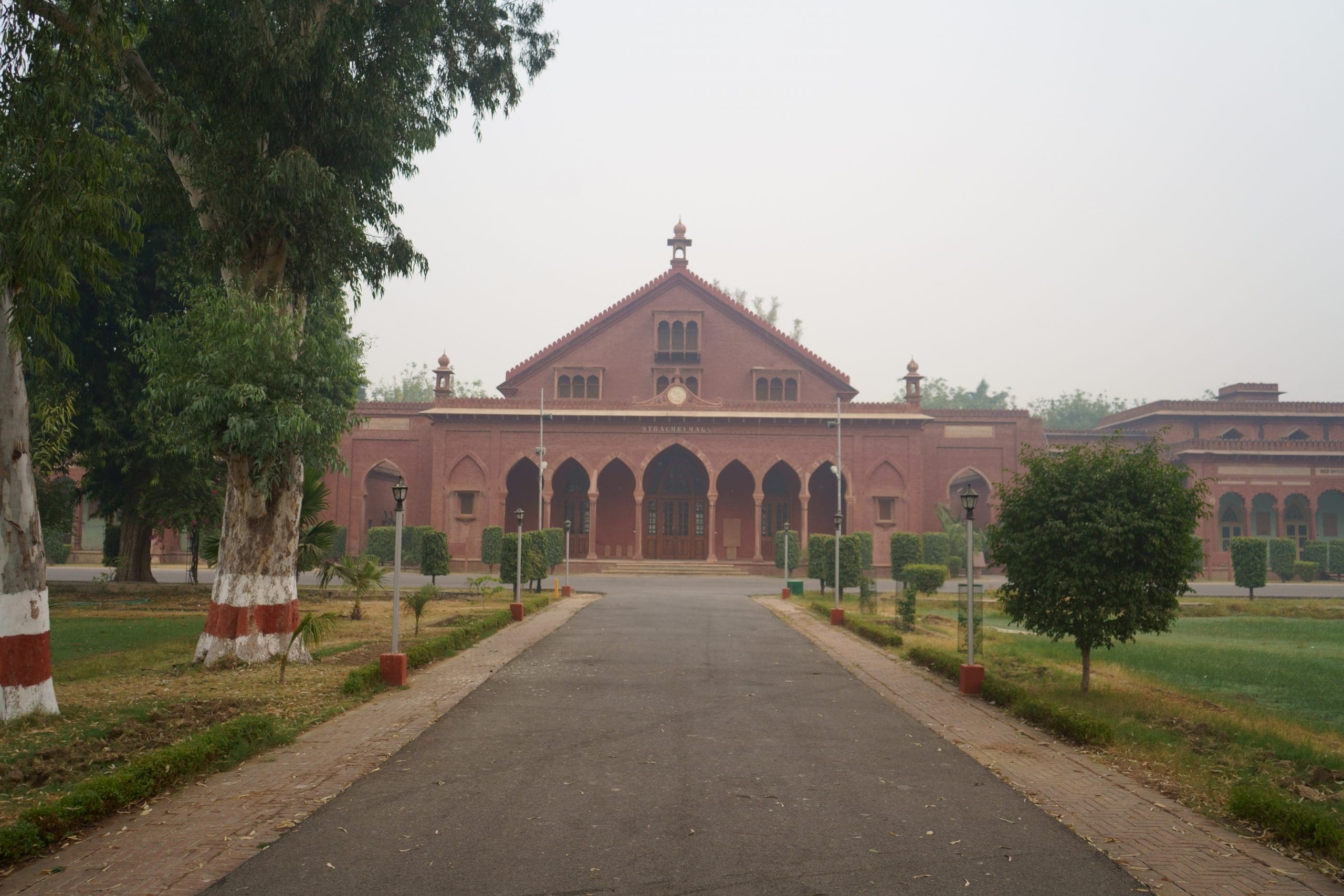
For instance, the Supreme Court recently revisited its stance in the Azeez Basha V Union of India while hearing the AMU minority status case. By overruling its earlier observations, the Court established specific tests for institutions to claim minority status, marking a significant development in constitutional jurisprudence. This shift demonstrates an evolving understanding of minority rights, reinforcing the judiciary’s commitment to constitutional safeguards.
However, criticizing the judiciary’s efforts to uphold minority rights as "problematic," especially in the context of decolonization, raises troubling questions. Does providing constitutional protection to vulnerable communities signify the remnants of a colonial hangover? Does the process of decolonization require dismantling the safeguards designed to protect minorities? More importantly, does it necessitate redefining the delicate balance between minority protections and societal harmony? If decolonization transforms into a process prioritising majoritarian interests under the pretext of restoring balance, does it not risk devolving into another form of dominance?
These questions highlight the potential risks of misconstruing decolonization as a majoritarian project. Such an interpretation may stem from a mistaken understanding of constitutional jurisprudence or a flawed premise about the objectives of decolonization. It is essential to recognize decolonization as a process aimed at broadening inclusivity and strengthening protections for marginalized groups, rather than undermining them. What is important to be conscious of is that the decolonisation process should seek to dismantle systems of oppression and inequality, not replace one form of subjugation with another. It demands a careful recalibration that upholds the ideals of justice, equity, and inclusivity enshrined in the Constitution.
Syed Shadab Asdaque, Assistant Professor ( Law). I am a law graduate from Aligarh Muslim University (AMU). I teach Jurisprudence and Interpretation of Statues at Jamia College of Law (JCL), Akkalkuwa, Maharashtra. Mohd Rehan, Assistant Professor (Law). He teaches administrative law at Manair College of Law (MCL), Khammam, Telangana.