Death by ‘Samadhi’ and legal recourse

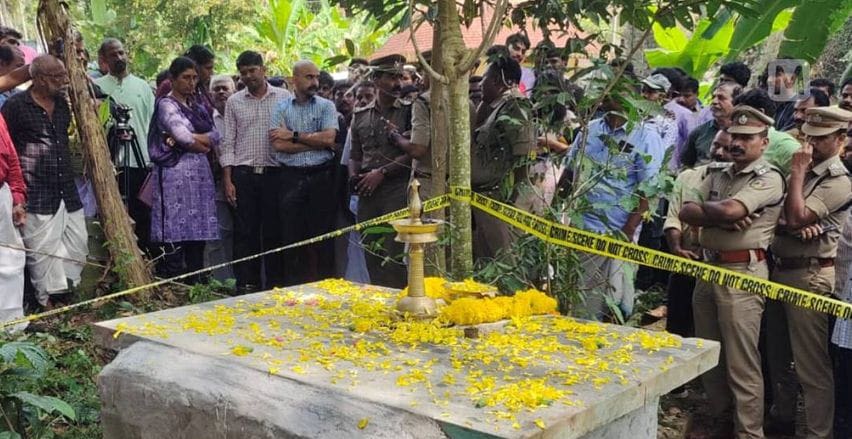
Gopan Swami, a resident of Thiruvananthapuram in Kerala, was buried by his family, who believed he had attained Samadhi (divine death). Following complaints from neighbors, the Kerala police began investigating the suspicious circumstances surrounding his death, prompting the district administration to order the exhumation of his body. His family argues that the practice of attaining Samadhi is deeply rooted in Hindu religious traditions and has been extensively documented in various sacred texts. Currently, there is no law in India that explicitly prohibits the act of attaining Samadhi or the preservation of the body through the construction of a Samadhi Peedam.
In societies and cultures that practice burial, disturbing the deceased’s final resting place is often strongly opposed due to the moral belief in allowing the dead to “rest in peace,” with exhumation viewed as a forbidden or sacrilegious act.
There was skepticism regarding the facts of the case, and Justice C.S. Dias orally examined the family about the death. The controversy surrounding the concept of Samadhi in Kerala has now sparked nationwide discussions. After several complications and objections from the family regarding the exhumation, the procedure was carried out on the morning of January 16. As the debate expands to include issues of superstition and spirituality, it is important to examine the legal aspects of the matter.
Exhumation, also known as disinterment, is the act of removing a buried body from the ground.
Firstly, there is no explicit law regarding the exhumation process in India. The need for a law on exhumation was mentioned in the case of Anandhi Simon v. State of Tamil Nadu. The lawful authority for exhumation is provided under Section 176(3) of the CrPC (now Section 196 of the BNSS). The provision states, “Whenever such Magistrate considers it expedient to examine the dead body of any person who has been already interred, to discover the cause of his death, the Magistrate may cause the body to be disinterred and examined.” Apart from this specific provision, no other legislation governs the procedure of disinterment.
Exhumation requests generally fall into two categories: “public interest” and “personal reasons.” It is commonly performed when there is suspicion of foul play, such as homicide, criminal abortion, poisoning, or disputed causes of death, to facilitate postmortem examination. The rights of the deceased are protected under Article 21 of the Indian Constitution.
In Mohd. Abdul Latif Magrey v. Union of India, the Court highlighted the urgent need for a proper mechanism in exhumation laws, noting the existing legislative gap. In the Abdul Latif case, it was further observed that the religious rights of every person and every religion are, however, subject to “public order,” the maintenance of which is paramount in the larger interest of society.
For instance, the right not to disturb an interred corpse is not absolute, as is evident from Section 176(3) of the Criminal Procedure Code, which permits exhumation for the purpose of crime detection. This provision applies to all, irrespective of the personal law governing the deceased. Therefore, the religious rights guaranteed under Articles 25 and 26 are circumscribed and must be exercised within constitutionally permissible limits.
Courts often have to determine whether a belief or practice is a fundamental part of a religion when adjudicating claims under Articles 25 and 26.
In Anandhi Simon v. State of Tamil Nadu, the Madras High Court held that: “The protection of life and personal liberty which is guaranteed under Article 21 of the Constitution of India has been interpreted by the Hon'ble Supreme Court in many cases. There are a lot of rights which are included in Article 21 such as right to privacy, right against solitary confinement, right to legal aid, right to speedy trial etc. The Hon'ble Supreme Court in many cases has also observed and interpreted that the right to have a decent burial is also included in Article 21 of the Constitution of India. The right to human dignity is not restricted to living human beings but is available even after death also.”
In the Common Cause v. Union of India case, the Supreme Court of India observed that if there is a legal vacuum—an area unaddressed by the legislature or executive—that is detrimental to the public interest, the judiciary must step in to serve the public good. The apex court added that the Union of India may consider enacting appropriate legislation on exhumation to address similar situations. Here in 2025, we are witnessing a similar issue, yet there is still no law regulating exhumation procedures.
Currently, the issue has received excessive media attention, and if no proper deterrent measures are taken, there is a high chance of it being misused. This could lead to a trend where individuals go missing under similar pretexts. Proper legal measures are necessary to reinforce that the right to life holds greater importance than any other rights.
The family cannot assert an absolute right to freedom of religion under Article 25, as it is subject to certain restrictions, including compliance with other provisions of Part III of the Constitution. This includes the fundamental rights of the deceased under Article 21 (right to life) and Article 19 (right to freedom).
Furthermore, the mishaps surrounding this case highlight the gap in Indian laws regarding exhumation. A proper law should be enacted by Parliament to prevent such issues in the future. Thus, from the aforesaid, it is evident that the religious rights of every person and every religion are subject to “public order,” the maintenance of which is paramount in the larger interest of society.
Saina Rinu is a lawyer and an assistant professor at BMS College of Law in Bangalore.