Srinagar is a living embodiment of Kashmir's tortuous history

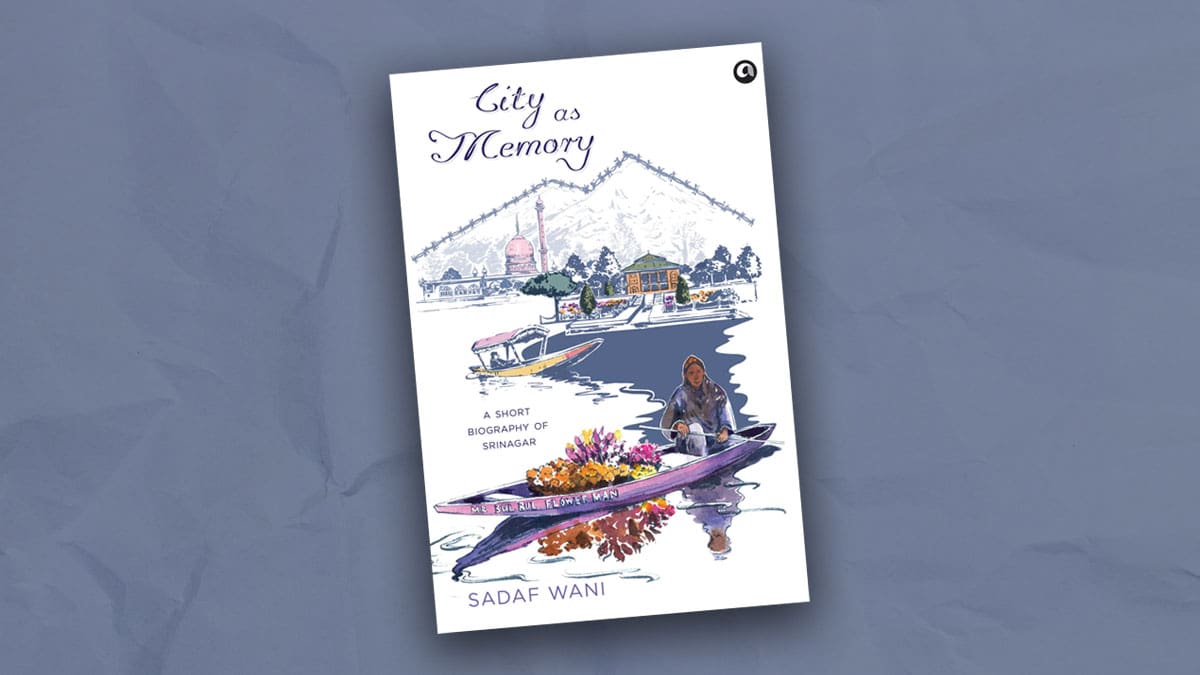
A city reflects the soul of a society—its triumphs, turmoil, and transformations are etched into every stone and shadow. In a bold new book, Sadaf Wani revives the story of a city marked by the rise and fall of empires, the flowering of civilizations, and the spectre of an enduring nuclear conflict. This work unveils a city as both a witness and keeper of history, weaving the echoes of its past into the pulse of its present.
Set in the political turmoil of 1990s Kashmir, the book is reflective of a conflict’s aggressive intrusion into the social sphere and the dehumanization of human life. The ceaseless brutality and lawlessness of the protracted conflict had left behind a bruised and persecuted mass of people whose stories became chronicles of ugliness, agony and traumatized lives.
Sadaf Wani’s City As Memory, with its discourse narrative, brings alive the horrors of the period which still haunts us like a hydra-headed monster. This book places us in Kashmir with an open heart. Steeped in history and deeply emotional, City As Memory is a painful portrayal of Srinagar, a city testament to Kashmir's glorious past and desolate present.
In the opening chapter, the author draws a disturbing sketch of Srinagar, pronounced as Sirinagar, through a docu-memoir of her childhood and upbringing amidst the conflict-torn city. Founded in 250 BCE by emperor Ashoka, Srinagar has been a seat of empires and a cradle of civilizations. From a key trade and cultural hub along the silk route to the centre of Buddhism, from a global centre of Kashmiri shawl industry to the epicentre of Kashmiri resistance movement, Srinagar’s journey intertwines deeply with the history of Kashmir, symbolizing resilience, cultural richness, and the complexities of political change.
The author's inability to locate her great-grandmother's grave in the Malakha area of Downtown Srinagar intimately led her to discover an intricate history of the city. In the graveyard, her eyes catch the view of a hill fort, Haer Parbat and through the magnificent view of Haer Parbat, the author beautifully portrayed not only the political and military significance of the fort but also as a centre of socio-cultural and religious life in Kashmir.
The outbreak of popular insurgency against the Indian state's military approach in the late 80s and early 90s blurred the distinctions between the personal and political. It was a period when the conflict pervades every aspect of life and violence started overtaking everyone and everything. The swift response to the brutality and repression of Kashmiri lives began in Downtown Srinagar, also known as ‘Old City ‘ and ‘Shehr e Khass’. For centuries before Kashmir's accession to the Indian Union, Downtown had been an epitome of political resistance against the mighty Mughals, Afghans and Dogras. It was also an epicentre of an intra-power struggle between populist Sheikh Abdullah supported Sher's ( Lion) and hardliner Mirwaiz-backed Bakra (Shepherd). The author masterfully visualizes a vivid portrait of Downtown as the architect of popular resistance against the injustices and brutality of the invaders through the ordeals of her father's experience in Matamaal (maternal home). Downtown is Buenos Aires and Sarajevo, it carries the scars of siege yet rises, an enduring testament to survival. Though an outsider to the city, the author symbolizes the power of memory as a timeless emblem of resilience and resistance. How her own understanding of the decaying city is different from her father's description reminds us that memory is the best descriptor of our glorious pasts.
In the third chapter titled “(Un)belonging in The Shahr” the author paints a grim picture of the neglect of Srinagar by the successive regimes. The frequent occurrence of epidemics due to indifferent rulers and harsh tax systems is devastating the population. Much like Immanuel Wallerstein's tripartite division, Kashmiri society has its political hierarchy of core(Srinagar), periphery ( villages) and semi-periphery ( Srinagar's adjoining areas). The migration of people from the periphery to the semi-periphery was partly due to the promise of a good life and partly because it was a refuge for those seeking respite from the chaos of the conflict in the periphery. Belonging is subjective and multifaceted, varying from person to person based on their 'lifeworlds’ (Lebenswelt). The Lebenswelt of the people from the periphery are their different lived experiences as conscious beings and their failure to incorporate the life of the Shahr.
Writing a biography of a city is a fairly bewildering experience. A question, really: do you want your city to feel vast and intricate or personal and intimate? The writers are worldbuilding a city for their stories but their dilemma is always what to include and what to leave. Sadaf Wani's City As Memory falters on being too political. Srinagar has been a remarkable corridor of ancient Globalization because of its proximity to the Silk Road, a centre of learning where the ancient world's largest religion, Buddhism, got accentuated and flourished and was at the confluence of cultures between the East and the West. The author's particular emphasis on the political identity of Srinagar has overshadowed the multifaceted identity of the city encompassing its history, culture, architecture, arts and countless other facets that make it unique.
Despite these minor aberrations, the book is a valuable addition to the existing literature on conflict, memory and above all a story of love for Kashmir.
Bilal Gani teaches politics at Govt. Degree College Beerwah, Jammu and Kashmir.