Hindutva is shaping communal divisions in my hometown

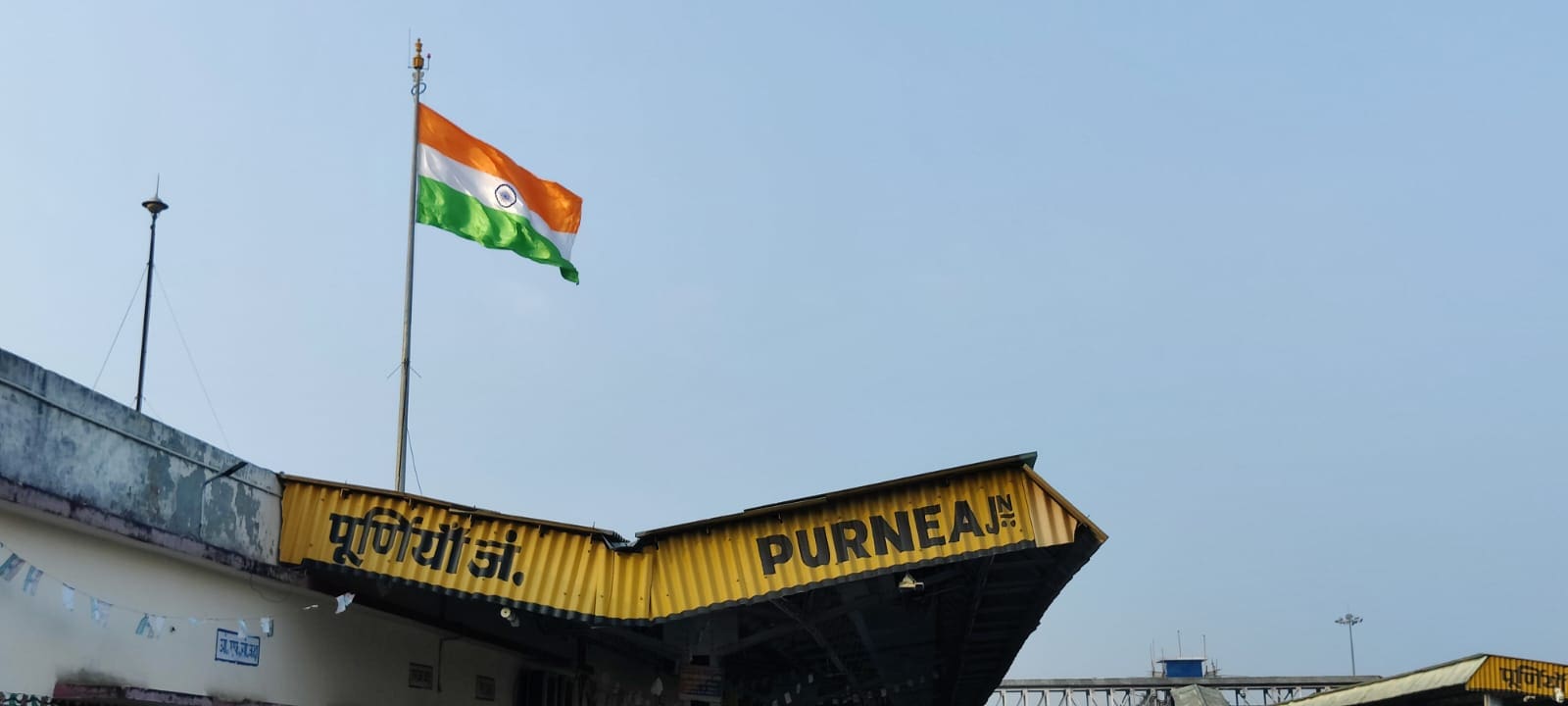
With a massive convoy and much fanfare, Union Minister Giriraj Singh toured the town of Purnia and said that he was here to restore the original Hindu society so that Hindus live in peace and not fear. He also said that NRC is a necessity in this region of Bihar. He was speaking in my hometown—Purnia—which comprises 60.94% Hindus and 38.46 % Muslims as per the 2011 census.
Having spent my entire childhood and school life in this town, I can vouch that growing up, the lines that divided people were drawn by geography, class, and caste but religion was rarely an issue. I remember my best friend in Class 6 was a Muslim girl. We were both quite different —she had short hair, I had long; her handwriting was beautiful, while mine was messy; she drove to school in a Bolero, while I was dropped off on my father’s scooter, she had two brothers, while I was an only child. Despite all these differences, we never saw our religious identities as a dividing factor.
Fast forward to 2024, my 17-year-old cousin who goes to a private school in Purnia expressed her discomfort about being around Muslim students. “They’re not like us,” she said. This sentiment— deep-seated division based on religion—startled me. When I pressed her on why she felt this way, she couldn’t offer a strong explanation beyond vague generalizations like “they eat bad things” or “their God and language are different from us”. When I countered her points and told her about communalism and societal polarisation, she confirmed that it had been subtly reinforced by peers, teachers, and even her own family.
Things were different when I was growing up. Religion was never the most important marker of identity in Bihar (at least in Purnia), someone father’s profession and caste were. This shift in Purnia’s societal framework is in line with pan-Indian Hindu sentiments. Senior journalist Saeed Naqvi in an interview elaborated how gradually people around him began to identify him as Muslim. He added that this was “the beginning of a process” which placed him with the "Other.”
The point in case: my cousin; was not antagonised by Muslims, have had Muslim friends when she was younger, but gradually she was fed things that placed the community in an alien world – the people of the community conveniently termed ‘them’ – who do not have commonality with ‘us’. I explained to my cousin how the ‘otherisation’ of a community begins at her level when she learns whatever is taught without applying logic or practically testing or experiencing it, how we as women would also face words – “different,” “not like us” -- because these words create unconscious divisions that in the long run, aligns with a narrative that alienates a group from the mass.
DAV Public School teacher Surbhi Singh, who spent her school life in Purnia, elaborated on my previous points and shared an incident where a Muslim boy in her class faced ‘otherisation’. “There’s a Muslim boy in my class; he has many friends but he eats his lunch alone every day because nobody wants to sit with him. When I asked the students, they said he eats all kinds of non-veg food. One day when I made a few boys sit with him, they placed their tiffin away from his. Later, I confronted them. That is when they informed me that their parents have told them not to sit with him [Muslim boy] because he is a Muslim and eats beef, while they worship the cow,” she said.
Singh also stood in defence of teachers and said that for them every student is equal. She added that any divisive statements by students or parents are not entertained and teachers as well as the school authorities teach equality. I disagree with Singh and my question is: Do the children learn equality with respect to religion?
My fears are aggravated by a set of instances shared by Asfia Tabassum, a doctor by profession and a native of Purnia. She said, “This changing cultural shift in Purnia can lead to a harsh end. My mother runs a school and kids as young as those studying in Class 1 can be heard saying ‘hum Hindu hai na…vo log muslaman hai’; I opted for Sanskrit in my school days because it was a scoring subject and my Hindu friends had opted for Urdu because they wanted to learn. Nowadays, parents complain that they do not want their children to learn a Muslim language. Urdu has become a Muslim language. It is no more about scoring or interest. It’s a different world.”
Another moment from my childhood that I recall is when I was invited to my Muslim friend's home for lunch on her birthday. After a hearty meal, I returned home only to be met by my grandmother, who solemnly declared that my religion was “over” because I had eaten at a Muslim household. I didn’t know how to react. Fortunately, my father and mother helped to quell my fears by reassuring me that food and friendships transcended religious boundaries. My mother, who had friends from various religious backgrounds, even shared that some of her best recipes came from her Muslim friends. This was way back in the early 2000s.
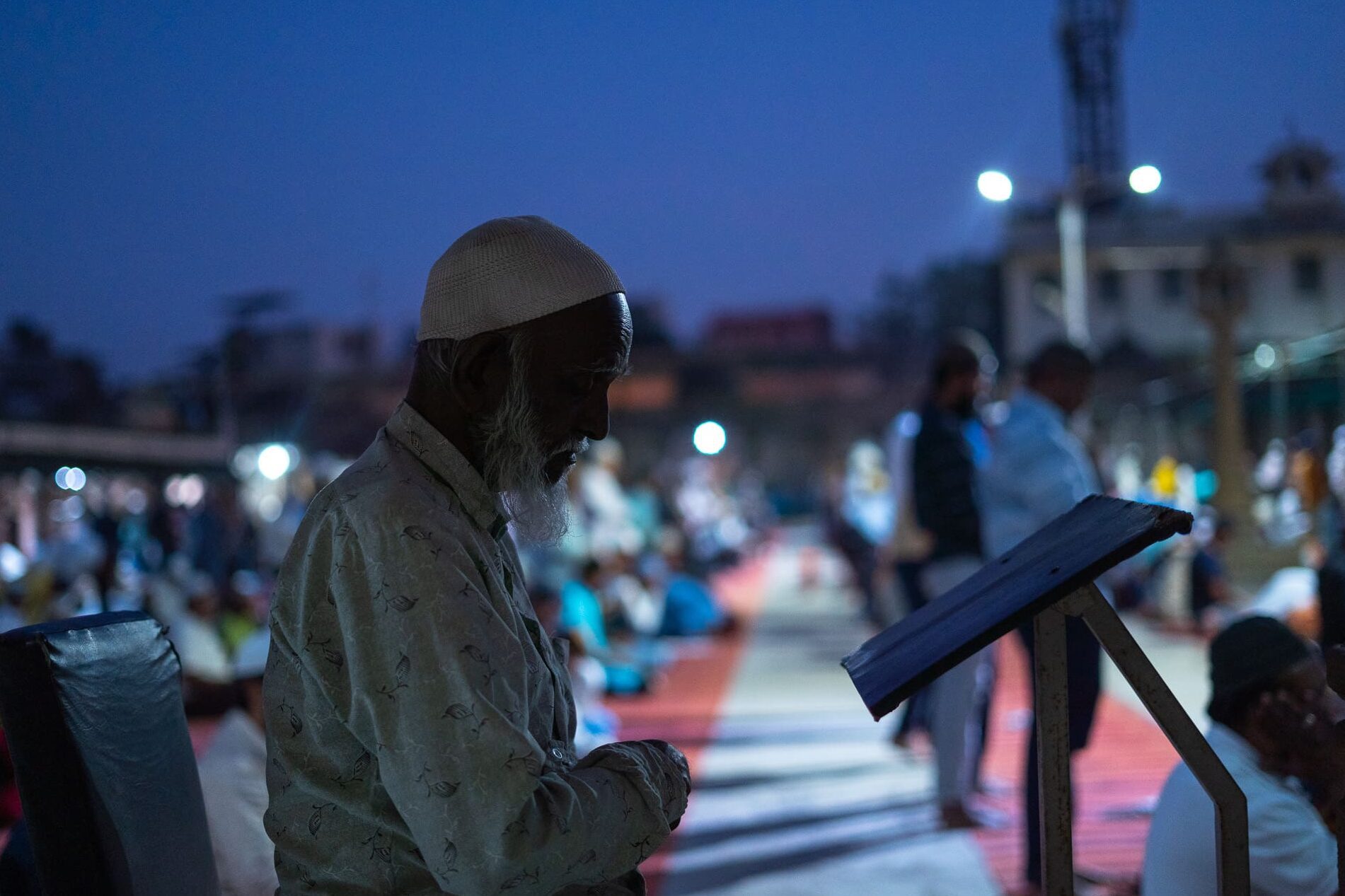
In the past decade, things have become complicated. This year, like every year, when I expressed my fondness for the iftar snacks sold around Purnia’s Jama Masjid during Ramadan, the responses were hostile. A labourer Tinku, who has been working in our neighbourhood for long, questioned the trustworthiness of those products and suggested that I should only eat from “Hindu” shops. My aunt told me she would make those snacks at home for me because she saw a video of Muslim chefs spitting on food. I protested, “Many videos were fake.”
What are the contrasts that I draw from the two experiences – both based in my home town Purnia around the same set of people I lived with before? I observe two words - mistrust and scepticism – tools that are used for setting the narrative of ‘otherisation’ which ultimately leads to communal mentality.
Khushali Priya, an M.A student at Delhi University reflected on the changing landscape filled with mistrust and scepticism with her lived experience. “I have had Muslim friends since my childhood. I have gone to their homes and they have come to mine. But now when I express my political opinions against a certain party, I am told that I have been brainwashed by them. My father even assumed that I was dating a Muslim guy because I spoke against the atrocities on them and the politicisation of it. I have been told by many that ‘I am being soft while they are hardliners.’”
A few days ago, I attended a book launch of Rakhshanda Jalil’s ‘Love in the Time of Hate’ in Delhi where the chief guest was Javed Akhtar. The most outstanding point by him – “We only hate those whom we do not know.” This is true in some sense – for instance, my friend’s father said that his best friend who is a Muslim is a good man but others belonging to his friend’s religion are not.
The Purnia I grew up in is in contrast with the Purnia where a school friend recently said that she does not like her Muslim colleagues reacting with words like, “Inshallah” or “Alhamdulillah”. “Why do they bring Allah into every conversation?” Another father’s friend said, “They have increased the volume of loudspeakers in mosques here. We need a pro-Hindutva leader here. In Uttar Pradesh, they don’t read namaz on roads anymore. We need this here.” Yet another friend once heard about my liking for Pakistani music and actors and said, “Do you ever want to travel to Pakistan or convert…because you seem to love everything about them?” That is simply a courteous way of saying – “Go to Pakistan,” I snapped.
Dilshad Ansari, who runs a small business in Purnia, said that the problem is that now the rift between the two communities is out in the open — from the dining room conversations to hate speeches. “It is sad that in our town too, a Muslim friend of mine (from Araria) was denied a room because the Hindu landlord wouldn’t rent his property to a Muslim,” he added.
Purnia, the border district in Bihar’s Seemanchal had a unique record of communal harmony and was not touched even by the communal frenzy of 1946-47. In 1979, the first Hindu-Muslim riot was recorded. Small instances have taken place throughout the late 90s, twenty and twenty-first century but largely it has been peaceful. However, in the past few years, there has been a volatile transformation in the way Hindu festivals are celebrated, especially Ram Navami. Though I have seen Ram Navami procession since my childhood, the fervour has changed. Triggering songs like – Bhagwa lehrayenge has replaced the usual Hanuman Chalisa.
Kunal Purohit’s H-Pop: The Secretive World of Hindutva Pop Stars chronicles how these songs and their makers are an essential part of this communal ecosystem. The grandeur spread across houses in the neighbourhood: saffron flags at the gates and flashy photos with weapons on WhatsApp has become a trend. When I questioned the need for such ostentatious displays, a neighbour argued, “If they do it on Moharram, why shouldn’t we?” Another added – “It is Shakti Pradarshan, they should not think they can take over this country and we will let them.”
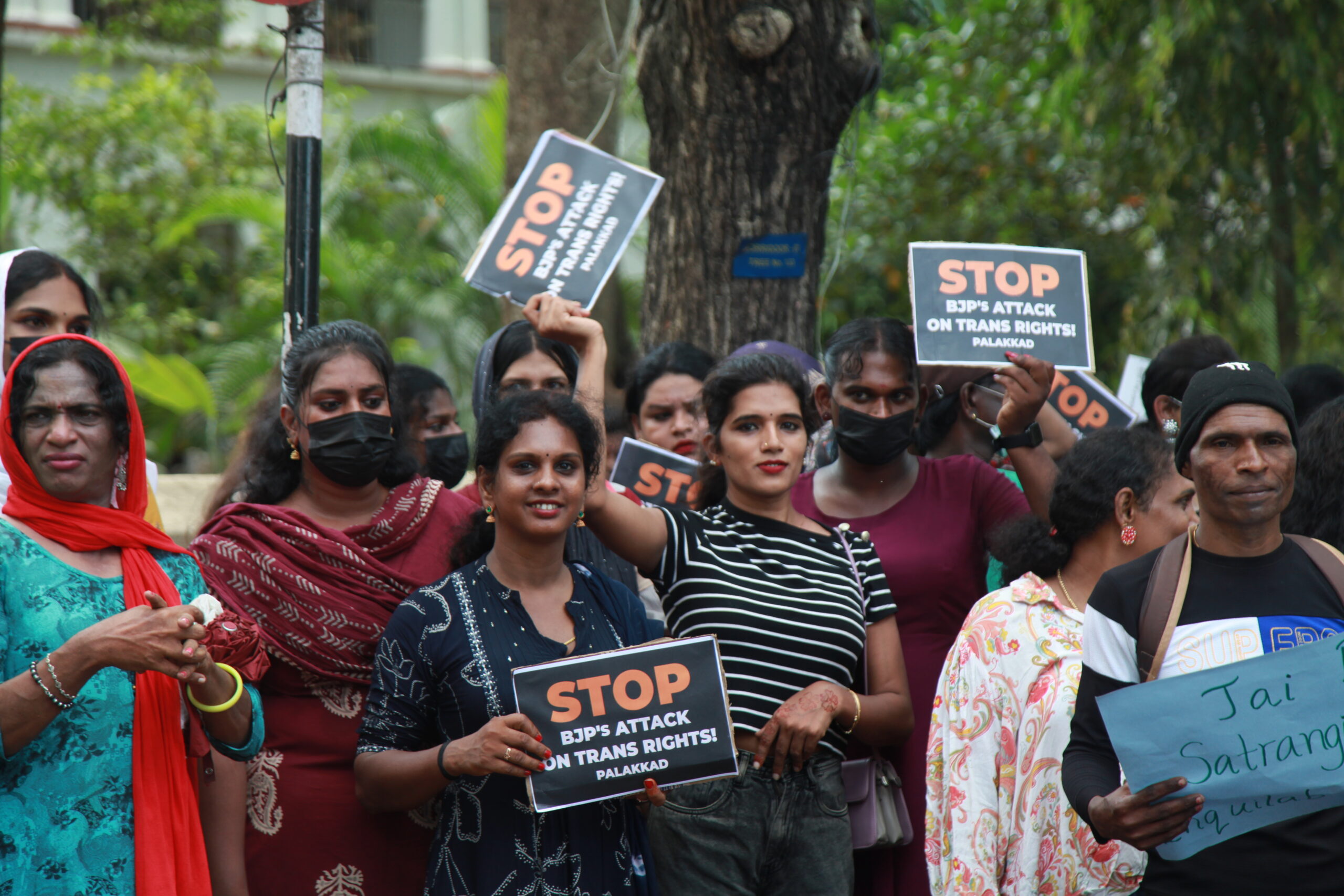
The notion of the Muslim as the “Other” is not new. In India, these fault lines have always existed, often just below the surface, ready to be exploited. The rift between Hindus and Muslims stretches back to the trauma and violence of Partition in 1947 when riots scarred India’s national consciousness. It’s also true that political forces, such as the ruling Bharatiya Janata Party (BJP), have made religion the central axis of Indian identity. What is new is that these fault lines are now panning horrifyingly in the very psyche of society. To see its roots spreading in this small town in Bihar, which also happens to be one of the most backward districts in India, is sad, to say the least. My town needs a lot more than communalism on a platter.
Navashree Nandini is a working journalist interested in politics, international relations and women's issues.