Gentlewoman: Hitchcock murder mystery in a K Balachander universe

Watching Joshua Sethuraman's Gentlewoman, it is difficult to not notice that it runs like a contemporary retelling of a K Balachander's film. And if we think about it, Balachander’s films themselves had an inherent Hitchcock-ian quality. Where his narratives would keep us perennially in the edge of the seat, making us gasp and wonder about the eventual fate of each character. But in Gentlewoman, the Hitchcock-ian quality is even more literal, for Sethuraman fuses a man-woman drama with a murder mystery twist.
What makes the viewer curiously engaged with Gentlewoman's narrative lies in how Sethuraman takes a fairly realistic setting but gives it an exaggerated treatment. The film uses gruesome satire and couples it with a social fantasy to drive home its point on gender politics. Should some of the primary characters react in such an extreme manner, one might wonder. But again, Sethuraman isn't attempting to offer a realistic outcome of social events. Instead, he plays with the frustrated claim that most women might have made at some point in their life - 'Why can't we just kill these men?'
The film effectively makes us ponder on a pertinent issue. On how our social structure and relationships pitch one woman against another but let go off the man quite easily. So in his rather fantastical interpretation, Sethuraman attempts to build camaraderie between women who are otherwise pitted against each other in real life. Whether that is between a mother-in-law and daughter-in-law or a man’s wife and his secret lover. While our social conditions might make it difficult to believe the proposition offered in the film, it still nudges us to imagine an alternate future reality. And there lies the success of Gentlewoman.
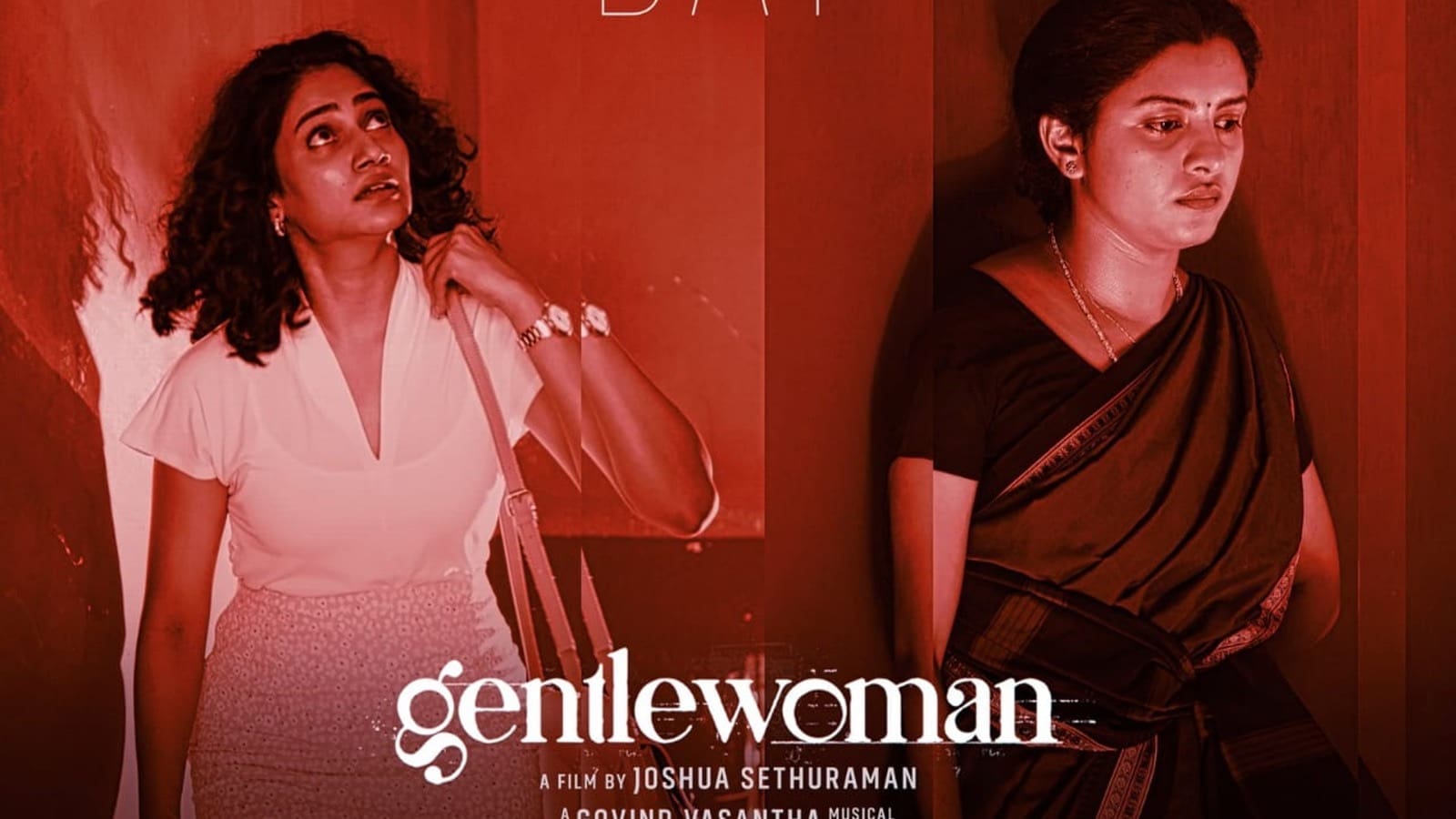
The film remains tight, focused and has consistent narrative surprises. And is sufficiently supported by the performances of its primary characters. While the credibility of Lijomol Jose's performance is something one is aware of, it was a pleasant surprise to witness Losliya Mariyanesan excel in her role. The dubbing replaces her otherwise squeakish voice and it offers more weight to her character. Though she plays the ‘other woman’ in the relationship, her performance keeps the character’s dignity and our empathy for her intact.
But at the same time, several of the minor characters appeared quite uncomfortable and conscious on frame. In particular, Hari Krishnan who plays Losliya's husband should have offered a more nuanced performance. It is the complexity of his character that essentially drives the story. But unfortunately, the actor offers a very simplistic interpretation of it.
While Sethuraman’s exaggerated story twists keep us hooked, it also affects the flow of the film at times. The sudden shift in Lijomol’s character doesn’t completely convince us even if we want to root for her. Similarly, the assault on Losliya’s character towards the climax has a very 80s Tamil masala potboiler quality about it. This was surprising since multiple scenes in the film also felt inspired by Pedro Almodóvar’s Volver (2006). It was this inconsistency in the film’s treatment that sometimes put us off.
Writer Yugabharathi’s dialogues were precise and punchy at several places. But they also easily slipped to very stage-like and preachy conversations at times. Whenever there was a reflective conversation between characters, they stopped sounding like themselves and started speaking like some gender politics PhD scholars from Jawaharlal Nehru University, New Delhi. We could easily sense that it is not the characters speaking these lines but the writer playing a ventriloquist. And this again distanced us further from the proceedings.
However, Govind Vasantha seems to have accurately understood the film's narrative. And offers a score that fits perfectly to the proceedings. So does Sa Kathavarayan’s cinematography that keeps the film very focussed.
There is no doubt that the film could have better exploited its own exciting premise. But in spite of its short comings, what makes Gentlewoman engaging is the filmmaker’s imaginative interpretation of a social issue and how he keeps the film very tight - well under 120 minutes.
The last scene in the film where the wife, secret lover and mother-in-law come together felt like a hat-tip to the final moment on train in K Balachander’s Avargal (1977). That the mother-in-law’s voice in Gentlewoman was offered by actor Geetha Kailasam, who is K Balanchander’s real life daughter-in-law makes it even more amusing.